Bentleys and Scottish salmon to benefit from UK-South Korea trade deal
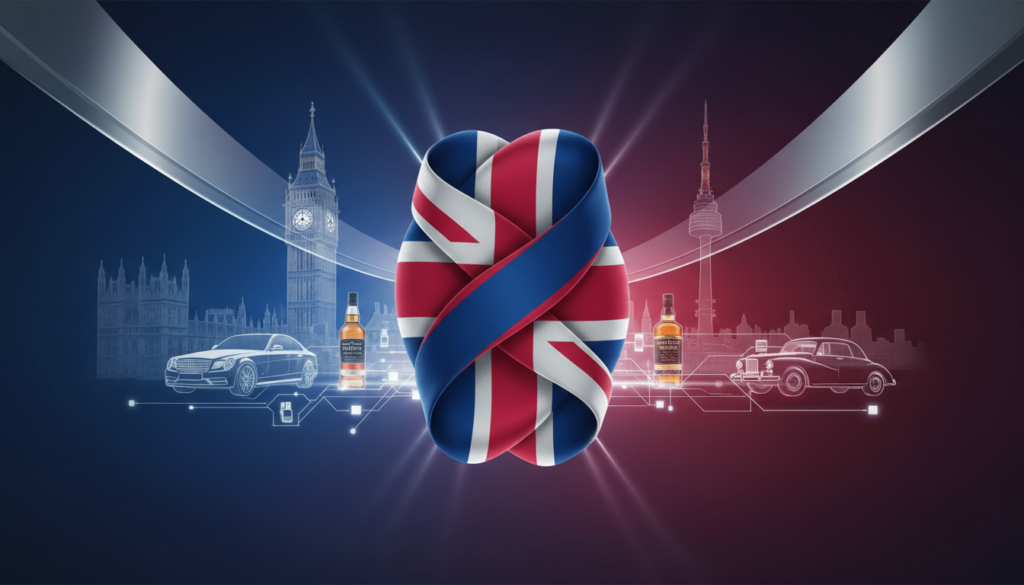
1. Catchy Headline
“Global Britain” Strikes Gold in the East: Why the £2 Billion UK-Korea Trade Deal is the Lifeline We Need
2. Brainx Perspective (Intro)
At Brainx, we believe that amidst the noise of stalled negotiations across the Atlantic, the UK’s finalized trade deal with South Korea is a masterclass in pragmatic diplomacy. This development highlights a crucial pivot: while the “Special Relationship” with the US faces friction, the “Asian Gateway” is wide open, proving that Britain’s economic future may well be written in Seoul rather than Washington.
3. The News (Body)
In a move that solidifies the United Kingdom’s post-Brexit economic strategy, the Labour government has officially finalized an enhanced trade agreement with South Korea. Coming as the fourth major trade pact under the current administration—following negotiations with the EU, India, and the United States—this deal is a critical stabilizer for British industry.
While champagne corks (and Soju bottles) are popping in Whitehall, the deal arrives at a pivotal moment. With the highly anticipated US “Tech Prosperity Deal” hitting diplomatic turbulence under the Trump administration, the UK has successfully hedged its bets by locking in a secure, long-term partnership with one of Asia’s most dynamic economies.
The Core Agreement: Locking in Stability
The primary victory of this agreement is certainty. Without this deal, British exporters were facing a “cliff edge” in January 2026 that would have seen tariffs skyrocket. Instead, the government has secured a framework that protects the status quo and builds upon it.
- Tariff-Free Trade: A staggering 98% of exports between the UK and South Korea will remain tariff-free. This directly protects £2 billion worth of UK goods from potential duty increases.
- Rules of Origin: The deal simplifies the complex “Rules of Origin” bureaucracy. This is a game-changer for British manufacturers who source parts globally; they can now assemble products in the UK and export them to Korea without being penalized by complex tax codes.
- Digital Protections: Acknowledging that modern trade is digital, the agreement includes robust new protections for data flows and intellectual property, vital for the UK’s service sector.
Automotive: The Luxury “Gold Rush”
If there is one clear winner in this deal, it is the British luxury automotive sector. South Korea has developed a voracious appetite for high-end British engineering, driven by a rapidly expanding middle class and a “Young Rich” demographic eager for status symbols.
- Bentley & JLR: Executives at Bentley Motors and Jaguar Land Rover (JLR) have hailed the deal. For these brands, South Korea is no longer a niche market but a primary revenue driver.
- Price Stability: The removal of tariff threats means these vehicles remain competitively priced against German and Italian rivals. Frank-Steffen Walliser of Bentley noted that immediate, ongoing access is “great news” for the company’s bottom line.
- The Demographic Shift: As disposable income in Korea rises, the demand for “British Heritage” brands—which signal exclusivity and history—has soared, allowing UK factories to ramp up production to meet Asian demand.
The “Liquid Gold” Flow: Whisky and Stout
The trade deal also secures the flow of Britain’s most iconic beverages, ensuring that Korean glasses remain filled with UK produce.
- Guinness from Cheshire: In a fascinating glimpse into global supply chains, the Guinness sold in South Korea is actually canned in Runcorn, Cheshire. This deal directly safeguards factory and logistics jobs in the North of England.
- Scotch Whisky Dominance: The Asia-Pacific region is the largest market by value for Scotch whisky. The deal supports the “premiumization” trend, where Korean consumers are shifting from local spirits to high-end Single Malts.
- Competitive Edge: By eliminating tariffs, a bottle of Macallan or Glenfiddich remains cheaper than it otherwise would be, protecting market share against Japanese whisky and American bourbon.
The “Gateway” Strategy: A Symbiotic Pivot
Perhaps the most insightful aspect of the negotiations was the concept of the “Gateway,” articulated by South Korean Trade Minister Yeo Han-koo. This vision reframes the relationship not just as a bilateral trade route, but as a strategic launchpad for both nations.
- UK as the Europe Gateway: Despite Brexit, the UK remains the financial and logistical hub for Asian firms to access the broader European market.
- Korea as the Asia Gateway: Conversely, South Korea offers British firms a stable, democratic, and high-tech entry point into the wider Asian continent, bridging the gap to other regional economies.
Geopolitical Context: The US Stumble
The success in Seoul is magnified by the failure in Washington. The “Tech Prosperity Deal” with the US, once touted as a £150bn breakthrough, has stalled. Reports indicate the Trump administration is demanding concessions in non-tech sectors, creating a deadlock.
This contrast underscores the importance of the Korean deal. It proves that “Global Britain” can still execute complex international agreements effectively, even when the “Special Relationship” falters. By diversifying its trade portfolio, the UK ensures that its economy is not held hostage by the political winds of any single partner.
Economic Reality Check
While the government projects optimism, independent analysis from the Office for Budget Responsibility (OBR) offers a grounded view.
- GDP Impact: The direct impact on GDP by 2030 is expected to be fractional (similar to the India deal’s projected 0.1% increase).
- Prevention vs. Growth: However, the true value of the deal is preventative. It stops a decline in trade that would have occurred if tariffs were reintroduced.
- Long-Term Potential: While current trade volumes are modest (0.8% of total UK trade), the deal removes the ceiling on growth, allowing British businesses to ride the wave of the Asian century.
4. “Why It Matters” (Conclusion)
For the common man—whether a factory worker in Cheshire or a logistics manager in Southampton—this deal is a shield against uncertainty. It protects jobs that rely on exports and keeps the cost of imported Korean tech (like Samsung phones) stable. Ultimately, it signals that the UK is successfully pivoting its economic focus East, securing a foothold in the markets that will define the next decade.
Frequently Asked Questions (FAQ)
1. Does this deal mean cheaper electronics for British consumers? Yes, potentially. By eliminating and keeping tariffs at zero on imports, Korean electronics (like Samsung smartphones, LG appliances, and components) avoid import taxes. While retail prices depend on many factors, this prevents price hikes that would occur if tariffs were reintroduced in 2026.
2. Why is the US deal stalled while the Korea deal succeeded? The US negotiations have hit a “protectionist” wall. The Trump administration often demands transactional concessions (e.g., “we will only give you X if you buy Y”), which complicates high-level tech agreements. In contrast, South Korea and the UK share a more aligned vision of free trade and mutual market access, allowing for a smoother negotiation process.
3. What is the “Rules of Origin” change, and why does it matter? “Rules of Origin” determine where a product is “made” for tax purposes. If a British car uses too many German parts, it might not count as “British” and could face tariffs. This deal simplifies those rules, making it easier for UK manufacturers to source parts globally and still export to Korea tariff-free. It cuts red tape and lowers costs for businesses.
4. How does K-Pop affect a trade deal? It falls under “Soft Power.” The massive popularity of Korean culture (K-Pop, K-Beauty, K-Food) in the UK creates a favorable environment for Korean products. Conversely, it opens the Korean market to British cultural exports. The deal facilitates this by lowering barriers on data and digital services, which is how most of this culture is consumed and monetized.
5. Is this deal better than being in the EU? Not necessarily “better” in volume, as the EU is a neighbor and a much larger market. However, this deal is “tailored.” Unlike EU deals which must satisfy 27 nations, this agreement is specifically designed for British strengths (Services, Luxury Auto, Scotch Whisky), allowing the UK to prioritize sectors that matter most to its specific economy.
Leave a Reply