Heavy rains worsen conditions for displaced Gazans, UN warns
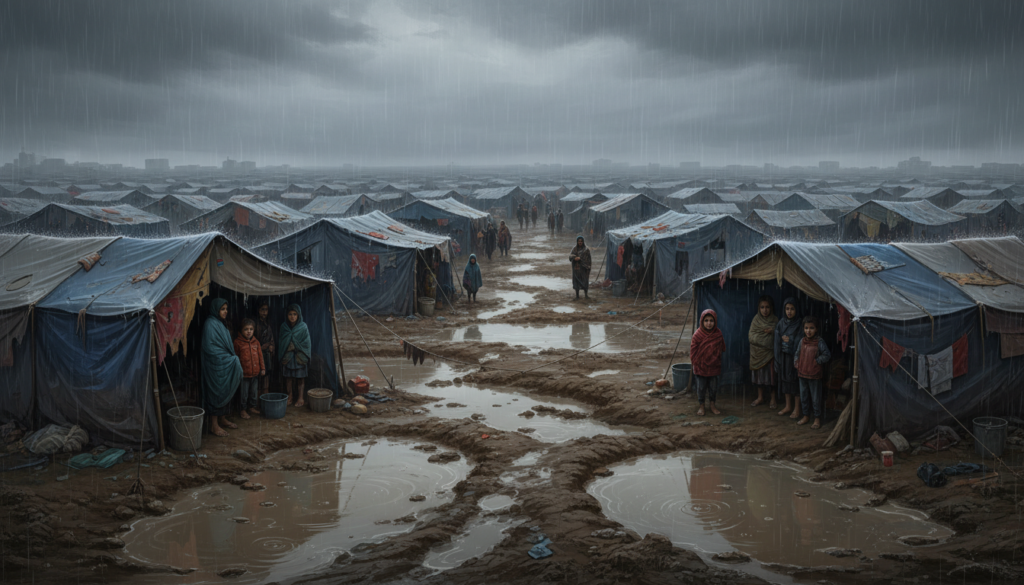
Gaza’s Winter Nightmare: Torrential Rains and Freezing Temperatures Deepen Humanitarian Collapse
Brainx Perspective
This development highlights the devastating intersection of prolonged conflict and severe climate conditions, where the most vulnerable populations pay the highest price. As infrastructure crumbles under the dual weight of war and relentless weather, the crisis in Gaza has shifted from a geopolitical standoff to a desperate, elemental struggle for basic human survival.
The News: A Deep Dive into the Crisis
The humanitarian situation in the Gaza Strip has reached a critical breaking point. Following weeks of unrelenting torrential rain, the living conditions for hundreds of thousands of internally displaced Palestinians have deteriorated rapidly. Below is a detailed breakdown of the unfolding crisis.
1. The Weather Assault: “Exceptionally Harsh” Conditions
The region has been battered by a weather system described by UN officials as exceptionally severe. This is not merely a seasonal disruption but a life-threatening weather event for those without adequate shelter.
- Unprecedented Rainfall: Jonathan Crickx, a spokesperson for UNICEF, reported witnessing water accumulation of up to 15 centimeters (6 inches) in a single night. This volume of water is catastrophic for temporary settlements located in low-lying areas.
- Plummeting Temperatures: Nighttime temperatures are currently hovering dangerously low, around 7–8°C (45–46°F). For displaced families living in damp conditions, this temperature drop is potentially lethal.
- Fierce Winds: Strong winds are accompanying the rain, ripping apart fragile tents made of single tarpaulin sheets or plastic nailed to wooden frames.
2. Casualties and Structural Collapses
The combination of war-damaged infrastructure and severe weather has led to immediate and tragic fatalities. The physical environment of Gaza, already weakened by months of conflict, is failing under the environmental stress.
- Fatalities Confirmed:
- The Hamas-run health ministry has confirmed the death of an infant due to hypothermia, highlighting the extreme risk to the youngest demographics.
- The Civil Defence agency reports a total of 17 deaths directly attributed to the cold and structural failures, including four children.
- Infrastructure Destruction:
- 17 residential buildings have completely collapsed due to the rain and wind.
- An additional 90 buildings have sustained partial damage, rendering them unsafe.
- In the Shati refugee camp, eyewitnesses reported a sudden roof collapse resulting in the death of a man, sparking desperate search and rescue operations amidst the mud and debris.
3. The Displacement Crisis Intensifies
The rain has undone the precarious stability that many displaced families had managed to establish.
- Widespread Impact: UN agencies estimate that heavy rains have impacted nearly 55,000 families. This includes significant damage to personal belongings, sleeping mats, and clothing.
- Shelters Inundated: More than 40 designated emergency shelters were flooded following the recent deluges.
- Repeated Displacement: Many of the estimated one million people currently in temporary shelters have been displaced multiple times over the last two years. They possess few dry clothes and lack the resources to dry what little bedding they have.
- Desperate Measures: Families were observed desperately using buckets to bail water out of their flooded tents, a futile effort against the rising water levels.
4. The Health Emergency
The primary concern for humanitarian agencies is the inevitable outbreak of illness caused by the wet and cold conditions.
- Hypothermia Risks: Children trapped in wet clothing with no way to dry off are at severe risk of hypothermia.
- Disease Vectors: The flooding of sewage systems and the accumulation of stagnant water increase the risk of waterborne diseases, compounding the misery of the displaced population.
5. The Logistics of Aid: A Contest of Statistics
A significant disparity exists regarding the flow of aid into the territory, with conflicting reports from international bodies and Israeli authorities.
- UN Aid Efforts:
- Since the ceasefire began nine weeks ago, UNICEF has delivered 250,000 winter clothing kits, 600,000 blankets, and 7,000 tents.
- However, officials warn these provisions are “woefully inadequate” given the immense scale of the need.
- COGAT Stance (Israeli Military Body):
- Israel refutes claims of aid restrictions, stating that 600 to 800 lorries enter Gaza daily.
- They report the delivery of 310,000 tents and over 1,800 lorry loads of winter gear.
- The Discrepancy: The UN reports collecting significantly fewer items at the crossings (e.g., 67,800 tents vs. the 310,000 claimed by COGAT), highlighting a critical gap in logistics or reporting that is slowing relief to those on the ground.
6. Calls for International Action
The International Committee of the Red Cross (ICRC) and local civilians are calling for urgent intervention.
- Infrastructure Repair: There is a critical need for equipment to repair war-damaged buildings before they collapse due to weather.
- Civilian Plea: Ahmed al-Hosari, a relative of a victim in the Shati camp, appealed to the world: “We call on the world to solve our problems and rebuild the territory so that people can have homes instead of being displaced and living in the streets.”
Why It Matters
At Brainx, we see this as a turning point where environmental factors are accelerating a humanitarian disaster. For the common man in Gaza, the loss of shelter means a total loss of dignity and safety. Globally, this underscores the urgent need for climate-resilient humanitarian aid; without it, post-conflict reconstruction will be impossible, leaving a generation exposed to preventable disease and trauma.
Leave a Reply