Will the US TikTok deal make it safer but less relevant?
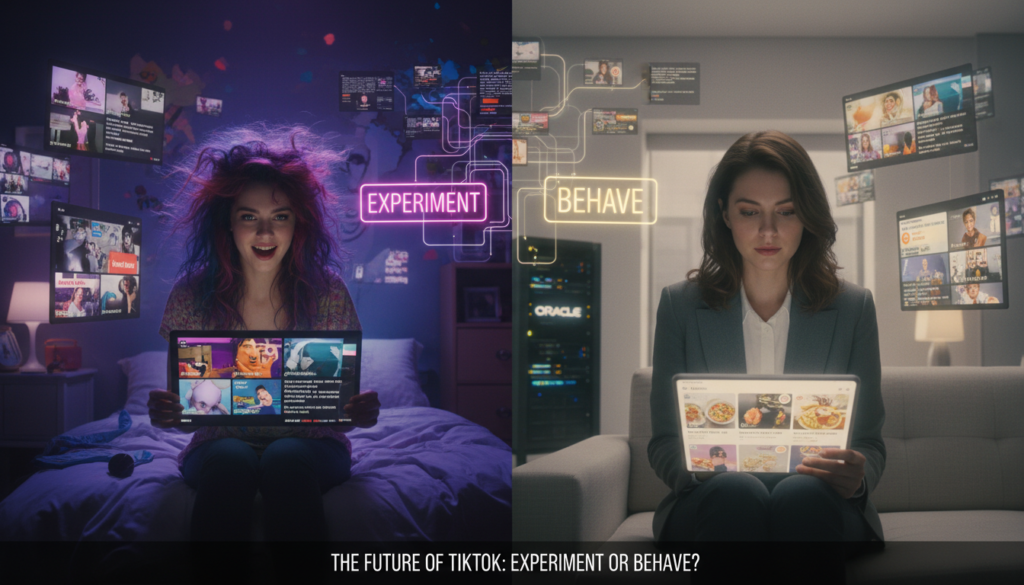
1. Catchy Headline
The Great Algorithmic Reset: How the US-TikTok Deal Changes the Future of the Internet
2. “Brainx Perspective” (Intro)
At Brainx, we believe the restructuring of TikTok’s US operations is not merely a corporate transaction; it is a watershed moment for digital sovereignty. This development highlights a pivotal shift where national borders are finally erecting walls in the cloud, challenging the open internet’s foundational promise. As data moves from global feedback loops to national silos, we are witnessing the first major experiment in “techno-nationalism,” creating a precedent that will redefine how global apps operate, how culture is exported, and how privacy is legislated in the 21st century.
3. The News (Body)
The Deal: A Digital Fortress in Texas
After years of geopolitical tug-of-war, regulatory threats, and executive orders, ByteDance has finalized a historic agreement to restructure its United States operations. The deal, designed to avert a nationwide ban, places the governance of TikTok’s US arm into the hands of a consortium of investors led by Oracle, Silver Lake, and the Abu Dhabi-based investment firm MGX.
This restructuring is far more than a change in the cap table; it is a fundamental re-engineering of how the app functions on American soil. The new entity, tentatively dubbed the “TikTok USDS Joint Venture,” aims to sever the operational links between US user data and ByteDance’s headquarters in Beijing.
Key Facts of the Agreement:
- Ownership Structure: A consortium led by Oracle and Silver Lake will acquire a significant stake (reportedly around 45%) in the new US entity. ByteDance will retain a minority stake but will lose operational control over US data.
- The “Project Texas” Protocol: All US user traffic is being routed to Oracle Cloud Infrastructure. This initiative, known as “Project Texas,” creates a “walled garden” where American data—from biometric identifiers to private messages—is stored physically within the United States.
- Code Transparency: Oracle will act as a “gatekeeper,” with the authority to review the source code of the recommendation engine to ensure there are no “backdoors” or foreign manipulation.
- Governance: The new entity will be governed by an independent board of directors approved by the US government, ensuring that fiduciary duty aligns with US national security interests.
The Engine Room: Why “Siloing” the Algorithm Matters
To understand the gravity of this change, one must understand the “secret sauce” of TikTok: its Recommendation Engine. Unlike Facebook or Instagram, which relied heavily on a “social graph” (who you know), TikTok relies on an “interest graph” (what you like).
This system uses a Deep Learning Recommender System (DLRS) that ingests billions of micro-signals—watch time, re-watches, pauses, and shares—to build a unique profile for every user. Historically, this model was trained on a global dataset. A dance trend erupting in Seoul would feed data into the model that eventually predicted a hit for a teenager in Chicago.
Under the new “siloed” model, the US algorithm will be “retrained” exclusively on US data.
Technical Implications:
- Data Starvation: Machine learning models thrive on volume and diversity. By cutting off the global data pipeline, the US algorithm may suffer from a “cold start” problem for new trends, becoming slower to identify viral content compared to its international counterpart.
- The “Lag” Effect: Experts predict a “lag in personalization.” Without the global hive mind, the uncanny accuracy that TikTok is famous for—the ability to show you a video about a niche hobby you didn’t know you had—may become less sharp.
- Homogenization: A US-only dataset creates a massive “filter bubble.” If the algorithm only sees what Americans like, it will only recommend what Americans already like, potentially stifling the cross-cultural discovery that defined the app’s early years.
The Cultural Shift: From “Wild West” to Corporate Safe Space
The cultural impact of this ownership change cannot be overstated. TikTok has historically been the “Wild West” of the internet—a place of raw, unfiltered, and often chaotic creativity. It was the anti-Instagram, rejecting polished aesthetics for authenticity.
However, the entry of institutional heavyweights like Silver Lake and MGX signals a shift toward stability and profitability. These investors manage hundreds of billions of dollars and prioritize Brand Safety above viral chaos.
Predicted Cultural Changes:
- Aggressive Moderation: To appease regulators and advertisers, the new US entity is expected to implement stricter content moderation policies. “Edgy” humor, political dissent, or controversial subcultures may find their reach throttled in favor of “wholesome” entertainment.
- The “Mall-ification” of TikTok: With increased pressure to monetize, the user experience may pivot heavily toward TikTok Shop. The feed, once a stream of entertainment, could morph into a stream of shoppable ads, similar to the evolution of Instagram.
- Creator Impact: For the creator economy, this is a double-edged sword. A “safer” platform attracts premium advertisers (higher CPMs), but an algorithm that favors “brand-safe” content makes it harder for new, unconventional voices to break out.
The Geopolitical Precedent: The Rise of the “Splinternet”
This deal is the final nail in the coffin of the “borderless internet.” For decades, the dream of the World Wide Web was a single, global network where information flowed freely. The TikTok deal formalizes the concept of the “Splinternet”—a web fractured by regional regulations and firewalls.
Strategic Consequences:
- Digital Sovereignty: The US has set a precedent that it can and will force the divestiture of foreign apps that achieve scale. Other nations, from India to the EU, may use this justification to demand similar control over US tech giants like Google and Meta.
- The Oracle Factor: Larry Ellison’s Oracle has effectively become a localized arm of the US national security apparatus. By hosting the data and vetting the code, Oracle is pioneering a new business model: “Sovereign Cloud as a Service,” where tech companies act as the border guards of the digital realm.
- The Chinese Response: Beijing has historically opposed the export of its algorithms, viewing them as national assets. This deal represents a complex compromise where ByteDance retains the core IP but licenses it to the US entity—a fragile arrangement that could collapse if geopolitical tensions flare up again.
The Competitive Landscape: Sharks in the Water
While TikTok navigates this complex transition, its primary competitors—YouTube Shorts and Instagram Reels—are watching closely. These platforms have spent years cloning TikTok’s features but have struggled to replicate its cultural dominance.
If the “retrained” US algorithm loses its magic, or if the user experience becomes too cluttered with ads and shopping links, the “switching cost” for users is zero. Gen Z and Gen Alpha are notoriously fickle; if TikTok becomes “cringe” or “corporate,” the migration to the next platform will be swift and merciless.
4. “Why It Matters” (Conclusion)
For the common man, this deal ensures that your favorite app remains downloadable, but the experience inside the app is about to change. You may notice fewer global trends, more shopping ads, and a feed that feels slightly “safer”—and perhaps a little more boring. More broadly, this news signifies that our digital lives are no longer global; they are being fenced in by national borders. The era of the open internet is closing, and the era of the “sovereign web” has begun.
Leave a Reply