Government waters down inheritance tax plan for farms
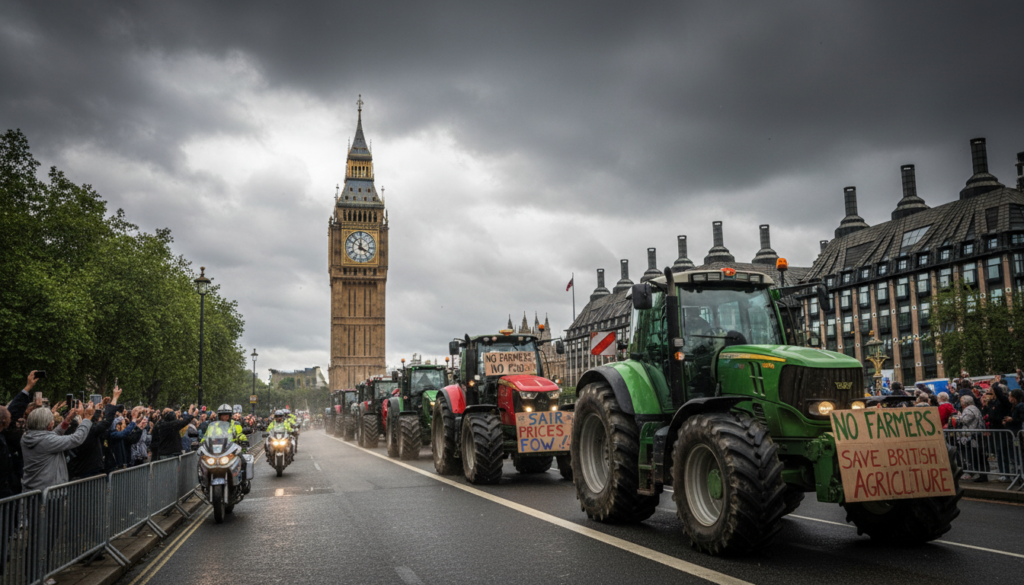
Westminster Retreats: How the £2.5m Rural Revolt Forced a Historic U-Turn on Farm Inheritance Tax
Brainx Perspective
At Brainx, we believe the government’s concession on farm inheritance tax is more than just a fiscal adjustment; it is a profound recognition of the “asset-rich, cash-poor” reality of rural Britain. This development highlights that while fiscal reform is necessary to close loopholes, it cannot come at the expense of national food security or the delicate multi-generational legacy of the family farm.
The News: A Comprehensive Analysis of the Agricultural Tax Shift
In a move that has recalibrated the political landscape for 2026, the UK government has announced a dramatic reversal of its planned inheritance tax (IHT) reforms for the agricultural sector. After a year defined by the roar of tractors in Parliament Square and a sustained campaign by rural advocacy groups, the Treasury has confirmed that the threshold for taxing inherited farmland will be raised from the originally proposed £1 million to a much more substantial £2.5 million per person.
This policy pivot, which was strategically announced just before the Christmas 2025 recess, represents a major victory for the National Farmers’ Union (NFU) and various rural backbenchers. The decision signals a strategic retreat by the Chancellor, Rachel Reeves, who has spent the latter half of 2025 navigating a series of high-profile “U-turns” to stabilize the government’s falling approval ratings in rural constituencies.
Key Facts of the New Fiscal Framework:
- The Threshold Hike: The previous £1 million limit for 100% Agricultural Property Relief (APR) and Business Property Relief (BPR) has been raised to £2.5 million per estate.
- The Spousal Shield: Crucially, this allowance is now fully transferable between spouses and civil partners. This means a farming couple can pass on up to £5 million in qualifying assets without paying a penny in inheritance tax.
- Total Tax-Free Potential: When combined with the standard £325,000 nil-rate band and other allowances, some farming families can now pass on estates worth up to £5.65 million tax-free.
- Reduced Effective Rate: For assets exceeding the £2.5 million threshold, a 50% relief remains in place, resulting in an effective tax rate of 20%—half the standard UK rate of 40%.
- Interest-Free Payments: To address liquidity concerns, any tax due can be paid in equal installments over a 10-year period, interest-free.
- Market Impact: The government expects the number of affected estates in 2026-27 to drop from 375 to approximately 185, ensuring that 85% of farms remain entirely exempt from the new levy.
The Genesis of the Revolt: The £1 Million Error
The controversy began in late 2024 when the government announced its intention to end the 100% tax relief on agricultural assets—a pillar of the British tax system since 1992. The Treasury’s initial rationale was to target “lifestyle” investors and wealthy city financiers who were allegedly buying up farmland as a tax shelter, thereby driving up land prices and freezing out young, aspiring farmers.
However, the choice of a £1 million threshold was immediately criticized as being mathematically divorced from the realities of modern farming. In an industry where a single high-end combine harvester can cost £500,000 and an acre of land averages £10,000, a £1 million valuation is reached with surprisingly modest acreage. For a typical 400-acre family farm, the original policy would have created a tax bill exceeding £500,000—a sum that would require half a generation’s worth of profit to pay off, or, more likely, the forced sale of land.
The “Tractor Army” and the Siege of Westminster
The policy reversal is widely credited to the highly visible “Tractor Army.” Throughout 2025, central London was frequently brought to a standstill by convoys of agricultural machinery. Protests organized by groups like the NFU and grassroots collectives like “No Farmer, No Food” brought thousands of rural workers to the capital.
These protests were not merely about tax; they were an emotive plea regarding the future of the British countryside. Signs reading “No Farmer, No Food, No Future” became iconic images in the national press. The movement successfully framed the tax as a “death warrant” for the family farm, winning significant sympathy from an urban public concerned about food prices and domestic security.
Political Fallout and the Case of Markus Campbell-Savours
The internal friction within the Labour Party over this issue has been palpable. The government’s initial insistence on the lower threshold led to significant disciplinary measures. Markus Campbell-Savours, the MP for Penrith and Solway, was famously suspended from the party after voting against the government on the original resolution.
With the government now adopting a threshold even higher than what some rebels had initially asked for, the status of suspended MPs and the handling of rural dissent are expected to be major talking points in the 2026 parliamentary session. Conservative leader Kemi Badenoch has already labeled the move a “cynical pre-Christmas climbdown,” promising that a future Conservative government would abolish the “family farm tax” entirely.
The “Asset Rich, Cash Poor” Dilemma
The core of the debate remains the unique economic structure of agriculture. Farmers are notoriously “asset rich but cash poor.” A farm valued at £4 million may only generate a net annual profit of £40,000 to £60,000. Under the standard inheritance tax model, the tax liability on such an asset is completely disconnected from the business’s ability to generate the cash required to pay it.
Environment Secretary Emma Reynolds, in defending the new £2.5 million threshold, noted that the government had to “find a balance” between funding public services and protecting the “backbone of rural communities.” By more than doubling the threshold, the Treasury has effectively admitted that its initial data—which suggested only the “top 500” wealthiest farmers would be hit—was significantly flawed.
Economic Costs and Future Uncertainty
The climbdown carries a fiscal cost. The Treasury estimates that raising the threshold will cost approximately £130 million in lost revenue per year. While this is a drop in the ocean of the national budget, it marks the latest in a series of expensive retreats for the Starmer administration, following previous reversals on winter fuel payments and welfare reform.
For the farming community, the news has been met with a mixture of relief and lingering suspicion. NFU President Tom Bradshaw welcomed the “return of common sense” but warned that the fight is not over. Organizations like the Country Land and Business Association (CLA) have pointed out that even at £2.5 million, many productive, medium-sized farms remain in the crosshairs. There are concerns that the remaining tax burden will still stifle long-term investment in technology and nature recovery, as farmers divert capital toward future tax planning rather than productivity.
A New Era of Rural Advocacy
As the UK prepares for the official implementation of these rules in April 2026, the “Great Farm Tax Retreat” will likely be remembered as the moment the rural lobby reasserted its power in a post-Brexit landscape. It serves as a stark reminder to policymakers that while the countryside may represent a minority of the population, its role as the custodian of the nation’s food and land gives it a political weight far beyond its numbers.
Why It Matters
For the common man, this U-turn prevents a potential spike in food prices that would have occurred if farms were forced to downsize or sell land to developers. It ensures the continuity of the local food supply and preserves the traditional British landscape. For the future, it sets a precedent that “asset-heavy” essential industries require specialized tax treatment to remain viable in a modern economy.
Leave a Reply