Israel targets senior Hamas official in deadly Gaza strike

1. Catchy Headline
Fragile Peace on the Brink: Hamas Commander Killed as Gaza Ceasefire Teeters
2. “Brainx Perspective” (Intro)
At Brainx, we believe the recent elimination of Hamas weapons chief Raed Saad tests the very limits of the new ceasefire. This development highlights a critical paradox: can a diplomatic peace plan survive while tactical military eliminations continue? The “Trump Peace Plan” is now facing its first true stress test, proving that signing a deal is far easier than enforcing it on the ground.
3. The News (Body)
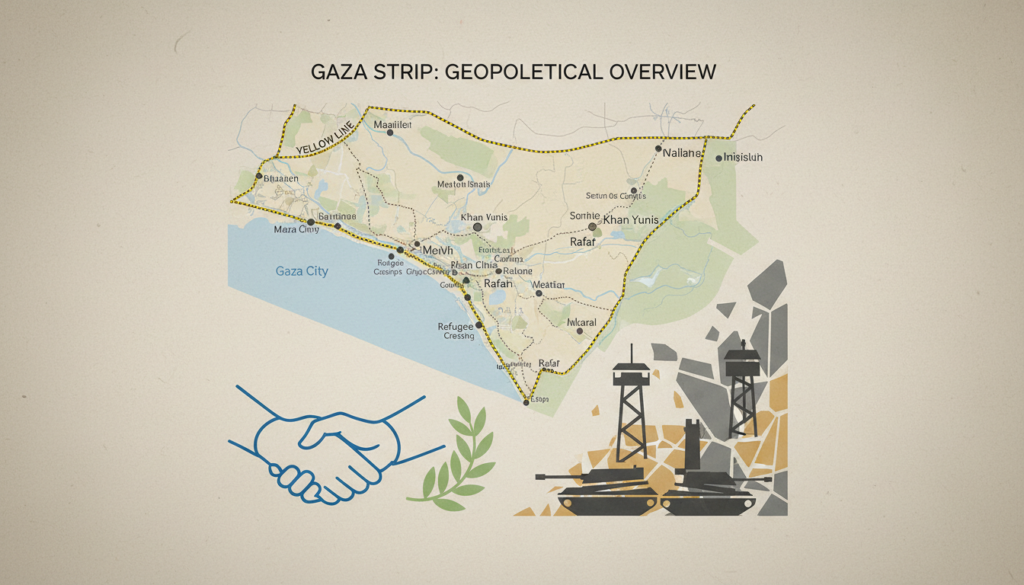
The fragile truce in Gaza is under severe strain following a high-profile Israeli strike and renewed clashes, threatening to unravel the “Comprehensive Plan to End the Gaza Conflict” initiated in late 2025.
Key Developments:
- Targeted Elimination: Israel confirmed the killing of Raed Saad, the head of Hamas’s weapons production, in a drone strike west of Gaza City in December 2025. Hamas has officially acknowledged his death. Israel justified the strike by claiming Saad was actively rebuilding missile capabilities in violation of the ceasefire.
- Ceasefire Violations: Tensions spiked further on January 6, 2026, when a Palestinian man was killed by Israeli fire near Khan Younis. The Health Ministry reports over 400 deaths due to “ceasefire violations” since the agreement took effect in October 2025.
- The Trump Plan Status: The 20-point US-brokered peace plan has successfully completed Phase One, seeing the return of all living Israeli hostages and the release of 1,700 Palestinian detainees. However, the transition to Phase Two—which demands Hamas’s disarmament and Gaza’s demilitarization—is stalling amidst mutual accusations of treachery.
- Humanitarian Toll: The total death toll in Gaza has now surpassed 71,300, with vast areas of the strip still awaiting the promised “Trump economic development plan” for reconstruction.
4. “Why It Matters” (Conclusion)
For the common citizen in Gaza and Israel, this signifies that “peace” remains a diplomatic term rather than a lived reality. If the transition to Phase Two fails, the region risks sliding back into full-scale war, turning the current pause into nothing more than a rearming period for both sides.
Leave a Reply