Last year was Ukraine’s deadliest for civilians since 2022, UN says
Grim Milestone: 2025 Becomes Deadliest Year for Civilians in Ukraine Since Invasion Began
Brainx Perspective
At Brainx, we believe the alarming 31% spike in civilian casualties during 2025 signals a catastrophic deterioration in the rules of engagement. This development highlights a strategic shift where the distinction between frontline combat and civilian safety has all but vanished, driven by the ruthless use of long-range weaponry targeting urban centers far removed from the trenches.
The News
The conflict in Ukraine has entered a darker, more lethal phase for non-combatants, with the United Nations (UN) confirming that 2025 was the deadliest year for civilians since the initial invasion in 2022. As the war crosses the 1,400-day mark—echoing the duration of the “Great Patriotic War” of World War II—the humanitarian cost continues to climb steeply.
The UN Report: A Surge in Violence According to the UN’s Human Rights Monitoring Mission in Ukraine, the trend lines for civilian safety are moving in a tragic direction.
- Rising Death Toll: Conflict-related violence claimed the lives of at least 2,514 civilians in 2025. This stands in stark contrast to 2,088 deaths in 2024 and 1,974 in 2023.
- Escalating Casualties: When combining deaths and injuries, 2025 saw a 31% increase compared to 2024, and a staggering 70% increase compared to 2023.
- The Deadliest Incident: The report highlighted a horrific attack in November 2025 in the western city of Ternopil, which killed at least 38 civilians, including eight children. This incident underscores that no region, regardless of its distance from the eastern front, is safe.
The Strategic Shift: Long-Range Terror Danielle Bell, chief of the UN mission, described the figures as a “marked deterioration in the protection of civilians.” The driving force behind this surge is not just ground combat, but the expanded use of advanced long-range missiles and drones. These weapons have exposed the entire country to heightened risk, turning residential areas into collateral damage zones.
The Current Crisis: Freezing in the Dark The start of 2026 has brought no respite. President Volodymyr Zelensky reported a massive overnight assault involving nearly 300 drones, 18 ballistic missiles, and seven cruise missiles.
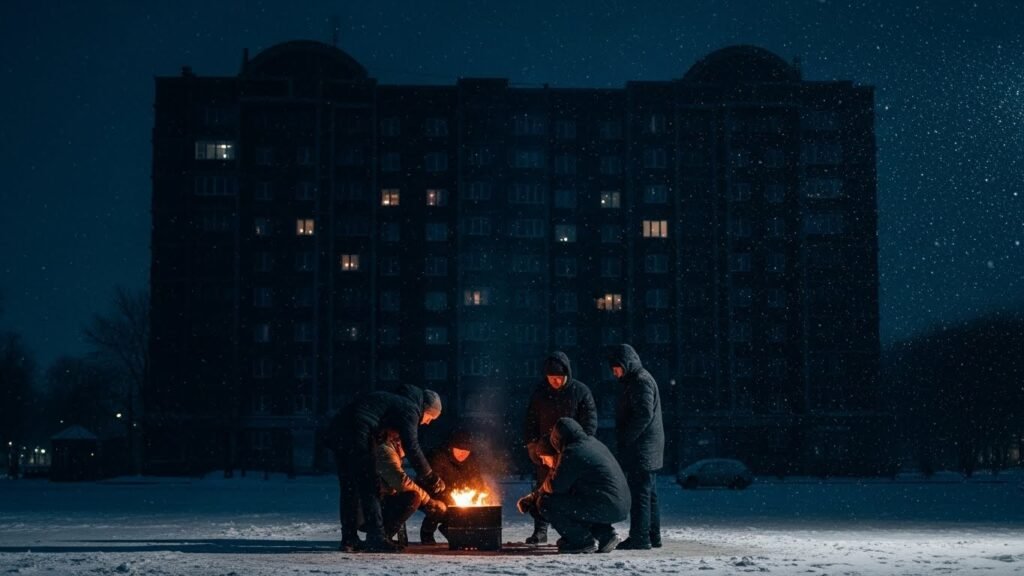
- Kyiv in the Cold: The strikes caused major emergency shutdowns in the capital, Kyiv. Yasno, a major energy provider, confirmed that hundreds of thousands of households were left without power, water, and heating as temperatures plummeted below -15°C.
- Kharkiv Tragedy: A missile strike on a postal terminal in Korotych, Kharkiv, killed four civilians. Zelensky condemned the attack, stating it had “no military purpose whatsoever.”
- Nationwide Damage: In Odesa, strikes damaged a hospital, a kindergarten, and homes. In the Donetsk region, two more civilians were killed.
The Energy War Ukraine’s Foreign Minister has accused Russia of deliberately weaponizing winter. By systematically targeting energy infrastructure during sub-zero conditions, the strategy aims to create a humanitarian catastrophe, depriving millions of life-sustaining heat and water. Emergency crews are currently battling fires and attempting to reconnect the grid in freezing conditions.
A Historic Parallel The latest wave of attacks arrived exactly two days after the war hit its 1,418th day—the precise length of the Soviet Union’s participation in World War II. The EU’s ambassador to Ukraine, Katarina Mathernova, noted the grim irony, pointing out that while the USSR fought back against aggression with Western help then, today it is Putin who “chose, planned, and owns” this war of aggression.
Ukraine Strikes Back In response to the relentless bombardment, Kyiv launched a reciprocal overnight attack targeting a drone manufacturing plant in Russia’s western Rostov region. The Ukrainian army’s general staff confirmed explosions and fires at the facility, signaling their intent to disrupt the supply chain of aerial terror.
4. “Why It Matters” (Conclusion)
This escalation matters because it sets a dangerous precedent for modern conflict, where civilian infrastructure is treated as a primary target rather than collateral damage. For the common man in Ukraine, it means survival is no longer just about avoiding gunfire, but enduring freezing winters without heat. Globally, it signals that without renewed diplomatic or defensive intervention, the normalization of mass civilian casualties will continue unchecked.
Leave a Reply