Decision time for Trump on Iran but what does he ultimately want?
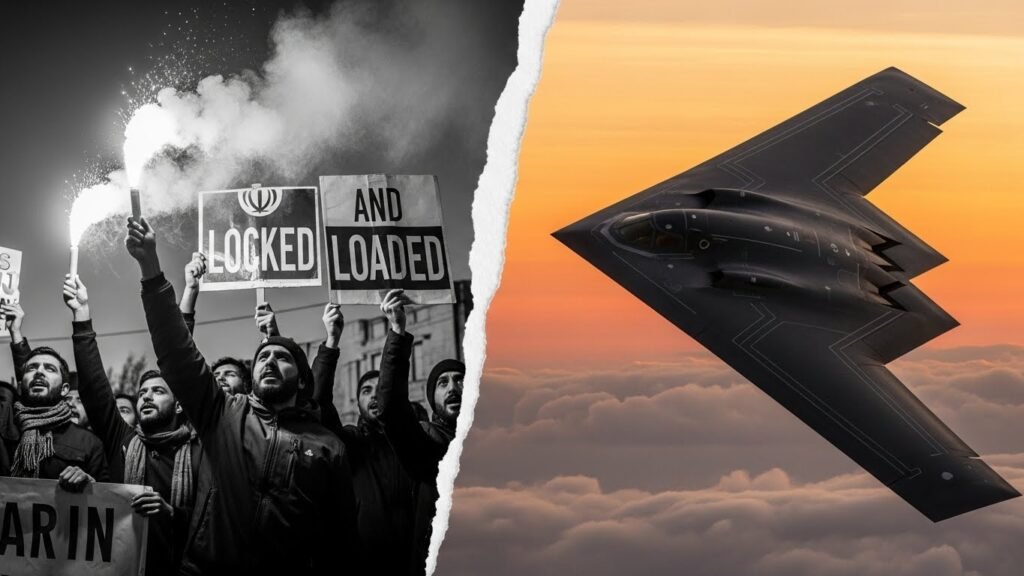
“Help Is On Its Way”: Trump Signals Imminent Intervention in Iran as Crackdown Intensifies
2. Brainx Perspective (Intro)
At Brainx, we believe President Trump’s latest declaration—”Help is on its way”—marks a perilous shift from diplomatic pressure to potential kinetic engagement. This development highlights a defining test for the administration: can the “Venezuela Model” of intervention work against a battle-hardened theocracy, or is the US walking into a geopolitical trap that has haunted presidents since 1979?
3. The News (Body)
The world is holding its breath as the standoff between Washington and Tehran moves from rhetorical sparring to the brink of direct conflict. Following a brutal and increasingly visible crackdown by the Iranian regime against its own citizens, President Donald Trump has signaled that the United States is prepared to intervene.
What began as a warning ten days ago—that the US was “locked and loaded”—has evolved into an explicit promise of support for protestors. On Tuesday morning, the President raised the stakes with a definitive, all-caps declaration on social media: “HELP IS ON ITS WAY.”
The Escalation: From Rhetoric to Reality
The timeline of this crisis has accelerated rapidly over the last 48 hours.
- The Trigger: Widespread protests have erupted across Iran, met with state-sanctioned violence. gruesome accounts and mortuary videos are emerging despite an internet blackout, revealing the extent of the “senseless killing.”
- The Ultimatum: President Trump has reportedly canceled all planned diplomatic meetings with Iranian officials until the violence stops.
- The Call to Action: In a move that observers describe as an attempt to actively destabilize the regime, Trump has urged protestors to “take over Iranian institutions” and document the identities of their abusers, suggesting a belief that the Islamic Republic’s grip on power is shattering.
The “Venezuela Confidence” Factor
A critical element driving the President’s calculus is the administration’s recent, highly publicized success in Venezuela.
- The Maduro Precedent: Trump has publicly described the recent capture of Nicolás Maduro as “one of the most successful operations in US history.”
- The Temptation: Flushed with this victory, the temptation to replicate a “decapitation strike” or a rapid intervention strategy in Iran is reportedly high. However, military analysts warn that equating the crumbling Venezuelan state with the Islamic Republic of Iran is a dangerous miscalculation. Iran possesses a deep state security apparatus, a vast missile arsenal, and a history of resilience against external pressure that Venezuela lacked.
Strategic Options: What Does “Help” Look Like?
Senior officials are convening at the White House to finalize the US response. According to Pentagon insiders and statements from the President aboard Air Force One, “very strong options” are on the table.
1. Kinetic Air Strikes
- Bunker Busters: As demonstrated last summer, the US retains the capability to fly B-2 Stealth Bombers on 30-hour round-trip missions from Missouri to strike deep inside Iran.
- Target List: Potential targets include the headquarters of the Islamic Revolutionary Guard Corps (IRGC), Basij militia command centers, and key nuclear infrastructure.
- Goal: To “panic” the regime and degrade its ability to coordinate the crackdown without putting American boots on the ground.
2. Cyber and Psychological Warfare
- The “Shadow” War: Pentagon officials suggest a response could involve covert methods designed to sever the regime’s communications.
- Disruption: Cyber operations could target the internal networks used by security forces to coordinate attacks on protestors, effectively blinding the regime.
- Psychological Operations: Campaigns intended to sow distrust among the regime’s ranks, encouraging defections within the military and the IRGC.
3. The “No Boots” Rule
- The Carter Shadow: President Trump is acutely aware of the ghosts of 1980. He has frequently referenced Jimmy Carter’s disastrous “Operation Eagle Claw”—the failed hostage rescue that resulted in the deaths of eight American servicemen and arguably cost Carter the presidency.
- Avoiding Occupation: Because of this historical trauma, and the logistical nightmare of invading a mountainous country of 88 million people, a ground invasion similar to the raid in Caracas is “almost certainly ruled out.”
The Internal Debate: Diplomacy vs. Force
Behind the scenes, the White House is divided on the endgame.
- The Diplomatic Track: Vice-President JD Vance is reportedly leading a faction urging caution. “The smartest thing for them to have done is for them to actually have a real negotiation,” Vance noted, emphasizing that the primary goal should be nuclear containment.
- The Regime Change Track: External voices, such as Reza Pahlavi (the exiled son of the last Shah), are urging immediate intervention. Pahlavi told CBS News, “The best way to ensure that there will be less people killed… is to intervene sooner.”
- The Consensus: With the cancellation of meetings and the “Help is on the Way” post, the window for diplomacy appears to have slammed shut. The prevailing view is that engaging with Tehran while blood flows in the streets would project weakness and demoralize the protest movement.
The Risks of Blowback
Military intervention carries the risk of igniting a wider regional war.
- The “Axis of Resistance”: While proxies like Hezbollah and the Assad regime in Syria have been weakened or removed, Iran still commands loyalty among Houthi rebels in Yemen and powerful Shia militias in Iraq.
- Missile Retaliation: Iran possesses one of the largest ballistic missile programs in the Middle East. Any US strike could trigger a barrage against US bases in the Gulf or allied targets.
- Rally ‘Round the Flag: Analysts like Bilal Saab of Chatham House warn that a limited, symbolic strike might backfire. Instead of causing a collapse, it could allow the regime to paint the protestors as American stooges, hardening their support base and justifying even harsher repression.
4. “Why It Matters” (Conclusion)
This standoff matters because the outcome will define the Middle East for the next generation. For the common man, this is not just about foreign politics; a US strike could spike global oil prices and draw Western nations into a protracted conflict. Conversely, inaction could see the extinguishment of a historic pro-democracy movement. The world is waiting to see if Trump’s gamble liberates a nation or ignites a war.
Deep Dive: The Geopolitical Chessboard of 2026
(Extended Analysis for Brainx Ultimate Readers)
The Specter of 1979 and the “Carter Effect” To understand President Trump’s hesitation and his specific choice of words, one must look at the trauma of the 1979 Hostage Crisis. For American presidents, Iran is the “graveyard of ambitions.” Trump’s specific reference to Carter’s electoral defeat following the Desert One disaster indicates that his military calculations are deeply intertwined with his political survival. He knows that a botched intervention is worse than no intervention at all. This explains the reliance on stand-off weaponry (missiles, bombers, cyber) rather than special forces raids, despite the success of such raids in Venezuela. The geography of Iran—massive, mountainous, and heavily fortified—makes a “Caracas-style” snatch-and-grab operation logistically impossible.
The “Venezuela Trap” The article mentions the “capture of Nicolas Maduro” as a success point for Trump. This is a crucial psychological factor. Success breeds confidence, but often leads to hubris. The “Venezuela Model”—likely a mix of intense sanctions, internal subversion, and a precise decapitation strike—is being templated onto Iran. However, Iran is a theological empire with a religious ideology that commands martyrdom; Venezuela was a kleptocracy run by a criminal syndicate. Collapsing a mafia state is different from collapsing a religious revolution. If the Trump administration treats Tehran like Caracas, they may underestimate the ferocity of the counter-attack.
The Nuclear Variable While the headlines focus on the protestors, the undercurrent is nuclear proliferation. JD Vance’s comments regarding “negotiation” reveal that the administration’s primary fear is not human rights abuses, but the Iranian nuclear bomb. The crackdown on protestors provides a convenient pretext for the US to strike nuclear facilities (Natanz, Fordow) under the guise of “humanitarian intervention.” If B-2 bombers are deployed, they will likely target centrifuge halls as much as they target Basij command centers.
The Cyber Dimension The mention of “covert psychological campaigns” is significant. In modern warfare, this means deep-fake technology, interrupting state TV broadcasts (as has happened previously with Hacktivist groups), and potentially severing the intranet that Iran uses to isolate its people. If “Help is on the Way” refers to Starlink terminals and unrestricted internet access rather than bombs, it could be the most effective weapon of all. Information is the one thing the regime fears more than a bunker-buster bomb.
Conclusion: The Point of No Return President Trump has drawn a red line. By explicitly promising “rescue,” he has put American credibility on the line. If the crackdown continues and the US does nothing, the “paper tiger” narrative returns. If the US strikes, the region enters uncharted waters. We are witnessing a high-stakes poker game where the chips are human lives and regional stability.




Leave a Reply