‘Europe is at a total loss’: Russia gloats over Greenland tensions
Russia Backs Trump’s Greenland Gambit: Why Moscow Calls It a “Historic Breakthrough”
2. Brainx Perspective
At Brainx, we believe the Kremlin’s surprising endorsement of President Trump’s Greenland ambitions reveals a deeper strategic play than mere territorial support. This development highlights that for Moscow, the ultimate prize isn’t the Arctic island itself, but the widening fracture within the transatlantic alliance. By encouraging a move that alienates Europe, Russia effectively weakens NATO without firing a shot.
3. The News
President Donald Trump’s renewed interest in acquiring Greenland has sparked a geopolitical firestorm, ostensibly driven by concerns over Russian and Chinese military expansion in the Arctic. However, in a twist that has baffled casual observers, the reaction from Moscow has not been one of outrage, but of enthusiastic support.
The President’s Rationale:
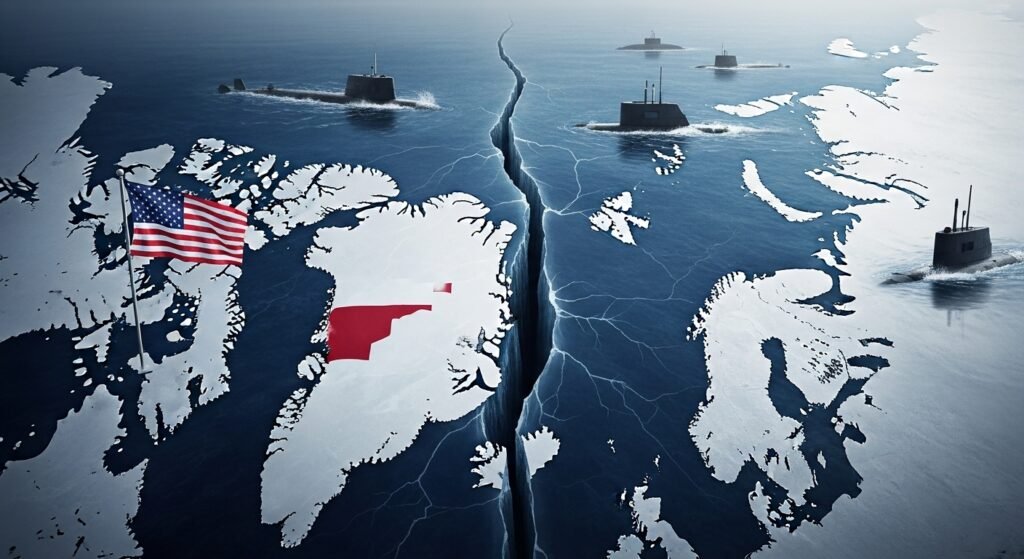
- Arctic Militarization: President Trump has explicitly cited the presence of Russian and Chinese military assets—specifically destroyers and submarines—off the coast of Greenland as a primary motivator.
- Strategic Control: The administration argues that US control of the island is essential to counter these rising threats and secure American dominance in the region.
Moscow’s Unexpected Reaction: Contrary to expectations that Russia would view a US expansion into the Arctic as a threat, state-backed media has launched a full-throated defense of Trump’s plan.
- Praise from State Media: Rossiyskaya Gazeta, the Russian government’s official newspaper, published an article praising Trump’s “historic breakthrough.” The paper harshly criticized European leaders—specifically in Britain, France, and Denmark—for their “stubbornness” and “mock solidarity” in opposing the sale.
- Legacy Building: The Russian publication argued that if Trump annexes Greenland by July 4, 2026 (the 250th anniversary of the Declaration of Independence), he would secure a legacy comparable to Abraham Lincoln’s abolition of slavery or the territorial expansions of the Napoleonic era.
- Territorial Dominance: The article noted that acquiring Greenland would make the US the second-largest country in the world by area, surpassing Canada—a metric of “greatness” that the paper suggests Americans would never forget.
The Political Advice: The Russian commentary went beyond praise, offering unsolicited political strategy to the White House:
- No U-Turns: The paper warned that backing down would look weak and could cost the Republican Party the midterm elections.
- The “Greatest Deal”: Conversely, a rapid annexation is portrayed as a political masterstroke that could secure a Republican victory and cement Trump’s status in history.
The Underlying Motivation: Why is Moscow cheering for an American land grab? The article in Moskovsky Komsomolets, a popular Russian tabloid, offers a clue:
- Schadenfreude: The paper admitted it is “a pleasure to watch” Europe at a “total loss” over Trump’s aggressive tactics.
- Fracturing the Alliance: By pushing for Greenland and threatening tariffs on European dissenters, Trump is placing immense strain on the NATO alliance. Moscow views any internal conflict in the West as a strategic victory for Russia.
- Justification for Ukraine: Pro-Kremlin commentators are also utilizing the US annexation narrative to legitimize Russia’s own war in Ukraine, framing territorial expansion as a standard superpower behavior.
4. “Why It Matters” (Conclusion)
This alignment between Moscow and Washington matters because it signals a potential erosion of the post-WWII international order. For the common man, the normalization of purchasing or annexing sovereign territory could lead to a more unstable world where borders are redrawn by the highest bidder. Furthermore, a fractured NATO emboldens adversaries, making global security less predictable for everyone.
Deep Dive: The Geopolitical Chessboard of the Arctic
(Detailed Analysis for “Brainx Ultimate” Readers)
To truly understand why a Russian government newspaper would compare the purchase of Greenland to the abolition of slavery, we must look past the hyperbole and examine the cold, hard interests driving this narrative. This is not just about ice and snow; it is about the future of global power projection.
1. The “GIUK Gap” and Strategic Depth Greenland is the “G” in the GIUK gap (Greenland-Iceland-UK), a naval choke point that is critical for controlling access to the Atlantic Ocean.
- The Russian View: If the US takes full sovereign control of Greenland, it solidifies NATO’s western flank. Logic dictates Russia should oppose this.
- The Twist: However, Russia calculates that the political cost of this move is worth the military risk. If the US acquires Greenland against the wishes of Denmark and the EU, it destroys trust between Washington and Brussels. A NATO that cannot agree on basic sovereignty is a NATO that cannot effectively oppose Russian expansion in Eastern Europe.
2. The Resource Race: Rare Earths and Oil Greenland is believed to hold some of the world’s largest deposits of rare earth metals—crucial for everything from iPhones to fighter jets. Currently, China dominates this market.
- US Interest: Breaking China’s monopoly is a national security priority.
- Russian Interest: Russia is an energy superpower. As the Arctic ice melts, new shipping routes and oil fields open up. While Russia wants to dominate the Arctic, they prefer a transactional US administration focused on “deals” rather than a unified Western bloc focused on “human rights” and “international law.”
3. The Psychological War: Normalizing Annexation Perhaps the most insidious reason for Russia’s support is the precedent it sets.
- Ukraine Context: Russia has faced heavy sanctions and global condemnation for its annexation of territories in Ukraine.
- The “Whataboutism” Defense: If the United States annexes Greenland—even through purchase—it validates the concept that Great Powers have the right to absorb smaller territories to serve their security interests. Russia can then point to Greenland and say, “The Americans do it too,” thereby diluting the moral argument against their own actions in Ukraine and Georgia.
4. The Domestic Angle: Midterms and Legacy The Russian media’s focus on the US midterm elections is telling. It suggests that Kremlin analysts believe a Trump presidency is more beneficial to Russian interests than a Democrat-led administration. By feeding Trump’s ego with comparisons to Lincoln and Napoleon, state media is actively trying to encourage a policy course (Greenland annexation) that they know will cause maximum chaos in the Western political sphere.
5. The Future of the Arctic Council The Arctic Council has traditionally been a forum for cooperation. If the US moves to annex Greenland, it shifts the Arctic from a zone of scientific cooperation to a zone of naked territorial competition. This militarization of the Arctic favors nations with heavy icebreaker fleets and established northern infrastructure—areas where Russia currently holds a significant lead over the US.
In conclusion, Moscow’s applause is not a gesture of friendship; it is a tactical maneuver. They are cheering for the bull in the china shop because they want to see the china shop—the European security architecture—smashed to pieces

Leave a Reply