Israel pushes back on Trump’s picks for executives on Gaza ‘Board of Peace’
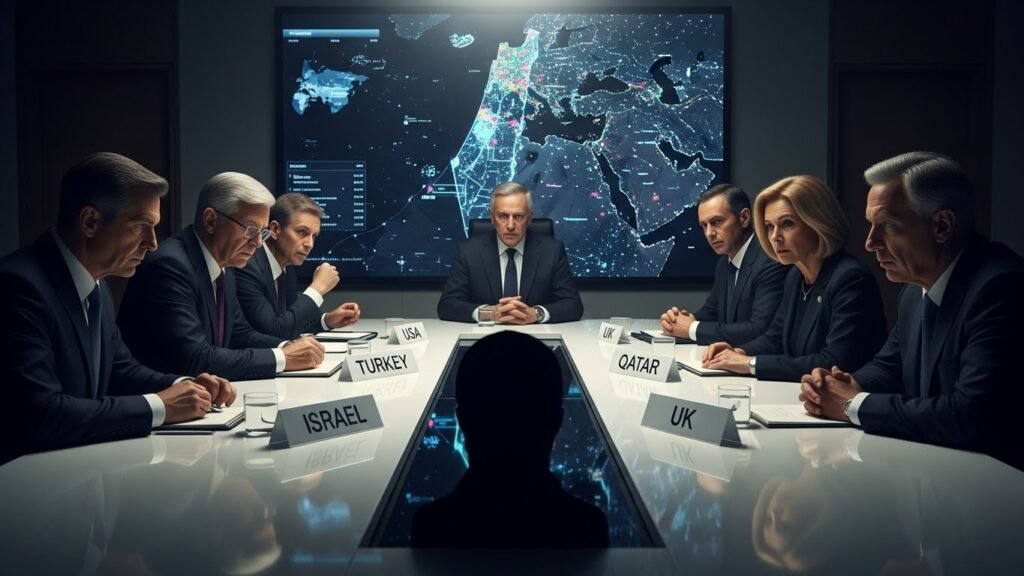
Netanyahu Blindsided: Israel Rejected from Trump’s New ‘Gaza Board of Peace’
Brainx Perspective
At Brainx, we believe this diplomatic rift exposes the fragility of post-war planning. The exclusion of the Israeli government from the initial formation of Trump’s “Board of Peace”—while including rivals like Turkey and Qatar—highlights a seismic shift in US strategy. It suggests a move towards imposed international solutions rather than waiting for bilateral consensus, risking further alienation of key stakeholders.
The News: A Diplomatic Firestorm
A significant diplomatic crisis is brewing between the Israeli government and the Trump administration following the unveiling of a new, controversial international body designed to govern post-war Gaza. Prime Minister Benjamin Netanyahu has urgently convened his top advisers after it became clear that the United States did not coordinate the creation of the “Board of Peace” with Israel, nor did it include official Israeli government representatives in the primary discussions.
The announcement has triggered a wave of confusion and anger in Jerusalem, with Netanyahu’s office issuing a stark statement declaring the move “not coordinated with Israel and runs contrary to its policy.”
The Structure of the “Board of Peace”
Donald Trump’s ambitious 20-point plan to end the Israel-Hamas war relies heavily on a complex new bureaucratic structure aimed at managing Gaza’s reconstruction and temporary governance. The structure is divided into tiers:
- The Overarching Board of Peace: Chaired by President Trump himself, this body will ostensibly include world leaders. Reports suggest invitations have been sent to the leaders of the UK, Hungary, Argentina, Jordan, Turkey, India, and Egypt.
- The Founding Executive Board: A high-level group focused on macro-diplomacy and securing investment.
- The Gaza Executive Board: This body is tasked with the practical, on-the-ground oversight of the National Committee for the Administration of Gaza (NCAG).
Key Figures and Controversial Inclusions
The composition of these boards has raised eyebrows across the region:
- Jared Kushner & Tony Blair: Trump’s son-in-law and the former UK Prime Minister are key figures, signaling a return to the “Abraham Accords” style of diplomacy.
- Regional Rivals: The board includes the Turkish Foreign Minister and a Qatari official—both representing nations that have been fiercely critical of Israel’s military campaign.
- The “Private” Israeli: The only Israeli citizen currently named to the Gaza Executive Board is Yakir Gabay, a Cyprus-based real estate businessman, rather than a government official.
- No Palestinians: Strikingly, there are no Palestinian representatives named to either of the senior executive boards.
The Backlash in Israel
The exclusion of official Israeli oversight has united disparate factions of Israeli politics in opposition:
- The Far-Right: National Security Minister Itamar Ben-Gvir furiously rejected the concept, stating on X (formerly Twitter): “The Gaza Strip does not need any ‘administrative committee’… it needs to be cleansed of Hamas terrorists.”
- The Opposition: Leader Yair Lapid characterized the surprise announcement as a “diplomatic failure for Israel,” criticizing Netanyahu’s government for being out of the loop on such a critical US initiative.
The “Billion Dollar” Question
Beyond the politics, the mechanics of the board are facing scrutiny regarding funding.
- Pay to Play? Bloomberg reported that the Trump team asked countries for a $1 billion contribution to join the panel.
- Clarification: A US official later clarified to CBS News that while contributions are sought, nations could join for a three-year term without an upfront payment.
- Global Hesitation: International reaction has been cautious. While Hungarian PM Viktor Orbán has accepted, others like Canada’s Mark Carney noted that financial details are still being “worked through,” emphasizing that Canada does not have “unimpeded” funds for membership fees.
The Humanitarian Context
While politicians argue over boardroom seats, the situation on the ground in Gaza remains desperate.
- Winter Crisis: The UN warns that the humanitarian crisis is “far from over,” with 80% of buildings destroyed and bitter winter weather exacerbating the suffering of displaced families.
- Aid Dispute: Israel maintains it is facilitating aid and blames the UN for distribution failures, while UN officials describe current relief efforts as merely a “band-aid” on a catastrophic wound.
Why It Matters
This development matters because it signals that the US may be willing to bypass the Israeli government to secure a regional settlement. For the common man in Gaza and Israel, this introduces a period of deep uncertainty: will this “Board of Peace” bring genuine reconstruction backed by global powers, or will it collapse under the weight of political infighting, leaving the ruins of Gaza in a dangerous power vacuum?



Leave a Reply