Middle East Shockwave: Deadly Missile Barrage Hits Israel as Regional Cities Reel From Expanding Conflict
Brainx Perspective
At Brainx, we believe this escalation signals a dangerous turning point where regional tensions risk transforming into a wider international confrontation. The scale, coordination, and geographic spread of these strikes suggest modern conflicts are increasingly interconnected, meaning a single military action can rapidly destabilize multiple nations and disrupt global systems.
The News
A wave of missile and drone attacks across the Middle East has left multiple casualties, widespread infrastructure damage, and major travel disruption, following retaliatory strikes reportedly launched by Iran against regional targets after an earlier military offensive involving Israel and the United States.
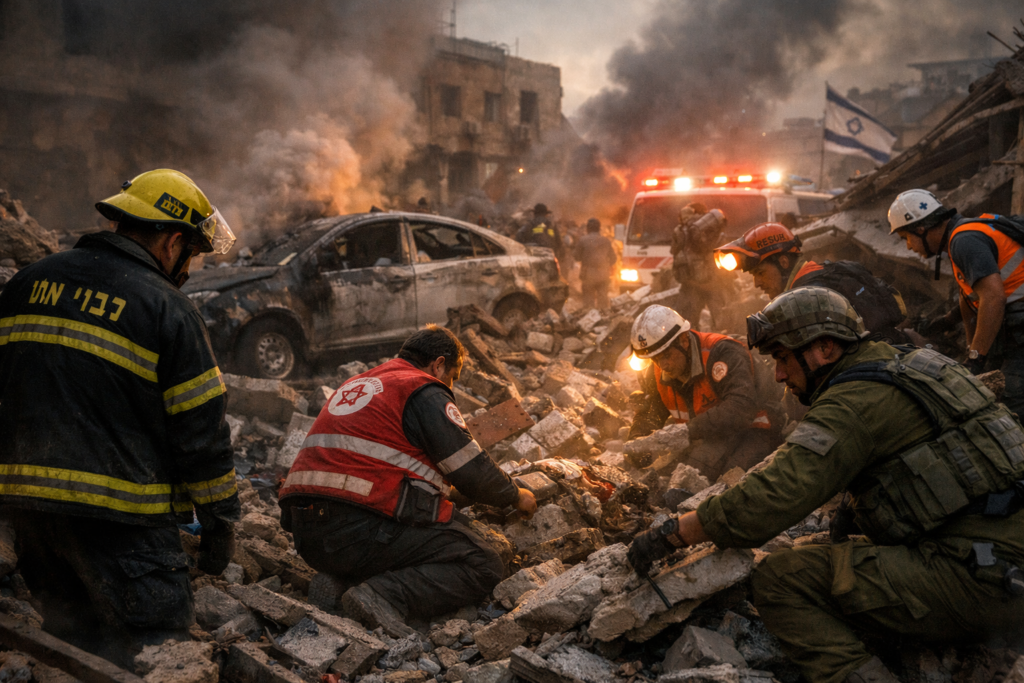
The most severe incident occurred in Beit Shemesh, where emergency authorities confirmed at least nine fatalities and dozens of injuries after a missile struck a residential zone.
Confirmed Casualties and Immediate Impact
Emergency responders and officials across several countries have released preliminary figures indicating the broad scale of the attacks:
- At least nine people killed and 27 injured in Beit Shemesh after a missile reportedly struck a structure used as shelter.
- One fatality confirmed in Abu Dhabi following falling debris from an intercepted aerial threat.
- Another death reported in Kuwait, where dozens more were injured.
- Additional casualties reported across multiple Gulf states due to debris from intercepted projectiles.
- Search and rescue operations in Israel continuing overnight amid fears people remain trapped beneath collapsed structures.
Officials described scenes of destruction including shattered concrete, twisted metal, burned vehicles, and a large crater marking the point of impact.
Nature of the Attack
Military analysts say the offensive appears to have involved a combination of ballistic missiles and armed drones launched toward several regional targets. Israeli defense officials stated that the missile that struck Beit Shemesh was fired directly from Iranian territory.
Authorities also confirmed:
- The building destroyed in Israel had been serving as a temporary shelter during air raid warnings.
- Rescue crews deployed heavy equipment and thermal imaging devices to locate survivors.
- Emergency medical teams treated victims for blast injuries, burns, and trauma.
Paramedics on site described widespread chaos, smoke plumes, and flames rising from residential buildings shortly after the explosion.
Regional Targets Beyond Israel
The attacks extended far beyond Israel’s borders, affecting multiple countries across the Gulf region, many of which host Western military installations.
Key developments:
- Air defense systems in Qatar, Bahrain, and Jordan reportedly intercepted incoming missiles.
- Falling debris caused fires and structural damage in several cities.
- Airports and infrastructure facilities experienced disruptions and partial shutdowns.
- Thousands of commercial flights to and from the region were grounded, marking one of the most significant aviation disruptions since the global pandemic.
Security officials warned that debris from intercepted projectiles can still pose lethal risks, even when defense systems successfully neutralize incoming threats.
Airports and Infrastructure Incidents
Several major aviation and transport hubs were affected by strike-related incidents or falling debris:
- A drone targeting Zayed International Airport was intercepted, but debris reportedly caused casualties on the ground.
- Staff members were injured in an incident at Dubai International Airport, one of the world’s busiest passenger hubs.
- A fire broke out at a port facility linked to Jebel Ali Port after aerial interception fragments fell nearby.
Residents described hearing explosions overhead as defensive systems engaged incoming projectiles midair.
Strikes on Civilian and Commercial Sites
Footage circulating online shows fires and smoke rising from several locations across the Gulf region.
Verified reports indicate:
- An explosion occurred near the luxury Fairmont The Palm resort on Palm Jumeirah.
- A minor blaze ignited on the exterior of the iconic Burj Al Arab after debris fell from an intercepted drone.
- Airport infrastructure in Bahrain sustained damage after reportedly being targeted.
Witnesses in Dubai reported seeing multiple defensive missiles launched from local air defense systems attempting to intercept incoming threats.
Military Claims and Strategic Targets
Iran’s Islamic Revolutionary Guard Corps claimed responsibility for striking the headquarters of the US Navy Fifth Fleet, located in Manama. Large plumes of smoke were reportedly observed near the installation following the attack.
Additional regional developments:
- Two drones reportedly struck a commercial port in Oman, injuring a worker.
- Qatari officials stated that approximately 65 missiles and 12 drones were launched toward their territory in a single day.
- Most projectiles were intercepted, though some caused injuries and property damage.
Travel and Economic Disruption
Airlines and travel authorities have suspended or rerouted flights across large portions of the Middle East airspace.
Experts say the consequences include:
- Delays affecting tens of thousands of travelers worldwide.
- Increased aviation insurance costs.
- Disrupted cargo shipments and trade routes.
- Rising fuel prices tied to regional instability.
Aviation analysts warn that prolonged airspace closures could trigger ripple effects in global supply chains, similar to those experienced during past international crises.
Context Behind the Escalation
The strikes are widely seen as retaliation following a major military offensive against Iran launched earlier in the week. Regional observers say the attacks signal a sharp escalation rather than an isolated incident.
Strategic analysts highlight several key factors:
- Iran’s strikes targeted multiple countries simultaneously, suggesting coordinated planning.
- Several targeted nations had previously pursued diplomatic efforts to ease tensions.
- Some Gulf states had declined requests to host foreign offensive operations from their territory.
Despite these diplomatic efforts, the latest attacks demonstrate that neutrality does not guarantee immunity in a rapidly escalating conflict environment.
Regional Stability Concerns
Security experts warn that the expanding geographic scope of attacks increases the risk of a broader confrontation involving additional nations.
Possible scenarios under discussion among analysts include:
- Intensified retaliatory cycles between opposing alliances.
- Expanded cyber warfare and covert operations.
- Maritime disruptions in key shipping corridors.
- Increased military presence by global powers.
While some residents expressed confidence in national defense systems, others acknowledged the psychological impact of hearing missiles intercepted overhead — a reminder of how quickly regional stability can shift.
Why It Matters
For ordinary people, this escalation underscores how distant conflicts can disrupt travel, fuel prices, trade, and safety worldwide. As regional tensions intensify, civilians far from battle zones may still feel economic and security consequences, proving that modern warfare’s reach extends well beyond borders and directly affects everyday global life.




Leave a Reply