Midnight Airstrikes and Drone Warfare: Inside the Escalating Pakistan-Afghanistan Border Conflict
Brainx Perspective
At Brainx, we believe this dangerous escalation between Pakistan and Afghanistan threatens to ignite a much broader regional crisis. The shift from border skirmishes to aerial bombardments and drone warfare indicates a severe breakdown in diplomacy, risking catastrophic humanitarian consequences for civilians already enduring extreme economic and complex social hardships.
The News: A Region on the Brink of War
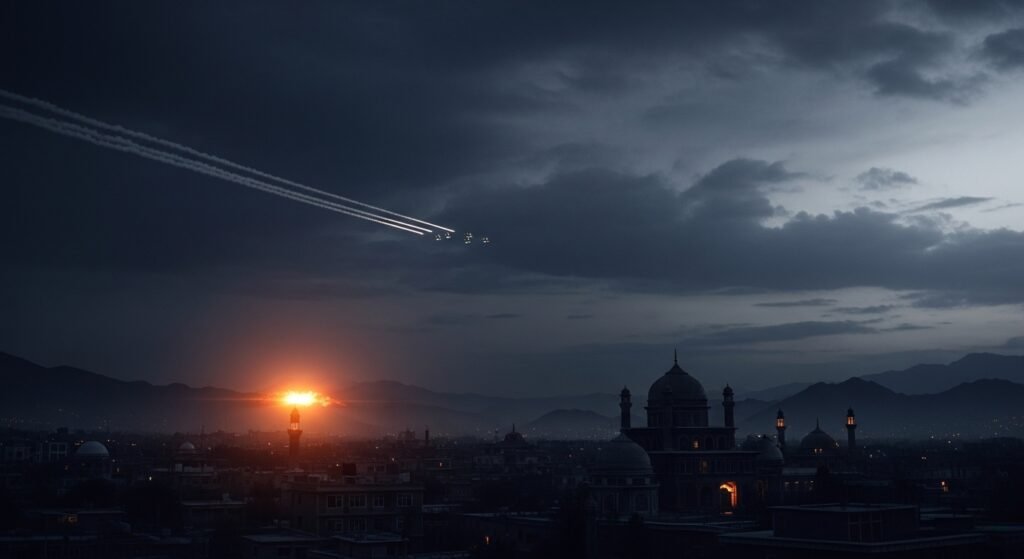
Residents of Kabul’s District 6 were jolted awake on a tense Thursday night by the deafening roar of explosions that violently shook their homes. As panicked citizens rushed into the darkened streets, the ominous sound of military jets screaming overhead confirmed their worst fears: the war had returned to the capital.
What unfolded that night was a dramatic and perilous escalation in the ongoing hostilities between Afghanistan and Pakistan. The Pakistani military launched a series of coordinated airstrikes deep into Afghan territory, hitting not just the capital city of Kabul, but also striking targets in Paktia and Kandahar provinces—the latter being the historical birthplace and absolute stronghold of the Taliban movement.
This is no longer a localized border dispute; it has morphed into a multi-front, cross-border military engagement that threatens to destabilize all of South Asia.
Key Facts of the Escalation
- Deep Aerial Incursions: Pakistani military jets carried out nighttime airstrikes targeting Kabul, Paktia, and Kandahar.
- Taliban Ground Retaliation: The Afghan Taliban government reported launching major ground operations against Pakistani military outposts along the border, claiming to have successfully captured several posts and inflicted casualties on Pakistani soldiers.
- Preceding Strikes: The Thursday attacks follow an earlier round of Pakistani airstrikes on February 21, targeting Nangarhar and Paktika provinces, which the United Nations reports killed at least 13 Afghan civilians.
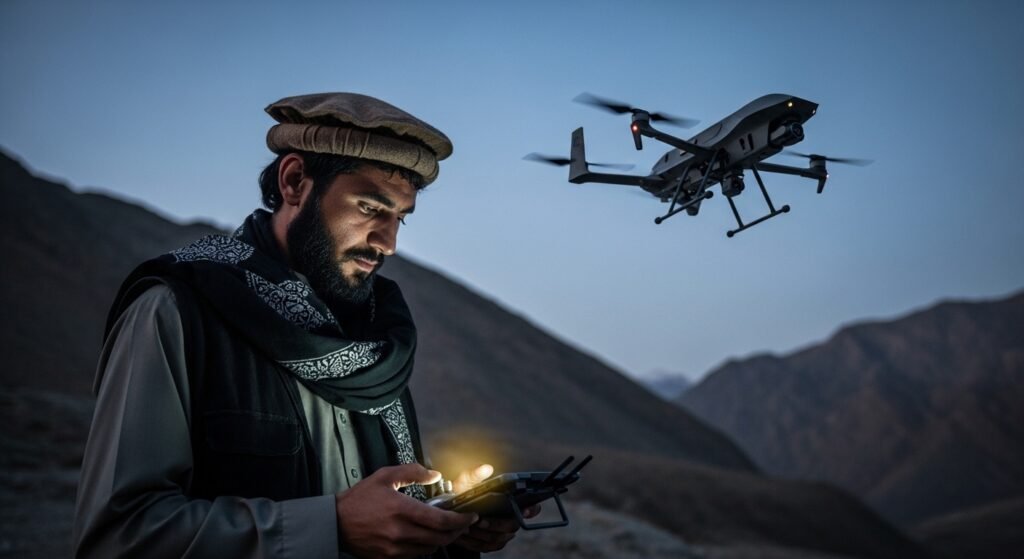
- Introduction of Drone Warfare: In a significant tactical shift, the Taliban government utilized combat drones to strike targets inside Pakistan, altering the traditional military dynamic of the region.
- Economic Blockade: Bilateral trade between the two nations has been completely shut down since October 2025, marking the longest border closure in decades.
The Blame Game: Two Competing Narratives
Hostilities between Islamabad and Kabul have been simmering and occasionally boiling over for months. However, determining the true catalyst for this specific escalation depends entirely on which side of the Durand Line you are standing on.
The Afghan Narrative: Defense of Sovereignty According to the Taliban government in Kabul, their aggressive ground maneuvers were strictly “retaliatory operations.” Afghan officials argue they were forced to respond after Pakistani military elements continuously violated Afghan territorial sovereignty. They point directly to the deadly February 21 airstrikes in the eastern provinces of Nangarhar and Paktika. The United Nations has corroborated parts of this claim, stating there are credible reports that 13 Afghan civilians, including women and children, perished in those bombardments. To the Taliban leadership, Pakistan is the undisputed aggressor, launching unprovoked attacks that demand a fierce, militarized response to protect Afghan citizens.
The Pakistani Narrative: Preemptive Counter-Terrorism Islamabad presents a starkly different justification. The Pakistani government insists that its air force has not targeted Afghan civilians, but rather pinpointed militant sanctuaries embedded deep within Afghanistan. Their primary target is the Tehreek-i-Taliban Pakistan (TTP), a militant offshoot commonly referred to as the Pakistani Taliban, which Islamabad has designated as Fitna al Khawarij.
Pakistan asserts it possesses “conclusive evidence” that the TTP is the mastermind behind a recent surge in devastating terrorist attacks on Pakistani soil. The most heinous of these was a recent suicide bombing at a Shia mosque in Islamabad, which claimed the lives of more than 30 innocent worshippers. Complicating matters further, the Islamic State (IS) publicly claimed responsibility for the mosque massacre. Nevertheless, Pakistani intelligence maintains that their evidence points directly to the TTP, alleging that these cross-border attacks are orchestrated by TTP handlers enjoying safe haven and tacit support from the Taliban government in Afghanistan. Kabul repeatedly denies these accusations, maintaining that Afghan soil will never be used to threaten the security of any neighboring state.
Military Asymmetry vs. The Rise of Drone Warfare
On paper, the military matchup between Pakistan and Afghanistan is highly asymmetrical. Pakistan is a recognized regional military heavyweight, boasting a massive standing army, hundreds of advanced main battle tanks, a sophisticated air force equipped with modern fighter jets, and nuclear capabilities. They possess the undisputed upper hand in conventional warfare and the ability to project power deep into Afghan airspace.
Conversely, the Taliban do not possess a traditional, modern air force. While they inherited billions of dollars worth of military hardware left behind by the former Afghan National Army and withdrawing foreign forces, their conventional capabilities are limited. However, despite heavy international sanctions, intelligence reports suggest the Taliban have successfully procured additional military technology via global black markets.
What the Taliban lack in jet fighters, they make up for in decades of battle-hardened experience. For over twenty years, they sustained a relentless war of attrition against the United States and NATO, mastering the art of unconventional, guerrilla warfare.
Most alarmingly for regional security analysts, this latest stand-off has seen the Taliban deploy combat drones to strike targets within Pakistan. The integration of cheap, highly maneuverable, and easily deployable drone technology has fundamentally altered modern battlefields from Eastern Europe to the Middle East, and it is now reshaping the Afghan-Pakistani theater. This asymmetric capability allows the Taliban to bypass traditional air defenses and inflict precise damage without risking piloted aircraft, partially leveling the playing field against Pakistan’s overwhelming conventional dominance.
The Collapse of Diplomatic Mediation
The current violence is a tragic repetition of recent history. The last severe military flare-up occurred in October 2025, which saw days of intense cross-border artillery duels and preceding Pakistani airstrikes. Recognizing the immense danger of an all-out war, the international community intervened.
Qatar and Turkey stepped in as urgent mediators, hosting high-level diplomatic talks in Doha and Istanbul. These negotiations managed to broker a fragile, temporary ceasefire. However, the diplomatic band-aid quickly peeled away. The core grievances—Pakistan’s demands for the extradition of TTP leaders and Afghanistan’s demands for the cessation of airspace violations—were never resolved. The negotiations ultimately collapsed, failing to bring about a permanent cessation of hostilities. Both capitals subsequently engaged in bitter diplomatic mudslinging, accusing each other of negotiating in bad faith and failing to engage seriously in the peace process.
Economic Strangulation and the Humanitarian Toll
While the military strikes grab international headlines, a quieter, equally deadly crisis is unfolding at the border crossings. Bilateral trade between Afghanistan and Pakistan has been completely suspended since the October 2025 clashes. This represents the longest consecutive border closure in decades.
The economic strangulation is having a devastating impact on an already fragile region. Small businesses in Afghanistan, heavily reliant on cross-border commerce, are facing total collapse. More critically, the blockade has severed the supply chains for essential goods, including food staples and life-saving medicines.
For ordinary Afghan citizens, the situation is a cruel paradox. Reeling under extreme poverty, a severe hunger crisis, and the stringent social restrictions imposed by the Taliban government, the single prevailing positive since the 2021 takeover was the cessation of open warfare. For the first time in four decades, families believed they no longer had to look to the sky in fear of falling bombs.
That brief illusion of relative security has been brutally punctured. The violence of the past six months has resurrected the trauma of war, leaving millions of civilians caught in the crossfire of a geopolitical feud they have no power to stop.
The Information Blackout: A War in the Shadows
Assessing the true scale, scope, and human cost of this escalating conflict is severely hindered by a pervasive information blackout. The Taliban government heavily restricts the movement of foreign journalists, making independent verification of ground realities—especially in the rugged, remote border areas where the fighting is most intense—nearly impossible.
Similarly, the Pakistani military maintains tight control over information flowing from its side of the volatile frontier. With both sides heavily managing the narrative to suit their strategic objectives, the international community is left trying to piece together the truth from fragmented reports, state-sponsored press releases, and unverified social media footage.
As the rhetoric sharpens and the military engagements become more sophisticated with the use of jets and drones, the window for a peaceful, diplomatic off-ramp is rapidly closing, threatening to plunge South Asia into a new era of profound instability.
Why It Matters
This development highlights a devastating setback for regional stability. For the common man, especially in Afghanistan, the return of aerial bombardments shatters the fragile peace established in 2021. If uncontained, this conflict promises prolonged economic strangulation, mass displacement, and a resurgent humanitarian nightmare that will inevitably spill across international borders.



Leave a Reply