Netflix Addresses Stranger Things Secret Episode Theory After Series Finale
1. Catchy Headline
Conformity Gate Debunked: Netflix Confirms the End of Stranger Things, But Reveals Massive Spinoff Roadmap
2. Brainx Perspective (Intro)
At Brainx, we believe the phenomenon of “Conformity Gate” highlights the deep emotional investment audiences have in the Hawkins saga. While the denial of a secret ninth episode is a bitter pill for the fandom, the immediate pivot to an expansive slate of spinoffs signals that Netflix is transforming this flagship IP from a nostalgic TV show into a permanent generational franchise.
3. The News (Body)
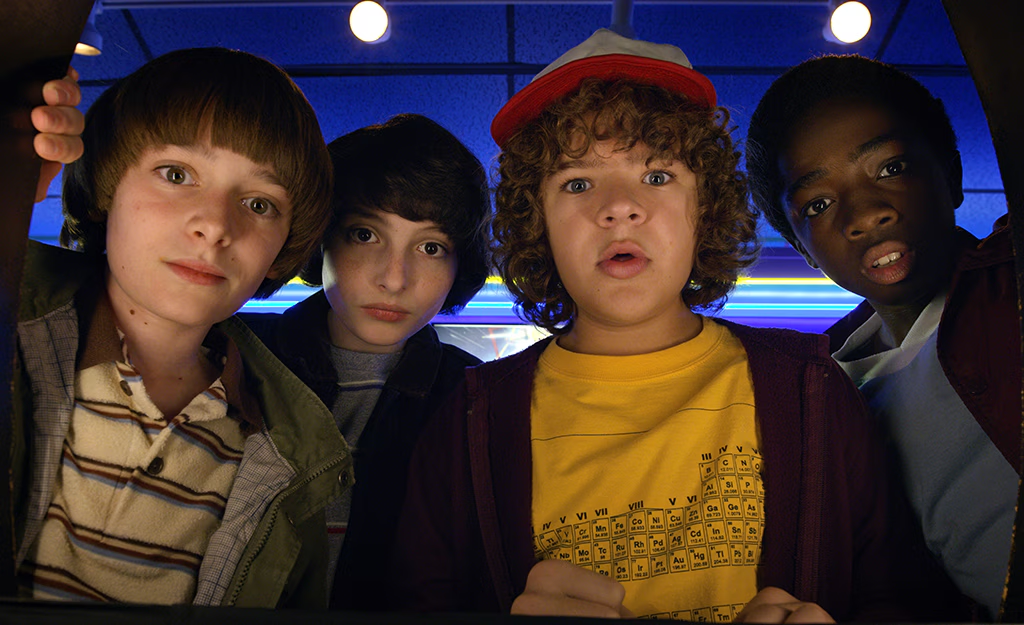
The speculation can finally rest. Netflix has officially addressed and shut down the viral fan theory known as “Conformity Gate,” confirming that the journey of Eleven and her friends has reached its definitive conclusion.
The “Conformity Gate” Theory and The Denial For weeks, the internet was ablaze with a theory suggesting that Stranger Things Season 5 did not actually end with Episode 8. Fans speculated that a secret, surprise ninth episode would drop on January 7, 2026, flipping the narrative—quite literally—upside down one last time.
- The Reality Check: As of the morning of January 7, Netflix updated all official Stranger Things social media bios to read: “ALL EPISODES OF STRANGER THINGS ARE NOW PLAYING.”
- The Verdict: The series finale aired as intended. There is no secret tape, no hidden episode, and no immediate return to the Upside Down for the core cast.
The Future of the Franchise: What Comes Next? While the main show has concluded, the Stranger Things universe is expanding aggressively. Netflix has confirmed three major projects to keep the franchise alive:
- “One Last Adventure” (Documentary): Releasing on January 12, this documentary chronicles the emotional and technical making of the fifth and final season.
- “Stranger Things: Tales of ’85” (Animated Series): Set between Season 2 and Season 3, this animated venture will follow the original crew (voiced by new actors) solving mysteries in the Upside Down.
- The Untitled Live-Action Spinoff: Creators Ross and Matt Duffer are writing a new live-action series.
- The Focus: It will explore the mythology of the Dimension X and the origins of the Mind Flayer, specifically addressing loose threads involving Henry Creel (Vecna).
- The Cast: It will feature a “clean slate” with no common characters from the original series.
The Legacy of Hawkins: A Deep Dive into the Show’s History
As we bid farewell to the show that defined a decade of streaming, it is vital to look back at the chaotic, miraculous, and often surprising history of its production. Below is a comprehensive analysis of the secrets that built Stranger Things.
The Origins and The “Montauk” Project
The show that conquered the world almost didn’t exist. The Duffer Brothers faced rejection from nearly 20 networks before landing at Netflix. Executives couldn’t wrap their heads around a show starring children that wasn’t strictly for children.
- The Original Title: The show was initially sold as Montauk. The Duffer Brothers were obsessed with the coastal setting of Long Island, drawing inspiration from Jaws (Amity Island).
- The Pivot to Indiana: Filming in Long Island during winter proved financially impossible. The production moved to Atlanta, Georgia, necessitating a fictional town. Thus, Hawkins, Indiana, was born.
- The Title Struggle: Matt Duffer admitted that changing the title to Stranger Things was a “hard sell” for their own brains, but it eventually became iconic.
Casting the Party: Finding Lighting in a Bottle
The casting process for Stranger Things is now legendary. The Duffer Brothers used scenes from the classic film Stand By Me to audition the children, looking for genuine chemistry rather than polished acting.
- Millie Bobby Brown (Eleven): At just 12 years old, Brown committed fully to the role, shaving her head. She drew inspiration from Charlize Theron in Mad Max: Fury Road. Interestingly, she learned her flawless American accent by watching Disney Channel’s Hannah Montana.
- Finn Wolfhard (Mike): The character of Mike was originally written as a soft-spoken dreamer. However, Wolfhard brought an “anxious, twitchy energy” to the audition that the Duffers loved so much, they rewrote the character to match his vibe.
- Gaten Matarazzo (Dustin): Similarly, Dustin was originally scripted as a stereotypical nerd. Upon meeting Matarazzo, the writers tailored the entire role to his unique personality and charm.
The Characters We Almost Lost
In the world of TV writing, survival is never guaranteed. Several fan-favorite characters were originally slated for the chopping block in Season 1.
- Steve Harrington: Joe Keery’s character was written as a one-dimensional “jocky douchebag” who was supposed to die. However, Keery was so charismatic and likable during filming that the brothers rewrote his arc, turning him into the babysitter-hero we know today.
- Eleven: The original “endgame” for the limited series plan was for Eleven to sacrifice herself permanently to save the town. Once Netflix realized the potential for a multi-season franchise, they knew the show “wouldn’t work without Eleven,” and her fate was left ambiguous.
Production Secrets and Easter Eggs
The attention to detail in Stranger Things went beyond the script. The costume and set design departments worked tirelessly to maintain the 80s illusion.
- The Growth Spurt Issue: The young cast grew so fast that the costume department had to buy shoes in “five different sizes” for a single season to keep up with their growth spurts every few weeks.
- Practical Effects vs. CGI: The Duffers originally wanted to use 100% practical effects (like The Thing or Alien). They quickly realized that practical effects require months of prep time they didn’t have, forcing a blend of practical and digital VFX.
- The “Lost Sister” Controversy: Season 2, Episode 7 (“The Lost Sister”) remains the most polarizing episode in the show’s history. The Duffers admitted they considered cutting it entirely because it disrupted the pacing, but felt the emotional closure for Eleven was necessary.
The Financial Explosion
As the show’s popularity skyrocketed, so did the costs.
- The Pay Raise: By Season 3, the child actors saw their pay jump from $30,000 per episode to nearly $250,000.
- The Budget: By Season 4, the production cost ballooned to a reported $30 million per episode, making it one of the most expensive television shows ever produced.
Viral Moments Beyond the Screen
The cast’s interaction with the fanbase played a massive role in the show’s success.
- David Harbour (Hopper): The actor became a social media legend in 2018. He fulfilled a promise to take senior high school portraits with a fan after a retweet challenge. Later, he actually officiated a fan’s wedding dressed in full Chief Hopper costume.
- The Eggo Effect: The character of Eleven single-handedly revived the Eggo waffle brand. Kellogg’s reported a 14% increase in consumption in late 2017, directly attributed to the show’s cultural dominance.
4. “Why It Matters” (Conclusion)
The definitive end of the main Stranger Things storyline marks the close of a cultural chapter. For the common viewer, this transition to spinoffs represents the new model of streaming entertainment: nothing truly ends, it just evolves. While we may never see the original party together again, the mythology they uncovered will fuel entertainment for the next decade.


Leave a Reply