Oil Price Crisis Warning: UK Government Says Energy Companies Must Not Exploit Rising Fuel Costs

Brainx Perspective
At Brainx, we believe the latest surge in global oil prices highlights how vulnerable modern economies remain to geopolitical tensions and fossil fuel dependence. Governments now face a difficult balancing act: protecting consumers from rising fuel costs while accelerating the transition toward cleaner and more stable energy sources.
The News
The UK government has issued a strong warning to energy companies amid rising global oil prices, declaring that profiteering from the current crisis will not be tolerated. UK Energy Secretary Ed Miliband confirmed that authorities are closely monitoring fuel markets and stand ready to intervene if companies attempt to exploit the situation.
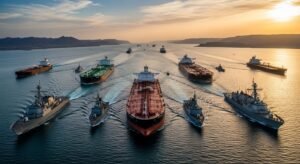
The warning comes as global oil prices surge due to escalating tensions in the Middle East, particularly disruptions linked to energy supply routes such as the Strait of Hormuz, one of the world’s most critical oil transit channels.
With households and businesses already feeling financial pressure from inflation and high living costs, officials are concerned that further increases in petrol and heating oil prices could worsen the situation.
Rising Oil Prices Trigger Government Alert
According to government officials, recent increases in oil prices have already started to impact consumer fuel costs across the United Kingdom.
Key developments include:
- Petrol prices across different UK fuel stations currently vary significantly, ranging between £1.27 and £1.80 per litre.
- Households that rely on heating oil have reported sharp increases in energy expenses.
- Motor fuel prices have begun rising as global oil markets react to geopolitical instability.
- The UK government is monitoring the fuel market to ensure price increases reflect real costs rather than opportunistic profit-taking.
The Competition and Markets Authority has reportedly been placed on “high alert” to identify and address any unfair pricing practices within the energy sector.
Government Warns Against Fuel Price “Rip-Offs”
Energy Secretary Miliband emphasized that authorities will act decisively if energy companies exploit the situation.
He stated that regulators are carefully analyzing market activity and are prepared to intervene if necessary.
Potential actions available to regulators include:
- Launching formal investigations into fuel retailers
- Imposing fines on companies engaged in price gouging
- Forcing transparency in fuel pricing structures
- Requiring corrective actions to protect consumers
Officials have made it clear that unjustified price increases during a global crisis will face strict scrutiny.
Government leaders are scheduled to meet petrol retailers to discuss pricing concerns and ensure fair market practices are maintained.
Impact on Household Energy Bills
One of the biggest concerns for policymakers is the potential effect on household energy costs.
Rising oil prices can influence multiple areas of everyday spending, including:
- Petrol and diesel costs for drivers
- Heating oil used by rural homes
- Transportation expenses for businesses
- Food prices due to higher logistics costs
Reports indicate that some households relying on heating oil have already experienced significant increases in winter fuel costs, with certain cases seeing prices more than double since the latest geopolitical tensions began.
This has intensified pressure on the government to provide support for vulnerable households.
Possible Government Support Measures
While no immediate policy changes have been confirmed, officials have indicated that financial support options remain on the table if the crisis continues.
Possible government responses could include:
- Extending the fuel duty freeze currently in place
- Providing financial support for vulnerable households
- Introducing temporary subsidies for heating oil
- Expanding existing energy bill relief programs
Chancellor Rachel Reeves has previously implemented targeted measures aimed at reducing energy costs for lower-income families.
Officials say further action will depend largely on how long global tensions continue to disrupt energy markets.
Political Debate Over Energy Strategy
The rising oil prices have also sparked renewed political debate over the UK’s long-term energy strategy.
Some industry leaders and political figures argue that the country should increase oil and gas exploration in the North Sea to strengthen domestic energy supply.
However, Energy Secretary Miliband rejected this argument, stating that expanding fossil fuel exploration would not significantly reduce household energy bills.
Instead, he emphasized the importance of accelerating the transition to renewable and domestic energy sources.
According to the government’s position:
- The UK will continue producing oil and gas from existing North Sea fields
- However, new exploration licenses will not be issued
- The long-term goal is to reduce reliance on global fossil fuel markets
Miliband described dependence on oil markets as a “fossil fuel rollercoaster”, where global events can quickly cause price shocks.
Push for Clean and Domestic Energy
The government argues that investing in clean energy infrastructure will provide long-term stability for both consumers and the economy.
Major initiatives currently under development include:
- Expansion of renewable energy projects such as wind and solar
- Accelerated construction of nuclear power plants
- Investment in domestic energy generation
- Reduction of reliance on imported fossil fuels
As part of this strategy, a new fast-track approval process for nuclear power projects is being launched to speed up development that has historically been delayed by bureaucracy and high costs.
Officials believe nuclear power can provide reliable energy while reducing carbon emissions.
Opposition Criticism Over Cost of Living
Despite government assurances, opposition politicians have criticized the administration for not acting quickly enough to protect consumers from rising fuel costs.
Shadow Transport Secretary Richard Holden accused the government of failing to take decisive action to ease the financial pressure on households.
Critics argue that policymakers could immediately reduce fuel costs by:
- Cancelling the planned fuel duty increase scheduled for September
- Lowering taxes applied to energy
- Introducing broader cost-of-living relief measures
Opposition leaders warn that increasing fuel duty by 5 pence per litre could further burden commuters, small businesses, and families already struggling with rising living expenses.
Fuel Duty Policy Under Review
Fuel duty — a tax added to petrol and diesel prices — is currently frozen but is scheduled to rise later this year.
The government has confirmed that the policy is under review, suggesting that the planned increase could be reconsidered depending on economic conditions and global oil prices.
Fuel duty decisions are politically sensitive because they affect:
- Daily commuting costs
- Transportation expenses for businesses
- Inflation levels across the economy
- Public satisfaction with government economic policy
Any decision to extend the freeze could provide temporary relief for motorists.
Global Energy Markets Under Pressure
The current oil price surge reflects wider instability in global energy markets.
The Strait of Hormuz, through which roughly one-fifth of the world’s oil supply passes, has become a focal point for geopolitical tensions.
Any disruption in this narrow shipping route can significantly affect oil prices worldwide.
Energy analysts warn that:
- Prolonged conflict in the Middle East could push oil prices even higher
- Supply disruptions could impact global fuel markets
- Energy security will remain a key issue for governments worldwide
These concerns have renewed discussions about energy independence and diversification.
Why It Matters
Rising oil prices affect more than fuel pumps; they influence food costs, transportation, business operations, and household budgets worldwide. Governments now face mounting pressure to protect consumers while building resilient energy systems. How policymakers respond today may shape energy affordability, climate strategy, and economic stability for years to come.



Leave a Reply