Oil Prices Fall and Global Markets Recover After Positive US-Iran Talks
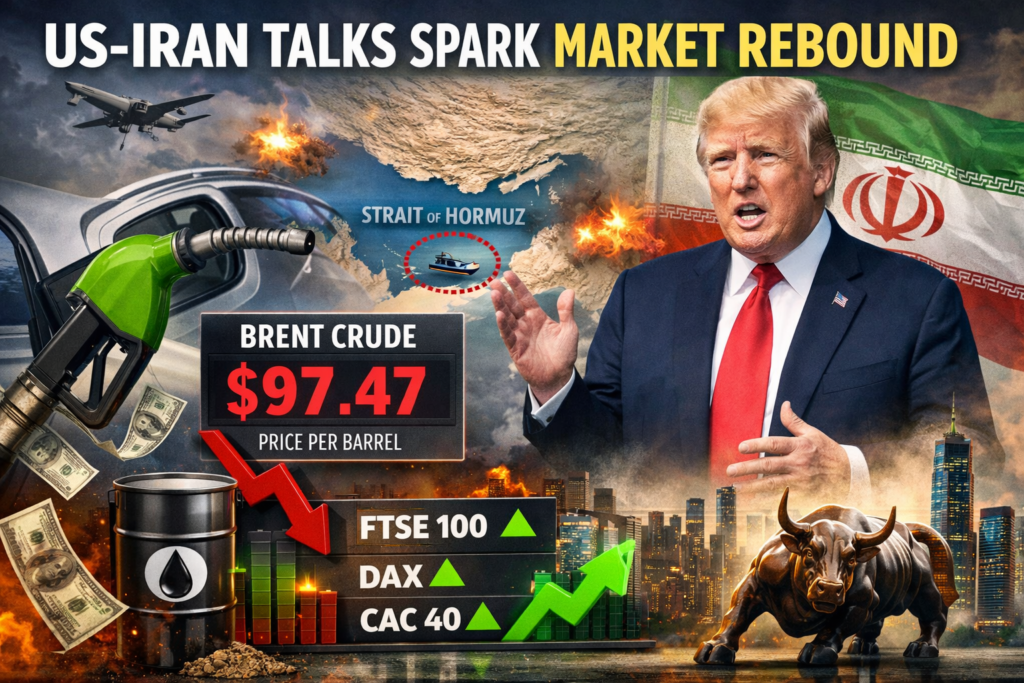
Oil prices dropped sharply and global stock markets showed signs of recovery after Donald Trump announced that the United States and Iran had engaged in “very good and productive” talks. These discussions raised hopes that tensions in the Middle East could ease, reducing fears of a long and damaging conflict.
This news came at a critical moment when global markets were under pressure due to rising geopolitical risks. Investors had been worried that the situation between the US, Iran, and its allies could escalate further, causing serious disruptions in global energy supply.
Sudden Drop in Oil Prices
Following Trump’s statement, the price of Brent crude oil experienced a sharp decline. Initially, prices dropped by around 13%, which is considered a significant move in the oil market. The price fell from highs above $110 per barrel to nearly $97 before slightly recovering.
Before the conflict began in late February, oil prices were relatively stable at around $72 per barrel. However, as tensions increased and supply concerns grew, prices surged rapidly. This sudden drop after the announcement shows how sensitive oil markets are to political developments.
The decline in oil prices brought some relief to global economies, as high oil prices usually lead to increased costs for transportation, manufacturing, and daily living.
Stock Markets Show Signs of Recovery
At the same time, stock markets reacted positively to the news. The FTSE 100, which had earlier fallen by more than 2%, started to recover and even moved into positive territory for a short period.
Other European markets also showed gains:
- DAX rose by about 1.5%
- CAC 40 increased by nearly 1%
These gains indicate that investors felt more confident after hearing about the possibility of reduced conflict. When geopolitical risks decrease, markets often respond positively because businesses can operate with more certainty.
However, not all markets were able to react immediately. Asian markets, including:
- Nikkei 225
- KOSPI
had already closed before the announcement and recorded significant losses for the day. These countries are particularly sensitive to oil supply disruptions because they rely heavily on energy imports.
Importance of the Strait of Hormuz
One of the key reasons behind the market volatility is the situation around the Strait of Hormuz. This narrow waterway is one of the most important oil transit routes in the world.
Approximately 20% of the world’s oil and liquefied natural gas pass through this route. Any disruption here can quickly impact global energy supply and prices.
Since the conflict began, Iran has effectively blocked this route, creating serious concerns for global trade. The blockage has not only pushed oil prices higher but also caused uncertainty in energy markets.
If the Strait of Hormuz remains closed for a long time, it could lead to supply shortages, higher fuel prices, and increased inflation worldwide.
Temporary Pause in Military Action
In his statement, Trump also mentioned that the United States would delay any potential military strikes against Iranian energy infrastructure for five days. This decision was seen as a positive step toward de-escalation.
Previously, Trump had warned of strong military action if the Strait of Hormuz was not reopened. These warnings had increased fears of a larger conflict involving multiple countries in the region.
The temporary pause in military action gives both sides time to continue negotiations and possibly reach an agreement. Markets often respond positively to such developments because they reduce immediate risks.
Warning of a Global Energy Crisis
Despite the positive reaction in markets, experts remain cautious. The head of the International Energy Agency, Fatih Birol, warned that the current situation could lead to one of the most serious energy crises in decades.
He compared the current situation to:
- The oil crises of the 1970s
- The impact of the Russia Ukraine war 2022
According to Birol, the world is facing a combination of multiple energy challenges at once. This includes high oil prices, gas supply disruptions, and increasing demand.
Such a situation can have wide-ranging effects on the global economy, including slower economic growth, higher inflation, and increased pressure on governments.
Impact on Countries and Consumers
The rise in oil and gas prices has already started affecting countries around the world. Governments are concerned about the impact on:
- Fuel prices
- Electricity costs
- Overall cost of living
In countries like the UK, leaders are taking steps to manage the situation. Keir Starmer has planned emergency meetings to discuss energy security and economic stability.
Higher energy prices can directly impact households, especially those with limited income. Increased fuel costs can also lead to higher prices for goods and services, as transportation becomes more expensive.
Rising Government Borrowing Costs
Another important effect of the crisis is the increase in government borrowing costs. Investors demand higher returns when there is uncertainty, which leads to higher interest rates.
Recently, borrowing costs in the UK reached their highest levels since the 2008 financial crisis. However, after Trump’s announcement, these rates showed some improvement.
Lower borrowing costs can help governments manage their finances more effectively, especially during times of economic uncertainty.
Why Markets React So Quickly
Financial markets are highly sensitive to news and expectations. Even a single statement from a major political leader can cause large movements in prices.
In this case, Trump’s comments created hope that the situation might improve. As a result:
- Oil prices dropped because supply fears reduced
- Stock markets rose because investor confidence improved
However, it is important to understand that these reactions can be temporary. If the situation changes or negotiations fail, markets could become volatile again.
What Happens Next?
The next few days will be very important. The five-day pause in military action provides an opportunity for further talks between the US and Iran.
If both sides reach an agreement:
- Oil prices may stabilize or decrease further
- Stock markets could continue to rise
- Global economic pressure may ease
However, if tensions rise again:
- Oil prices could spike sharply
- Markets may fall
- The risk of a global energy crisis could increase
Final Thoughts
In summary, the recent developments have provided some relief to global markets. The announcement of positive talks between the US and Iran helped reduce immediate fears, leading to a drop in oil prices and a recovery in stock markets.
However, the situation remains uncertain. The conflict has already shown how quickly global energy supply can be disrupted and how sensitive markets are to geopolitical events.
The world is closely watching the outcome of these discussions. A peaceful resolution could bring stability, while further escalation could create serious economic challenges.
For now, investors, governments, and consumers are all hoping that diplomacy will succeed and prevent a larger crisis.




Leave a Reply