Rising Tensions: Afghanistan–Pakistan Airstrikes Mark Dangerous New Phase in Border Conflict
Brainx Perspective
At Brainx, we believe escalating cross-border strikes between Afghanistan and Pakistan signal a dangerous regional flashpoint that could reshape South Asian security dynamics, disrupt trade corridors, and deepen humanitarian distress. Understanding the roots, claims, and strategic calculations behind this conflict is essential to grasp its global geopolitical implications worldwide today.
The News
Tensions between Afghanistan and Pakistan have sharply intensified after a night of explosions, aerial bombardment, and military claims from both sides. The latest confrontation reflects months of mounting hostility, retaliatory strikes, and mutual accusations, raising fears of a prolonged regional conflict.
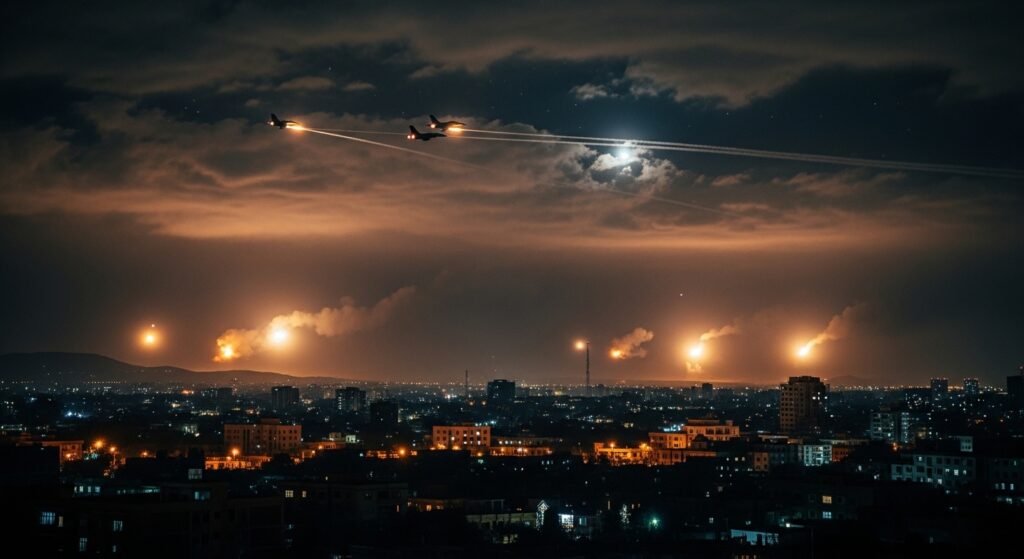
Residents of Kabul reported being jolted awake by powerful blasts and the sound of jets overhead, as Pakistani airstrikes reportedly struck multiple locations, including the capital and southern strongholds such as Kandahar. Additional strikes were reported in Paktia, marking one of the most geographically widespread operations in recent months.
Key Verified Developments
- Afghanistan’s ruling Taliban administration claimed it launched a major ground offensive against Pakistani border posts prior to the strikes.
- Officials asserted they captured several positions and killed or detained Pakistani soldiers.
- The Taliban described their operation as retaliation for alleged Pakistani incursions into Afghan territory that reportedly killed civilians.
- Pakistan denied targeting civilians and stated its airstrikes were aimed at militant infrastructure linked to Tehreek-i-Taliban Pakistan (TTP).
- Islamabad claims it has “conclusive evidence” the group orchestrated recent attacks inside Pakistan, including a deadly mosque bombing in Islamabad.
- The United Nations reported credible information that 13 Afghan civilians were killed in Pakistani strikes conducted days earlier in Nangarhar and Paktika.
- Pakistan maintains militants operate from Afghan territory with alleged support networks inside Afghanistan.
- Afghan authorities deny this, insisting their soil is not used to threaten other countries and labeling Pakistan’s strikes “unprovoked.”
Escalation Pattern: A Conflict Months in the Making
Although the latest strikes shocked residents, analysts note the confrontation did not emerge overnight. Border tensions have been steadily rising since late 2025, when both sides exchanged cross-border attacks and air operations. That crisis prompted mediation efforts led by Doha and Istanbul, resulting in a fragile ceasefire that ultimately failed.
Diplomatic sources say negotiations stalled because each government accused the other of insincerity and covert support for hostile groups. Since then, incidents along the frontier have become more frequent and more lethal.
Strategists describe the situation as a “cycle of retaliation”:
- Attack inside Pakistan attributed to militants.
- Pakistani airstrikes inside Afghanistan.
- Afghan retaliation along the border.
- Escalation rhetoric from both sides.
This pattern has hardened political positions and reduced diplomatic flexibility.
Military Balance: Conventional Power vs Guerrilla Experience
From a purely conventional standpoint, Pakistan holds overwhelming military superiority. Its armed forces possess advanced aircraft, armored divisions, and surveillance capabilities that far exceed those available to Afghanistan’s current authorities.
However, analysts warn that raw hardware does not automatically translate into strategic dominance.
Pakistan’s Advantages
- Modern fighter jets and precision weapons.
- Large standing army and advanced defense systems.
- Established command-and-control infrastructure.
- International military partnerships and intelligence networks.
Afghanistan’s Strengths
- Extensive experience in asymmetric warfare.
- Terrain advantage in mountainous border regions.
- Stockpiles of equipment left behind after foreign troop withdrawals.
- Ability to wage prolonged guerrilla campaigns.
During the latest confrontation, Afghan forces reportedly deployed drones against Pakistani targets. Low-cost drones have transformed modern warfare globally by enabling smaller actors to strike strategic positions without large air forces. Military experts say this technological shift could redefine how this conflict evolves.
Information Fog and Verification Challenges
Determining what actually happened on the ground remains difficult. Independent verification is limited because:
- Journalists face restricted access to border zones.
- Communications infrastructure is weak or controlled.
- Both governments tightly manage official narratives.
- Remote terrain makes monitoring difficult.
Without neutral observers, analysts must rely on partial evidence, satellite imagery, and official statements—each carrying potential bias.
Economic Fallout and Humanitarian Strain
Beyond military consequences, the conflict is already disrupting civilian life.
Trade between the two countries has been suspended since October 2025—the longest closure in decades. Economists warn that prolonged shutdowns could trigger:
- Supply shortages of essential goods.
- Price spikes in food and medicine.
- Income losses for cross-border traders.
- Rising unemployment in frontier communities.
Afghanistan’s fragile economy is especially vulnerable. Many small businesses depend on Pakistani markets for supplies, while humanitarian agencies rely on cross-border routes to deliver aid.
For ordinary Afghan families already facing hunger and poverty, the renewed airstrikes have shattered a fragile sense of stability that followed decades of war. Residents who once felt relatively safe from aerial bombardment now fear a return to constant insecurity.
Strategic Stakes for South Asia
Regional analysts warn that the confrontation is not merely a bilateral dispute—it has broader geopolitical implications.
- South Asia is home to multiple nuclear-armed states; instability increases global concern.
- Militant group activity could spill across borders.
- Refugee flows may rise if violence intensifies.
- International trade routes through the region could face disruption.
Security experts also note that prolonged hostility may create space for extremist organizations to regroup, recruit, and operate in unstable zones.
Why It Matters
This conflict’s escalation threatens regional stability, economic security, and civilian safety across South Asia. For ordinary people, it risks higher prices, disrupted trade, and growing insecurity. If tensions continue unchecked, the standoff could reshape alliances, intensify militancy, and draw global powers into another prolonged geopolitical crisis with worldwide consequences.




Leave a Reply