Trump briefed on military and covert options for Iran, sources say
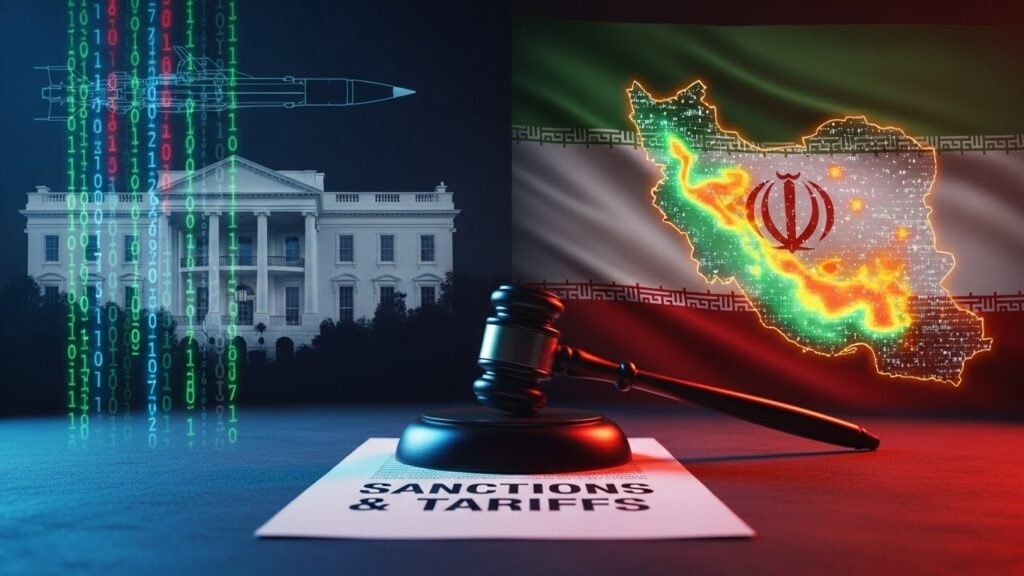
US vs Iran: Trump Briefed on “Covert” War Options as Death Toll Mounts to 600
2. Brainx Perspective (Intro)
At Brainx, we believe the current escalation between Washington and Tehran represents a pivotal shift from diplomatic pressure to hybrid warfare. This development highlights that the US administration is no longer relying solely on sanctions; the inclusion of cyber and psychological warfare options signals a readiness to dismantle the Iranian regime’s control from the inside out, rather than just containing it.
3. The News (Body)
Tensions between the United States and Iran have reached a boiling point, with the Pentagon presenting President Donald Trump with a suite of aggressive military and covert options. As anti-government protests sweep across Iran, claiming hundreds of lives, the White House is weighing a response that could fundamentally alter the geopolitical landscape of the Middle East.
Here is a comprehensive breakdown of the developing situation:
The Pentagon’s Menu of Options
Two Department of Defense officials have confirmed to CBS News that President Trump has been briefed on a “wide range” of tools to address the crisis in Iran. The administration is moving beyond standard diplomatic warnings to prepare for potential kinetic and non-kinetic intervention.
- Kinetic Strikes: Long-range missile strikes remain a primary option on the table. This would likely target key military infrastructure or command centers, similar to previous retaliatory measures.
- Cyber Operations: Planners have presented advanced cyber warfare options. These are designed to disrupt Iranian command and control structures, potentially severing communications between the regime and its security forces crackdown on protesters.
- Psychological Campaigns: The inclusion of “psychological campaign responses” suggests an information warfare strategy aimed at undermining the legitimacy of Supreme Leader Ayatollah Ali Khamenei and emboldening the opposition.
The Economic Siege: A 25% Tariff Threat
In a move that expands the conflict to the global stage, President Trump has announced a blanket 25% tariff on goods from any country that maintains “commercial ties” with Iran.
- The Target: This order is effectively a secondary sanction aimed at Iran’s major trading partners, specifically China, Iraq, the UAE, Turkey, and India.
- The Goal: By threatening the economies of these nations, the US aims to completely isolate Tehran financially.
- The Impact: Iran is already suffering from hyperinflation, with food prices up by 70%. Since food constitutes one-third of Iran’s imports, these tariffs could lead to catastrophic shortages, further fueling the unrest on the streets.
- Presidential Decree: Trump stated on his Truth Social platform, “This order is final and conclusive,” signaling no room for negotiation with trading partners.
The Human Crisis: Protests and Crackdowns
While politicians strategize, the people of Iran are facing a brutal reality.
- Death Toll: Rights groups, specifically the Norway-based Iran Human Rights (IHRNGO), report that at least 648 protesters have been killed in just three weeks, including nine minors. Unverified reports suggest the toll could be as high as 6,000.
- State of Emergency: An internet blackout has been in place since Thursday, making verification difficult. However, footage obtained by the BBC shows ongoing protests in multiple cities, contradicting state media claims of a “calm night.”
- Regime Rhetoric: Supreme Leader Khamenei has accused the US of using “treacherous mercenaries” to incite unrest and praised state-organized counter-rallies.
Diplomacy in the Shadows
Despite the saber-rattling, backchannel communications remain active.
- Private vs. Public: White House Press Secretary Karoline Leavitt revealed that Iranian officials have privately contacted Trump’s special envoy, Steve Witkoff. She noted a stark contrast between Tehran’s public belligerence and its private messages.
- The “Trick”: Reza Pahlavi, the son of the exiled Shah of Iran, warned in a CBS interview that the regime is “trying to trick the world” into negotiations to buy time. He urged Trump to intervene “sooner” to save lives.
Deep Dive: Analysis of the US Strategic Calculation
To understand the gravity of this news, we must look beyond the headlines. The briefing on “covert tools” suggests that the US is wary of a full-scale ground war but is prepared to wage a “Shadow War.”
1. The Cyber Warfare Doctrine The mention of cyber operations is the most significant detail. Unlike missile strikes, which are acts of war that rally populations around the flag, cyber-attacks can be precise and debilitating without causing immediate mass casualties. The US could be looking to replicate the success of operations like Stuxnet, but on a broader scale—targeting the internal communication networks of the Islamic Revolutionary Guard Corps (IRGC). If the regime cannot communicate with its commanders in the provinces, the crackdown could fracture.
2. The Tariff Weaponization Trump’s 25% tariff threat is a “nuclear option” in economic trade. China is Iran’s largest oil customer. By threatening tariffs on Chinese goods, the US is forcing Beijing to choose between cheap Iranian oil and access to the massive American consumer market. This puts immense diplomatic pressure on China to stop propping up the Iranian economy.
3. The Legitimacy Crisis The report notes that the collapse of the currency has expanded into a “crisis of legitimacy” for Ayatollah Khamenei. This is the regime’s Achilles’ heel. Previous protests were often economic; these protests appear existential. The US “psychological campaign” likely aims to exploit this fracture, broadcasting evidence of corruption or mismanagement to further alienate the population from the leadership.
4. The “Red Line” President Trump stated he is “unafraid to use military options.” The trigger point appears to be the death toll. With over 600 confirmed dead, the administration faces pressure from exiles like Reza Pahlavi and human rights groups to act before the situation devolves into a massacre similar to Syria. However, military intervention carries the risk of uniting the Iranian populace against an “external aggressor,” a risk the Pentagon planners are undoubtedly weighing carefully.
4. “Why It Matters” (Conclusion)
This escalation matters because it moves the standoff with Iran into unpredictable territory. For the common man, the immediate impact will be felt in global oil prices and supply chain disruptions due to the new tariffs. Long-term, if the US initiates cyber or kinetic strikes, the region faces the risk of a conflict that could draw in major powers like China and Russia, while the Iranian people remain caught in the tragic crossfire of revolution and geopolitics.

Leave a Reply