Two killed in suspected Palestinian ramming and knife attack in Israel
Blood on Route 71: Decoding the Northern Israel Killing Spree and its Explosive Aftermath
Brainx Perspective
At Brainx, we believe this latest eruption of violence in northern Israel is more than a isolated tragedy; it is a grim diagnostic of a region trapped in a self-perpetuating cycle of escalation. This development highlights the diminishing efficacy of traditional deterrence as “lone wolf” tactics bypass conventional security, forcing both societies to confront the human cost of a political stalemate that shows no signs of resolution in 2026.
The News: A Multi-Stage Terror and the Siege of Qabatiya
On Friday, December 26, 2025, a calculated and brutal killing spree paralyzed northern Israel, leaving a trail of grief across three locations. The attack, which utilized both a vehicle and a blade, has reignited a fierce debate over illegal labor, West Bank border security, and the military’s policy of collective punishment.
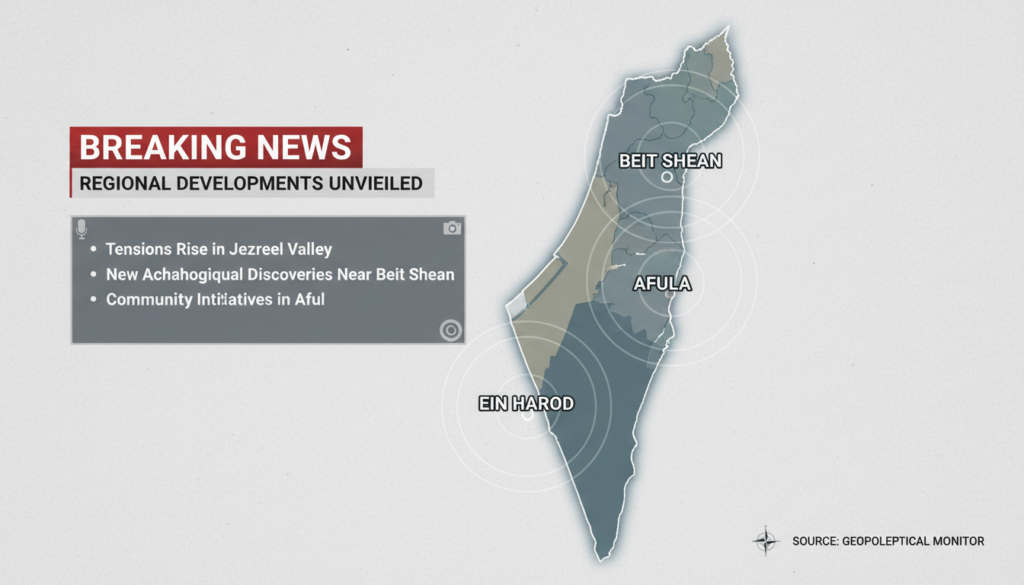
I. The Timeline of Terror: Beit Shean to Afula
The incident unfolded shortly after noon, a time when many residents were preparing for the Sabbath. The attacker, later identified as Ahmed al-Rub, a 37-year-old from the West Bank town of Qabatiya, turned a quiet afternoon into a theater of violence along Route 71.
- 12:15 PM – Beit Shean: The spree began in the eastern city of Beit Shean. Al-Rub, driving a pickup truck belonging to his Israeli employer, intentionally veered off the road. He struck Shimshon Mordechai, a 68-year-old resident, at high speed. Mordechai was killed instantly. A 16-year-old boy nearby was also struck, suffering light to moderate injuries.
- 12:30 PM – Highway 71 & Ein Harod: Instead of fleeing toward the West Bank border, the assailant drove west. Near the entrance to Kibbutz Ein Harod, he exited the vehicle and encountered Aviv Maor, an 18-year-old woman and beloved member of the kibbutz community. Al-Rub stabbed her multiple times. Despite the frantic efforts of paramedics, she was pronounced dead at the scene.
- 12:45 PM – The Afula Junction: The suspect continued toward Afula, where he attempted to ram another group of pedestrians but crashed into a utility pole. Emerging from the wreckage, he reportedly attacked a passerby with a stone before being shot and neutralized by an armed civilian. The suspect was taken into custody in moderate condition.
II. Profiles of the Fallen
The victims represent the diverse demographic fabric of northern Israel.
- Shimshon Mordechai (68): A grandfather and long-time resident of Beit Shean, Mordechai was described by neighbors as a quiet man who was simply walking home. His funeral, held two days later, drew thousands of mourners.
- Aviv Maor (18): A gifted photographer and equestrian, Maor was a “child of nature” according to her family. Her death has particularly devastated the kibbutz movements in the Jezreel Valley, where she was known for her volunteer work with injured animals.
III. The Suspect and the Qabatiya Connection
The Israeli Defense Ministry confirmed that Ahmed al-Rub had infiltrated Israel illegally several days prior. Investigations suggest he was working in the construction sector without a valid permit—a persistent security gap that Israeli authorities have struggled to close.
Qabatiya, located near Jenin, has long been a flashpoint for IDF operations. Within hours of the attack, Defense Minister Israel Katz ordered a “forceful and immediate” military response.
- House Sealing: By December 28, the IDF had completed the sealing of al-Rub’s family home, a precursor to its total demolition.
- Village Raid: Israeli paratroopers and border police entered Qabatiya, arresting the suspect’s father and several associates. Palestinian media reported heavy use of live fire and bulldozers to block village exits.
IV. The Political Fallout: Netanyahu vs. The Opposition
Prime Minister Benjamin Netanyahu praised the civilian who ended the spree, calling him a “hero who saved countless lives.” However, the incident has exposed cracks in the government’s security narrative.
- The “October 7 Style” Warning: Following the attack, Israel Katz warned that the IDF must prepare for a “mass invasion” scenario from the West Bank, similar to the Hamas attacks of 2023. He has used this incident to justify the relocation of IDF bases to the northern West Bank.
- Internal Critique: Opposition leaders point to the fact that the attacker used an Israeli vehicle and was living in Israel for days undetected as a major intelligence failure.
V. Context: A Region on the Brink
This attack did not occur in a vacuum. It happened exactly 24 hours after a viral video showed an Israeli reservist intentionally ramming a praying Palestinian man with a quad bike in the West Bank. While the victim in that case survived, the optics fueled regional anger.
Furthermore, 2025 has been a record-breaking year for West Bank violence:
- Fatalities: The UN reports that over 1,373 Palestinians and dozens of Israelis have been killed in the West Bank since mid-2025.
- Settler Violence: OCHA documented over 1,485 settler attacks against Palestinians in the first ten months of 2025, the highest frequency since recording began in 2006.
- Gaza Echoes: With the death toll in Gaza surpassing 71,000, the “spillover” effect into northern Israel and the West Bank has reached a critical mass, with “lone wolf” attacks becoming the primary mode of Palestinian resistance.
VI. Legislative and Security Shifts
In the wake of the Afula incident, the Israeli Knesset is fast-tracking legislation to:
- Harshen Penalties for Employers: Business owners who hire illegal workers from the Palestinian territories could face up to ten years in prison.
- Expedited Demolitions: Removing the judicial review period for the homes of terrorists caught “in the act.”
- Civilian Armament: A renewed push by the National Security Ministry to distribute thousands more weapons to civilians in “border-adjacent” cities like Afula and Beit Shean.
Why It Matters
For the average citizen, this event signals a terrifying reality: the front line is no longer just the border, but the local bus stop or grocery store. As 2026 progresses, the failure to distinguish between civilian labor and security threats is leading to “fortress” policies that may permanently sever the remaining economic ties between Israel and the West Bank, deepening the regional divide


Leave a Reply