US and Iran War: Why Ending the Conflict Is Becoming More Difficult
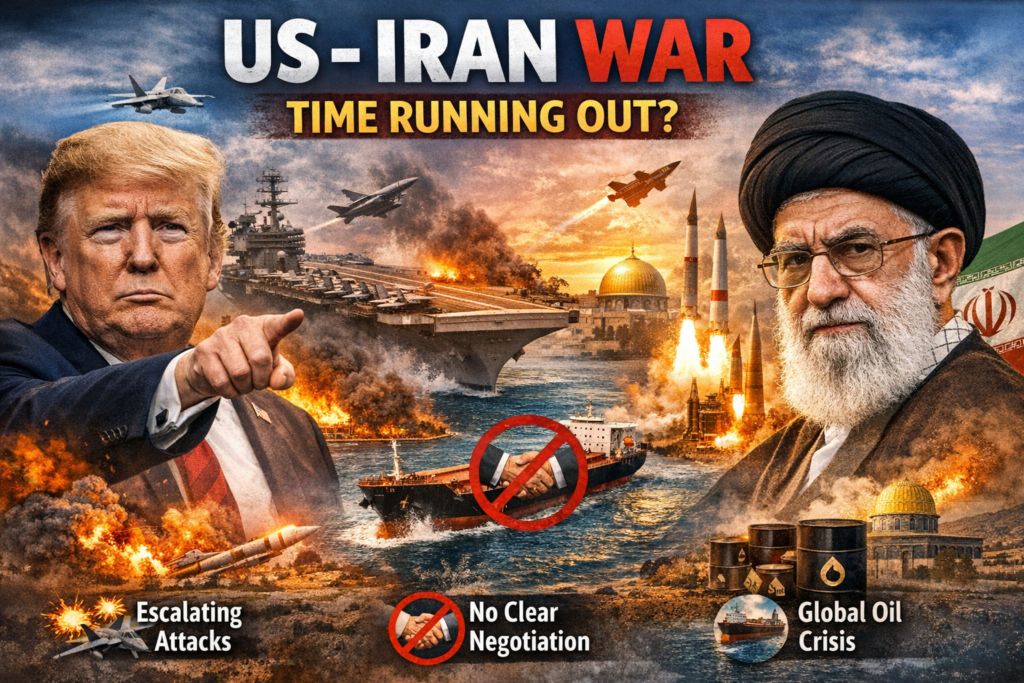
As the conflict between the United States and Iran continues, one thing is becoming clear — the longer the war goes on, the harder it is to stop.
What many expected to be a short and controlled situation is now turning into a complex and dangerous standoff. Both sides are still active, and instead of slowing down, tensions are increasing.
So why is it getting harder to end this war? Let’s understand in simple words.
War Was Expected to Slow Down – But It Didn’t
Leaders in the US, including Donald Trump, have said many times that Iran’s military strength has been weakened.
According to US officials:
- Iran’s leadership structure has been damaged
- Key military targets have been destroyed
- Iran’s ability to respond has reduced
Based on this, many believed the war would start calming down.
But the reality is very different.
Instead of slowing, the conflict is becoming more intense and unpredictable.
Iran’s Unexpected Military Moves
A recent event shocked many experts.
Iran reportedly launched missiles toward a joint US-UK military base at Diego Garcia — a distance of about 3,800 km.
Even though the missiles did not hit the target, this raised serious questions:
- Has Iran developed longer-range missiles?
- Or were these capabilities hidden before?
Earlier, Iran’s missile range was believed to be around 2,000 km. This new development suggests that Iran may still have more power than expected.
Leadership Uncertainty Inside Iran
Another major issue is confusion about leadership in Iran.
After reports of heavy strikes on top leaders, including Ali Khamenei, a new leader, Mojtaba Khamenei, is believed to have taken control.
However:
- He has not appeared publicly
- Only written messages have been shared
- His condition and authority are unclear
In a system where leadership is very centralized, this silence creates uncertainty.
But here’s the surprising part…
Iran Still Acting Strong
Despite leadership confusion, Iran is still actively responding.
For example:
- Iran launched strikes near Dimona in Israel
- Israel targeted energy sites near Bushehr in Iran
These actions show that Iran’s system is still working and capable of coordination.
This challenges the earlier belief that removing top leaders would weaken the country quickly.
The Biggest Problem: No One to Negotiate With
One of the most serious issues right now is diplomacy.
If leaders are unclear or silent, who will negotiate peace?
Iran’s President Masoud Pezeshkian has kept a low profile and is not actively leading negotiations.
This creates a situation where:
- Communication is limited
- Trust is low
- Peace talks are difficult
Without clear leadership, ending the conflict becomes much harder.
Trust Between US and Iran Is Very Low
From Iran’s perspective, there is another major concern — trust.
Iranian officials say that:
- Talks were happening earlier in cities like Geneva and Vienna
- Progress was being made
- But military strikes still happened
This creates a belief that:
Negotiations do not guarantee safety.
Because of this, Iran may be less willing to trust future talks.
Rising Tensions Over Oil Routes
Another major issue is the Strait of Hormuz.
This is one of the most important oil routes in the world.
Recently:
- The US demanded Iran reopen the route
- Trump warned of strong action if it remained closed
- Iran responded with its own threats
Iran even suggested it could block parts of the Persian Gulf.
This back-and-forth is increasing the risk of a bigger conflict.
Trump’s Ultimatum and Sudden Pause
At one point, Trump gave a 48-hour ultimatum to Iran.
He warned that if the Strait of Hormuz was not reopened, the US could target Iran’s energy infrastructure.
But just before the deadline:
- Trump announced a five-day pause in attacks
- He mentioned “productive talks” with Iran
This move gave a small window for diplomacy.
However, experts say:
- It’s unclear if this pause will last
- It may only be temporary
Why Both Sides Are Stuck
Right now, both sides are facing difficult choices.
For the US:
- Airstrikes can cause damage
- But they may not force Iran to surrender
- Ground troops are not being used
For Iran:
- Backing down may look like weakness
- Continuing the fight increases risks
- Internal pressure is already high
This creates a deadlock situation.
Risk for Millions of People
If the conflict continues, the impact could be massive.
Experts warn that:
- Around 170 million people in the region could be affected
- Power supply and essential services could be disrupted
- Oil prices could rise again
This means the conflict is not just political — it can affect everyday life globally.
A Dangerous Cycle
The biggest danger right now is escalation.
Each action from one side leads to a stronger response from the other.
This creates a cycle:
- Attack
- Retaliation
- Stronger attack
- Even stronger retaliation
Breaking this cycle is becoming harder with time.
Final Thoughts – Time Is Running Out
The longer this conflict continues, the fewer options both sides will have.
Right now:
- Diplomacy is weak
- Trust is low
- Military pressure is increasing
If no clear solution is found soon, the situation could move toward a much more dangerous phase.
For now, the world is watching closely — hoping that talks will succeed before it’s too late.
Why You Should Keep Watching This Story
This conflict matters because it affects:
- Global oil prices
- International security
- Economic stability
A small decision here can have a big impact worldwide.




Leave a Reply