US Eases Russian Oil Sanctions as Iran War Disrupts Global Energy Markets
Brainx Perspective
This development highlights how fragile the global energy system becomes during geopolitical conflict. When war disrupts critical shipping routes and supply chains, even rival nations can temporarily shift policies to stabilize markets. The latest decision by Washington reflects a balancing act between political pressure, economic stability, and global energy security.
The News
The United States has temporarily eased certain sanctions on Russian oil exports as escalating tensions in the Middle East threaten global energy stability. The decision comes amid the ongoing conflict involving Israel and Iran, which has significantly disrupted oil transportation routes and pushed crude prices above the $100-per-barrel mark.
The move is being described as a short-term emergency measure aimed at preventing severe economic fallout and stabilizing the global oil market during a period of intense geopolitical uncertainty.
US officials say the authorization will only apply to Russian oil shipments already at sea and will remain in effect until April 11. The measure is designed to prevent sudden supply shortages without significantly benefiting Russia’s economy.
Why the US Adjusted Russian Oil Sanctions
The global oil market has been under extreme pressure due to attacks on ships and energy infrastructure in the Gulf region. These developments have intensified concerns about supply disruptions, especially after Iran’s leadership vowed to continue blocking access to the strategic Strait of Hormuz.
Around 20% of the world’s oil supply typically passes through this narrow maritime corridor. Any disruption there can immediately send shockwaves across global energy markets.
According to Scott Bessent, the temporary adjustment in sanctions policy was implemented to maintain stability in energy markets during the ongoing crisis.
Key points from the announcement include:
- The authorization applies only to Russian oil shipments already in transit at sea.
- The measure will expire on April 11, making it strictly temporary.
- Officials emphasize that the policy is designed to avoid major financial benefits for Russia.
- The goal is to prevent sharp spikes in global oil prices and protect global economic stability.
Washington stressed that this step does not represent a broader rollback of sanctions but rather a targeted measure to manage extraordinary circumstances.
Energy Markets React to Rising Tensions
Global oil prices surged this week as fears of supply disruption intensified. Traders and analysts closely monitored the situation in the Persian Gulf, where multiple cargo ships have reportedly been attacked in recent days.
The Strait of Hormuz has become the focal point of the crisis.
Energy market developments include:
- Brent crude oil prices climbed above $100 per barrel.
- US crude oil traded near $95 per barrel.
- Global stock markets experienced volatility due to rising energy costs.
- Shipping companies began reassessing routes through the Gulf.
The narrow waterway connecting the Persian Gulf to global shipping lanes is one of the most strategically important energy corridors on the planet.
Any interruption to traffic through the strait can quickly lead to higher fuel prices, increased shipping costs, and broader economic instability.
Attacks on Oil Infrastructure Escalate the Crisis
Recent attacks targeting cargo vessels and energy facilities have heightened concerns among global energy analysts.
Security incidents reported in the Gulf include:
- Several commercial cargo ships being damaged by missile or drone strikes.
- Threats to offshore energy facilities and shipping infrastructure.
- Rising insurance costs for vessels traveling through the region.
- Increased military presence by multiple nations to protect shipping routes.
These developments have forced governments and energy agencies worldwide to respond quickly in order to prevent long-term economic disruption.
International Energy Agency Releases Strategic Oil Reserves
In response to the energy crisis, the International Energy Agency announced an unprecedented release of emergency oil reserves.
The agency plans to release 400 million barrels of oil, the largest coordinated strategic reserve release in history.
The goal is to stabilize supply levels and prevent further price spikes in international energy markets.
Energy experts say such large-scale releases are rare and typically occur only during severe global disruptions, such as wars or major natural disasters.
Asian Economies Take Emergency Measures
Many Asian countries depend heavily on oil imports from the Middle East, making them particularly vulnerable to supply disruptions caused by the crisis.
Governments across Asia have already begun implementing emergency economic policies to cope with rising fuel costs.
Key responses include:
- Philippines
- Nearly 95% of crude oil imports come from the Middle East.
- The government has proposed a four-day work week for public employees to reduce fuel consumption.
- Japan
- Authorities announced fuel price caps to protect consumers.
- South Korea
- Government subsidies are being considered to offset rising gasoline prices.
- Thailand
- Officials implemented temporary price controls on petrol.
These measures highlight the widespread economic impact of global oil price fluctuations.
Potential Military Escort for Oil Tankers
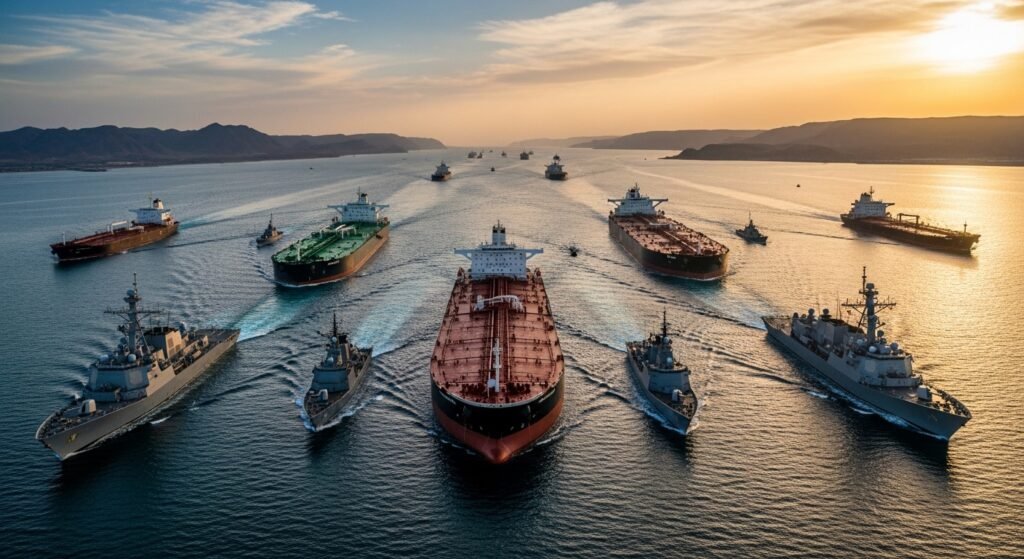
Another significant development involves the possibility of military protection for commercial vessels traveling through the Strait of Hormuz.
According to US officials, naval escorts could soon be deployed to ensure the safe passage of oil tankers.
The United States has historically maintained a strong naval presence in the region to safeguard global energy transportation routes.
Officials say the plan to escort vessels was already part of contingency preparations.
However, implementation depends on military readiness and security assessments.
If activated, the operation could involve:
- US naval warships escorting commercial oil tankers.
- Coordination with allied naval forces.
- Monitoring of shipping lanes for potential threats.
- Protection against drone, missile, or maritime attacks.
Such actions would represent a major escalation in efforts to secure global energy trade routes.
Economic Implications of Rising Oil Prices
Energy analysts warn that prolonged disruptions in oil supply could have far-reaching consequences for the global economy.
Higher oil prices often trigger:
- Increased transportation costs.
- Higher food prices due to supply chain expenses.
- Rising inflation across multiple industries.
- Economic slowdowns in energy-dependent economies.
Financial markets have already shown signs of concern, with stock indexes reacting negatively to rising oil prices earlier this week.
Businesses worldwide are closely monitoring the situation as fuel costs influence everything from airline travel to manufacturing operations.
Balancing Sanctions and Energy Stability
The temporary easing of sanctions on Russian oil highlights a difficult policy dilemma for global leaders.
On one hand, sanctions are intended to pressure geopolitical rivals. On the other hand, restricting energy supply during a major crisis could cause severe economic consequences worldwide.
The current approach attempts to balance these competing priorities by allowing limited transactions without permanently altering sanctions policy.
Officials emphasize that the move is strictly temporary and designed to address a specific crisis scenario rather than signal a long-term shift in foreign policy.
The Future of Global Energy Security
The ongoing crisis demonstrates how geopolitical conflicts can rapidly reshape global energy strategies.
Experts predict that countries may increasingly focus on:
- Diversifying energy supply sources.
- Expanding renewable energy infrastructure.
- Increasing domestic oil and gas production.
- Strengthening strategic petroleum reserves.
Energy independence is becoming a central objective for many governments seeking to avoid future disruptions caused by international conflicts.
Why It Matters
For everyday people, rising oil prices directly affect the cost of transportation, food, and electricity. When geopolitical tensions disrupt global energy supply chains, households and businesses feel the impact quickly. Decisions made in diplomatic negotiations and military strategy rooms ultimately influence everyday economic stability across the world.




Leave a Reply