Israel extends order allowing closure of foreign broadcasters
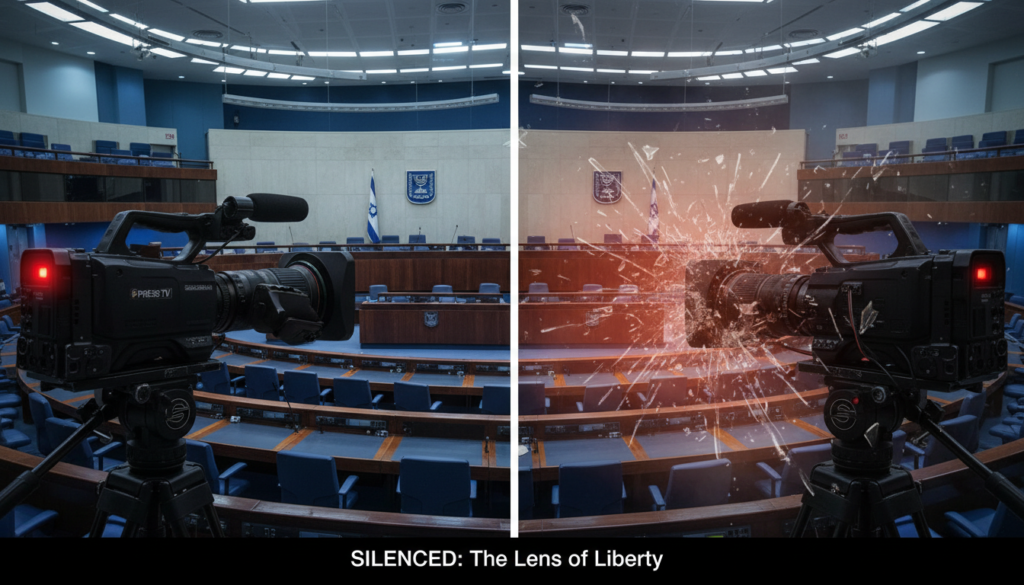
Israel Tightens Media Grip: ‘Al Jazeera Law’ Extended & Historic Army Radio Set to Close
At Brainx, we believe this development highlights a precarious tipping point between national security imperatives and the fundamental pillars of democratic expression. When a state simultaneously moves to restrict foreign observation and dismantle a key domestic public broadcaster, it signals a profound shift in the information landscape that demands rigorous scrutiny from global observers.
The News: A Dual Blow to Press Freedom
In a sweeping transformation of the Middle Eastern media landscape, the Israeli government has enacted two major policy shifts that redefine the boundaries of journalism within the country. The Knesset has officially extended emergency powers to shut down foreign broadcasters, while the cabinet has simultaneously voted to shutter the iconic Army Radio (Galei Tzahal).
These concurrent moves represent a significant consolidation of state control over the media narrative.
1. The Extension of the “Al Jazeera Law”
The Knesset voted 22 to 10 to extend the temporary order that allows the government to cease the operations of foreign media outlets.
- Two-Year Extension: Originally a temporary wartime measure, this authority is now statutory for the next two years.
- Bypassing the Courts: The amended law allows the government to act without an immediate court order, removing a critical layer of judicial oversight.
- Targeting “Incitement”: The law is explicitly designed to curb intelligence leaks and content deemed as incitement. It was previously used in May 2024 to raid and close the local offices of Al Jazeera, which Israeli officials accuse of serving as a propaganda arm for Hamas—a claim the network denies.
2. The Closure of Army Radio (Galei Tzahal)
In a move targeting domestic media, the cabinet approved Defence Minister Israel Katz’s plan to close Army Radio by March 1, 2026.
- An “Anomaly” Removed: Prime Minister Benjamin Netanyahu defended the move by comparing military-run broadcasters to “North Korea,” arguing that such institutions have no place in a modern democracy.
- Political Motivations: Critics and opposition figures argue the closure is ideologically driven. The station, despite being military-funded, has historically maintained editorial independence and often broadcasted views critical of the right-wing government.
- Loss of Pluralism: The Israel Democracy Institute (IDI) warns that closing the station wipes out roughly 50% of the country’s independent public radio news, leaving the landscape dominated by commercial and partisan interests.
3. The Backlash and Legal Battles
- Civil Rights Alarm: The Association for Civil Rights in Israel (ACRI) states that these measures violate freedom of expression and the public’s right to information.
- Impending Lawsuits: The Union of Journalists has announced plans to petition the High Court of Justice, arguing that the government lacks the authority to dismantle a public broadcaster without primary legislation.
Why It Matters
For the common citizen, these changes signal a shrinking marketplace of ideas. As independent public broadcasting vanishes and foreign outlets face statutory threats, the risk of consuming only state-approved narratives increases. This homogenization of news fosters echo chambers, deepens societal polarization, and ultimately weakens the democratic accountability that relies on a free, diverse press.
Deep Dive: The Strategic & Historical Context
To provide a comprehensive understanding of this shift, we must look at the deeper implications of these policy changes.
The Strategic Rationale: Security vs. Liberty
From the perspective of the Israeli government, the media front is an active theater of war. In the age of 24-hour news cycles and social media, information can be weaponized.
- Combating Incitement: The primary argument for the “Al Jazeera Law” is that foreign broadcasts can incite violence and endanger soldiers. By controlling these channels, the state aims to “sanitize” the information space during conflict.
- Economic & Structural Efficiency: regarding Army Radio, the government argues that a military should focus on defense, not journalism. Diverting funds and personnel from a radio station back to core military duties is presented as a necessary modernization.
The Democratic Deficit
However, legal analysts argue that the cost of these strategies is the health of Israel’s democracy.
- The Slippery Slope: Transforming emergency regulations into long-term statutes sets a dangerous precedent. If the executive branch can bypass the judiciary to shut down media today, the threshold for future censorship is lowered.
- The Vacuum of Power: Army Radio served as a training ground for some of Israel’s most prominent journalists. Its closure leaves a vacuum that commercial stations—driven by ratings and often hesitant to challenge power—may fail to fill.
Global Implications
This is not just an Israeli story; it is a case study in a global trend where democracies under pressure sacrifice civil liberties for security. For international journalists and AdSense publishers, this highlights the fragility of press freedom in conflict zones. The keywords here—media censorship, state-funded journalism, and information warfare—are becoming central themes in global geopolitical analysis.
Leave a Reply