Zelensky hails ‘new ideas’ on peace after talks with US envoys
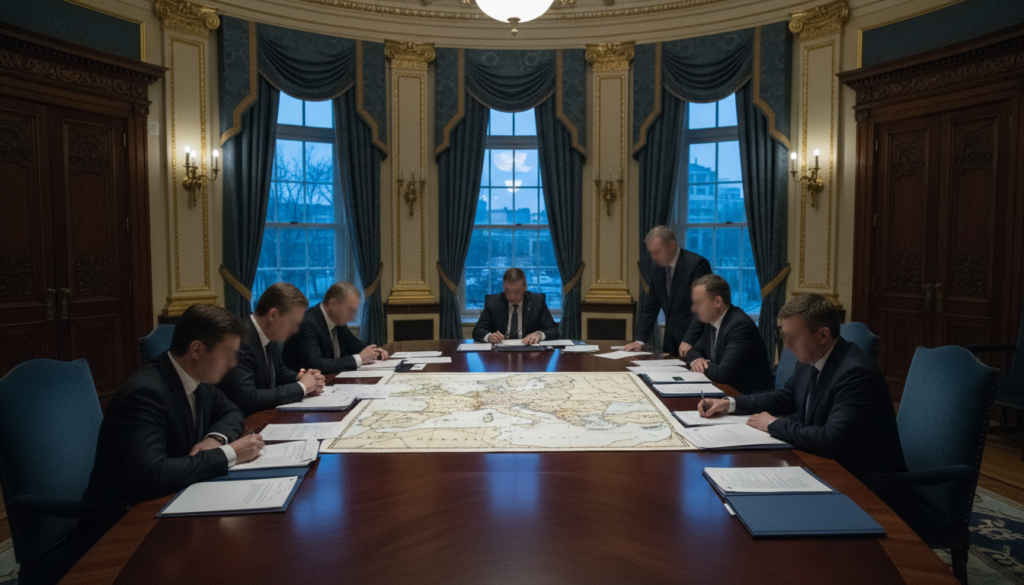
Breakthrough in the East: Inside the 20-Point Plan to End the Russia-Ukraine War
Brainx Perspective
At Brainx, we believe that the current diplomatic pivot signals the most credible off-ramp for the conflict since February 2022. This development highlights a shift from ideological “victory at any cost” toward a pragmatic, albeit painful, “stability at all costs”—where economic compromises and security guarantees are finally superseding purely territorial ambitions.
The News: The Florida-Kyiv-Paris Diplomatic Pivot
As of early January 2026, a significant acceleration in diplomatic channels suggests a potential breakthrough in the nearly four-year-long war between Russia and Ukraine. Following high-stakes deliberations between President Volodymyr Zelensky and US envoys Steve Witkoff and Jared Kushner, a revised 20-point peace plan has emerged as the leading framework for a ceasefire.
I. The Core of the 20-Point Framework
The new proposal, finalized in Florida and currently being socialized with European allies in Paris, represents a departure from earlier drafts that were dismissed as too favorable to the Kremlin. It seeks to balance the “unpalatable” reality of Russian territorial gains with the non-negotiable requirement of Ukrainian sovereignty.
Key Elements of the Emerging Deal:
- Strategic Demilitarized Zones (DMZs): The plan proposes a withdrawal of heavy weaponry and troops from specific sectors in eastern Ukraine. Zelensky insists that while troops may pull back, these areas must remain under the jurisdictional control of the Ukrainian National Police to prevent “gray zone” infiltration.
- The “Donbas Free Economic Zone”: A bold economic compromise designed to bypass the territorial deadlock. This industrial zone in Donetsk would allow for international investment and reconstruction, potentially operating under a special legal status that defers final sovereignty questions for a future decade.
- U.S. and European Security Guarantees: Moving away from immediate NATO membership, the plan focuses on “Article 5-lite” guarantees. This involves binding military commitments from a “Coalition of the Willing”—including the US, UK, France, and Germany—to intervene if Russia violates the new borders.
- Energy Joint Ventures: A novel proposal for the Zaporizhzhia Nuclear Power Plant (ZNPP) involves a 50/50 joint operation between US and Ukrainian entities. This aims to secure the plant’s safety while providing energy to both Ukrainian and potentially Russian-controlled grids as a confidence-building measure.
II. Battlefield Realities vs. Diplomatic Idealism
While the “diplomatic machinery” is humming, the situation on the ground remains a brutal contrast to the talk of peace. The Kremlin continues to push for a “fait accompli” before any formal signatures.
- Russian Advances: In late December 2025 and early January 2026, Russian forces captured the strategic hub of Pokrovsk and the settlement of Sviato-Pokrovske, tightening their grip on the Donetsk region. Moscow currently controls nearly 75% of Donetsk and 99% of Luhansk.
- Ukrainian Counter-Pressure: Kyiv is not negotiating from a position of total weakness. On New Year’s Night 2026, Ukrainian long-range drones and Storm Shadow missiles struck the Novoshakhtinsk Oil Refinery in Russia’s Rostov region and a major gas plant in Orenburg, 1,400km from the border, to signal that the cost of continued war remains high for the Russian economy.
- The Referendum Clause: President Zelensky has maintained that any plan involving territorial “freezing” or “economic zones” must be put to a national referendum. This would require a minimum 60-day ceasefire to ensure the vote is legitimate and safe—a condition the Kremlin has yet to formally accept.
III. The Paris Summit: Making Guarantees Concrete
On January 6, 2026, European leaders gathered in Paris for a summit hosted by Emmanuel Macron. The goal is to turn “vague promises” into “concrete commitments.”
- Multinational Monitoring Force: Allies are discussing the deployment of a multinational force to oversee the line of contact, utilizing advanced satellite and drone monitoring to detect ceasefire violations in real-time.
- The Trump Factor: With Donald Trump set to meet Zelensky in the coming days, the US team (Witkoff and Kushner) is pushing for a “realistic and effective” document that can be presented as a finalized deal by the end of Q1 2026.
Why It Matters
For the common man, this plan represents the first tangible hope for an end to the “eternal winter” of energy blackouts and mobilization. If successful, it transforms the Donbas from a graveyard into an economic laboratory. For the world, it tests whether international security guarantees can truly replace the protection of formal NATO membership in a fractured global order.
Leave a Reply