One dead after mid-air helicopter collision in New Jersey
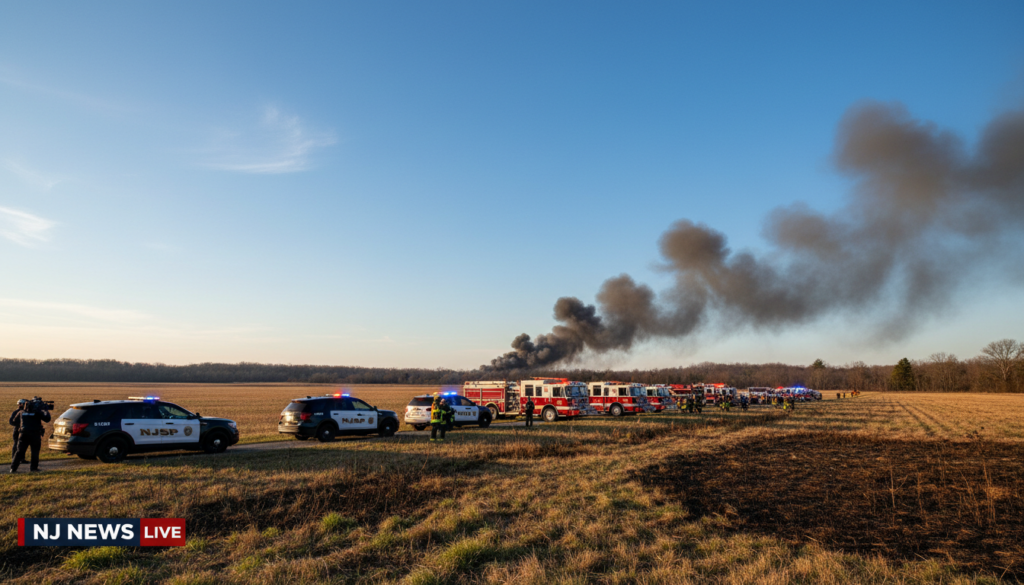
Tragedy in Hammonton: A Deadly Skies Collision Ignites a National Aviation Safety Crisis
Brainx Perspective
At Brainx, we believe that the Hammonton mid-air collision is not merely an isolated accident, but a stark warning signal for the future of general aviation. This development highlights a critical tension between the freedom of small-craft flight and the urgent need for modernized, automated collision-avoidance systems in increasingly crowded low-altitude corridors.
The News: Chaos Over the Garden State
On a clear Sunday morning, what should have been a routine flight for two experienced pilots turned into a catastrophic scene over Hammonton, New Jersey. The mid-air impact between two light helicopters has sent shockwaves through the aviation community and triggered an immediate high-stakes federal inquiry.
Crucial Details of the Incident:
- The Impact: At approximately 11:25 AM EST, two helicopters collided near the Hammonton Municipal Airport, roughly 35 miles southeast of Philadelphia. One aircraft spiraled into a vertical descent, while the second was immediately engulfed in a post-impact inferno.
- The Human Toll: Authorities have confirmed that one pilot was killed instantly upon impact. The surviving pilot was airlifted to a specialized trauma unit in critical condition, fighting life-threatening injuries. Remarkably, both aircraft were occupied only by their respective pilots.
- The Aircraft Involved: The National Transportation Safety Board (NTSB) identified the rotorcraft as an Enstrom 280C and an Enstrom F-28A. Both are vintage, lightweight piston-engine models known for their three-blade articulated rotor systems, frequently used for private travel and flight training.
- A Community in Mourning: Local witnesses noted that the two pilots were frequent patrons of a nearby cafe and were reportedly close friends who often flew in tandem—a detail that adds a layer of personal tragedy to the mechanical disaster.
- The Investigation: The Federal Aviation Administration (FAA) and NTSB are currently examining flight data, radar signatures, and the wreckage to determine if the collision resulted from a mechanical failure, a breakdown in air traffic communication, or the “see-and-avoid” limitations of low-altitude flight.
The Broader Context: A Resurgence of Aerial Risks?
The Hammonton tragedy does not exist in a vacuum. It follows a dark period for American aviation. Just months ago, in January 2026, the nation witnessed its worst air disaster in decades when a U.S. Army Black Hawk helicopter collided with an American Eagle regional jet over the Potomac River near Washington D.C., resulting in 67 fatalities.
While the FAA had recently reported a downward trend in fatal helicopter accidents from 2024 to 2025—reaching a 25-year low of 0.44 per 100,000 flight hours—the start of 2026 has seen a worrying spike in mid-air incidents. This has placed the FAA’s “NextGen” air traffic control modernization program under intense scrutiny by both Congress and the public.
Why It Matters
For the common man, this crash represents more than just a headline; it signals a potential shift in how we regulate the “skyways.” As drone delivery and air taxis prepare for mass adoption, the Hammonton collision proves that even with human experts at the helm, the current safety nets are insufficient. Expect stricter transponder mandates and higher insurance premiums for private flyers in the coming months.
Would you like me to create a comparison report between the Hammonton crash and the recent DC Potomac collision to see if there are shared systemic failures?
Leave a Reply