US says it will discuss Greenland ownership with Denmark next week
1. Catchy Headline
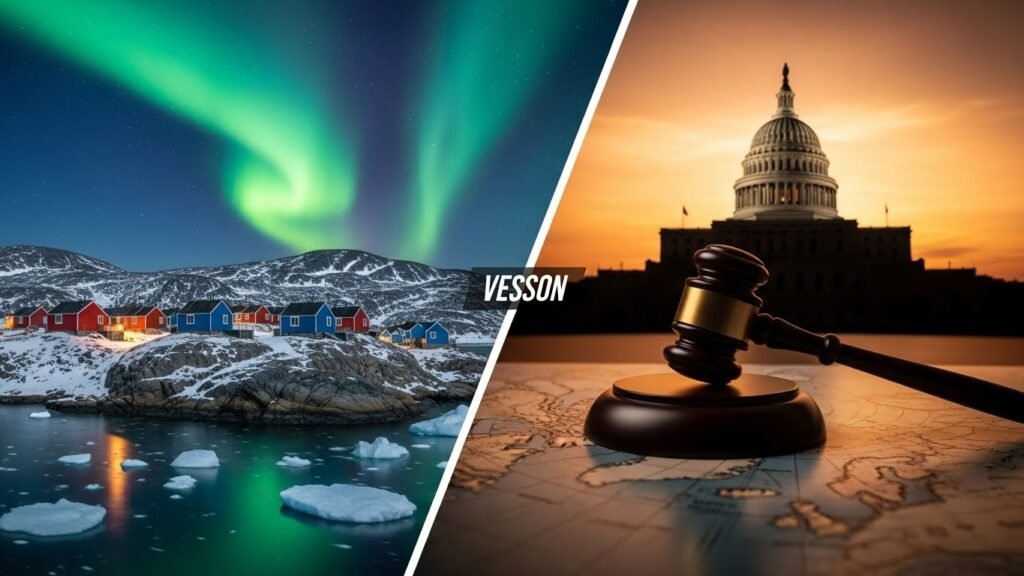
Arctic Cold War? US-Denmark Relations Strain as Rubio Addresses Greenland Acquisition Rumors
2. Brainx Perspective (Intro)
At Brainx, we believe this escalation represents a pivotal moment for the international order, testing the resilience of the NATO alliance like never before. The juxtaposition of the recent military action in Venezuela with the renewed focus on Greenland highlights a shift towards a more transactional and assertive US foreign policy. This development forces the world to ask: where does the line between strategic interest and national sovereignty lie in 2026?
3. The News (Body)
Tensions between the United States and its European allies have reached a fever pitch following reports of the Trump administration’s intensified interest in acquiring Greenland. In a move to de-escalate the situation, US Secretary of State Marco Rubio has announced scheduled talks with Danish officials next week.
The diplomatic scramble comes in the wake of a highly controversial week in geopolitics, marked by US military action in South America and aggressive rhetoric regarding the Arctic.
The Diplomatic Fallout: Rubio Steps In
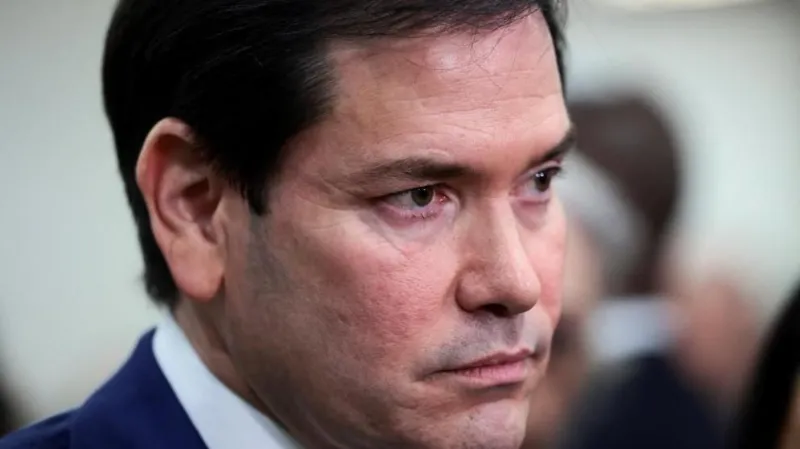
Secretary of State Marco Rubio addressed reporters on Wednesday following a classified briefing with US senators. His comments aimed to clarify the US position while maintaining a stance of strength.
- The Meeting: Rubio confirmed he will meet with Danish counterparts to discuss the situation.
- The Stance: While emphasizing that diplomacy is the preferred route, Rubio did not explicitly disavow the President’s authority to act. “If the president identifies a threat to the national security of the United States, every president retains the option to address it through military means,” Rubio stated.
- The Nuance: He added, “As a diplomat… we always prefer to settle it in different ways,” citing the recent operation in Venezuela as an example of alternative resolution methods—though that operation involved direct military force.
The Venezuela Precedent
The context for the current anxiety over Greenland cannot be separated from the events of last Saturday.
- The Operation: In a unilateral move, US forces executed a military operation in Venezuela, resulting in the seizure of President Nicolás Maduro.
- The Connection: This display of force has reignited fears that the US might employ similar “hard power” tactics to secure strategic assets elsewhere, specifically Greenland.
- White House Rhetoric: Just a day prior to Rubio’s statement, the White House confirmed that President Trump had discussed various options—including military force—to secure the Danish territory, citing it as “vital to US security.”
Europe Pushes Back: A Show of Unity
The reaction from Europe has been swift and unified. On Tuesday, leaders from France, the UK, Germany, Italy, Poland, Spain, and Denmark released a joint statement condemning any potential aggression.
- Sovereignty First: “Greenland belongs to its people, and only Denmark and Greenland can decide on matters concerning their relations,” the statement read.
- NATO Warning: The signatories emphasized that Arctic security must be a “collective” NATO effort, implicitly warning that unilateral US action could fracture the alliance. Denmark has stated clearly that an attack on Greenland would effectively end NATO.
- French Intervention: French Foreign Minister Jean-Noël Barrot reported a phone call with Rubio in which the Secretary of State allegedly “ruled out the possibility of an invasion,” offering a glimmer of hope for a diplomatic solution.
The Internal Push: The “Miller” Strategy
While Rubio plays the diplomat, other figures in the administration are signaling a more aggressive intent.
- Official Position: Stephen Miller, a senior aide to the President, declared on Monday that it is now “the formal position of the US government that Greenland should be part of the US.”
- Social Media Signaling: Katie Miller, Stephen Miller’s wife, posted a map of Greenland colored with the US flag and the caption “SOON” just a day after the Venezuela operation, fueling public speculation and anxiety.
The Human Cost: Fear in the Arctic
Beyond the geopolitical maneuvering, the rhetoric is having a profound psychological impact on the residents of Greenland. Morgan Angaju, a 27-year-old Inuit resident of Ilulissat, expressed the community’s dread.
- Living in Fear: “It has been terrifying to listen to the leader of the free world laughing at Denmark and Greenland and just talking about us like we’re something to claim,” Angaju said.
- Existential Threat: For the locals, this is not just about flags changing; it is a question of identity, history, and the fear of becoming a strategic pawn in a global power game.
4. “Why It Matters” (Conclusion)
This standoff goes beyond territorial ambition; it challenges the foundational principles of the UN Charter and the stability of the Western alliance. For the common citizen, it signals a volatile era where established borders may no longer be guaranteed by treaty, but rather determined by military capability and strategic desire.
Deep Dive Analysis: Why Greenland?
(Brainx Exclusive Context)
To understand why this icy territory has become the center of a global firestorm, one must look at three critical factors that make Greenland a “crown jewel” of 21st-century strategy:
1. The Rare Earth Treasure Chest Greenland is home to some of the world’s largest undeveloped deposits of rare earth metals (neodymium, praseodymium, dysprosium). These are essential for building:
- EV batteries
- Fighter jets (like the F-35)
- Wind turbines Currently, China dominates this supply chain. Controlling Greenland would effectively secure US energy and military independence for the next century.
2. The Arctic Shipping Superhighway As polar ice caps melt, new shipping lanes are opening in the Arctic. These routes drastically cut travel time between Europe, Asia, and America. Whoever controls Greenland controls the gateway to these new “Suez Canals” of the North, dictating the flow of global trade.
3. The Thule Air Base Factor The US already operates Thule Air Base (Pituffik Space Force Base) in northern Greenland. It is the US military’s northernmost installation and critical for:
- Missile warning systems (detecting threats over the North Pole).
- Space surveillance.
- Satellite control. Full acquisition of the territory would remove any “host nation” restrictions, allowing the US to expand this fortress without diplomatic hurdles.
This context explains why the administration views the island not just as land, but as a non-negotiable asset for future American dominance.
Leave a Reply