Winter storm grips US as millions face power outages and disruption
“Life-Threatening” Arctic Blast Targets 200 Million: Historic Winter Storm Brings Travel Chaos and Record Cold to US
2. Brainx Perspective
At Brainx, we believe the scale of this impending Arctic blast serves as a critical stress test for America’s infrastructure and emergency responsiveness. With 16 states already declaring emergencies, this weather event highlights the widening gap between extreme climate realities and our aging power grids. It is a stark reminder that in an era of volatile weather, preparation is not just a precaution—it is a survival necessity.
3. The News
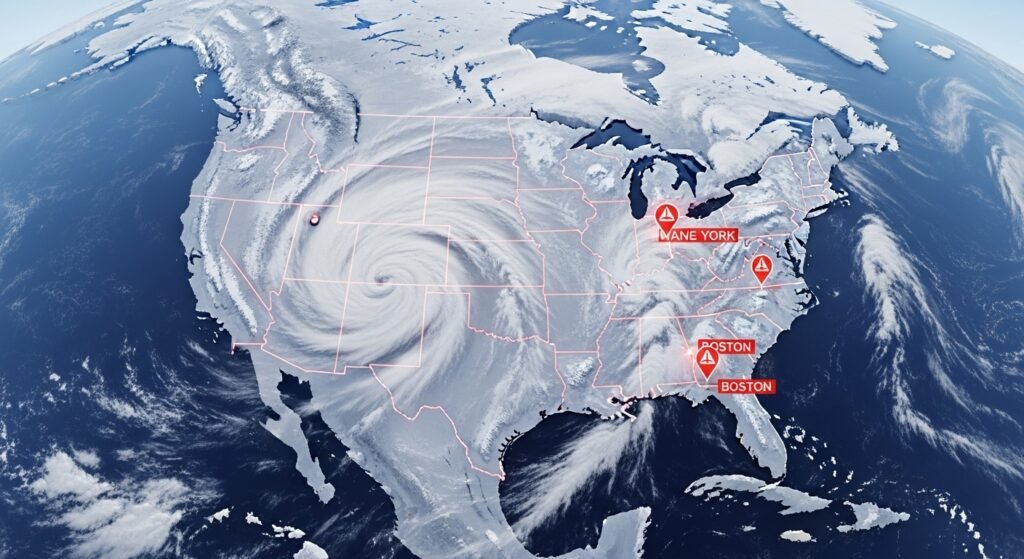
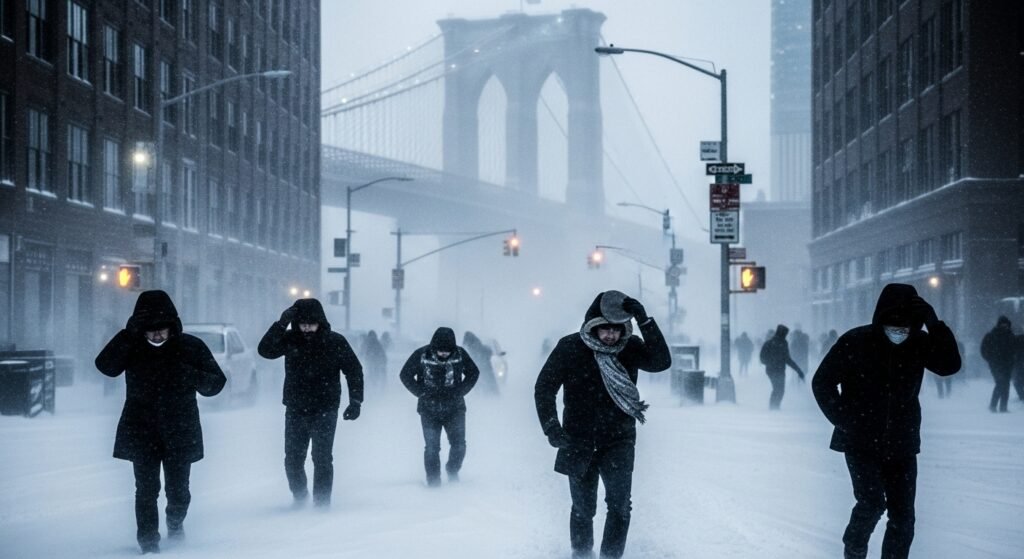
A potentially historic and “life-threatening” winter storm is currently mobilizing across the United States, poised to impact nearly two-thirds of the nation’s population. Starting Friday, this massive weather system is expected to unleash a brutal combination of heavy snow, ice, and bone-chilling temperatures upon more than 200 million Americans.
The National Weather Service (NWS) has issued grave warnings, characterizing the conditions as “extremely dangerous.” As the storm tracks eastward from the High Plains and the Rockies, it is gathering strength, threatening to paralyze transportation networks and strain power grids from Texas to New England.
The Trajectory: A Coast-to-Coast Threat
The storm is not a localized event but a sweeping atmospheric disruption. It is forecast to move slowly, maximizing the accumulation of snow and ice in its path.
- The Southern Plains & Rockies: Heavy snow is predicted to hammer the Southern Rockies before moving into the Plains.
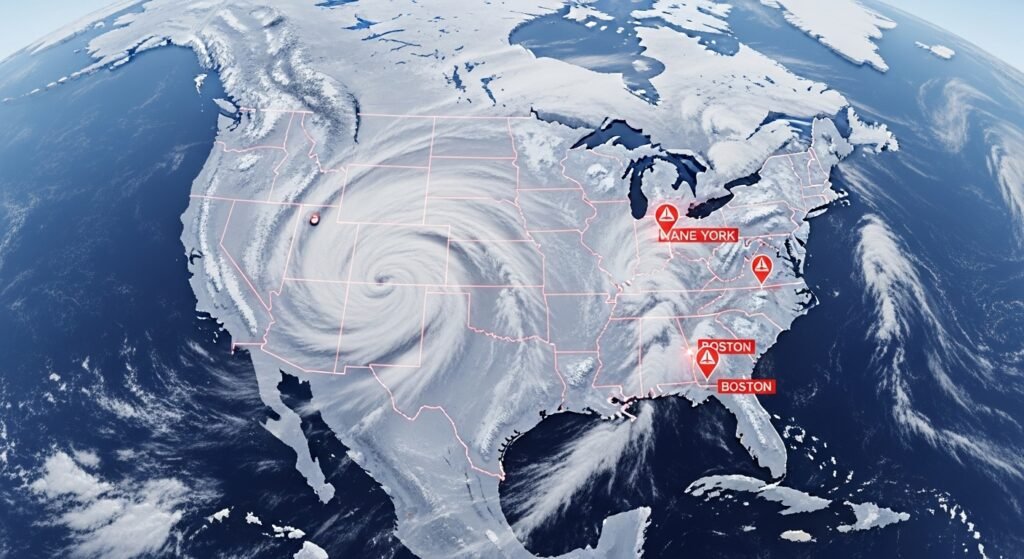
- The East Coast Path: The system will blanket major metropolitan hubs including Memphis, Nashville, Washington DC, Baltimore, Philadelphia, and New York City.
- The “Foot of Snow” Zone: According to NWS data, a vast corridor stretching from Colorado through West Virginia and up to Boston could see snow accumulations exceeding 12 inches (one foot).
The Numbers: Snowfall and Dangerous Chill
The specific forecasts for key regions paint a grim picture for the weekend:
- New York City & Tri-State Area: Parts of northeast New Jersey and southeast New York are bracing for 10 to 14 inches of snow. The heaviest downfall is expected from early Sunday through Monday.
- New England & Boston: Southern New England faces even harsher conditions, with forecasts predicting 12 to 17 inches of snow accompanied by wind gusts up to 30 mph.
- The Deep Freeze:
- Wind Chills: In the Northeast, wind chills could drop to -10F (-23C). In Boston, they may plummet to -15F (-26C).
- Record-Breaking Cold: The Northern Plains face the most extreme danger, with wind chills potentially hitting a life-threatening -50F (-46C).
- The South: Even the south-eastern US will not be spared, with freezing temperatures expanding far beyond traditional winter zones. North Texas has already reported sleet and ice accumulation as of Friday night.
State of Emergency: Mobilizing for Impact
Acknowledging the severity of the threat, governors across the country have moved swiftly to unlock resources.
- Emergency Declarations: A total of 16 states were under a state of emergency as of Friday. This list includes Arkansas, Georgia, Texas, North Carolina, and South Carolina. This legal move allows the deployment of the National Guard to assist with rescues and logistics.
- New York’s Defense: Governor Kathy Hochul announced a massive deployment of resources, including 1,600 snow plows and 114,000 tonnes of salt. She issued a stern warning that no part of the state would be “immune from feeling the effect of Mother Nature’s wrath,” urging residents to stock up on essentials and work from home.
- New York City Strategy: Mayor Zohran Mamdani confirmed the deployment of 700 salt spreaders and 2,200 plows, which will activate once two inches of snow accumulate. While public transit (subways and buses) aims to remain operational, the advice to citizens is clear: stay home.
The Texas Grid Anxiety
A focal point of national attention is the Texas power grid, which famously failed during a 2021 storm, leading to hundreds of fatalities.
- Governor’s Assurance: Texas Governor Greg Abbott stated there is “no expectation whatsoever” of a grid failure this time.
- Local Outages vs. Grid Failure: While Abbott warned that ice and heavy snow could cause local power lines to snap (leading to localized outages), he emphasized that local power providers “have never been more prepared” and that the central grid remains stable.
Travel Chaos: Grounded Flights and Dangerous Roads
The storm has already wreaked havoc on the nation’s travel infrastructure just as the weekend begins.
- Aviation: Flight tracking service FlightAware reports massive disruptions.
- Saturday: Over 3,200 flights cancelled.
- Sunday: Over 4,800 flights cancelled.
- Airlines: Major carriers are offering fee waivers for passengers looking to rebook their travel to avoid getting stranded.
- Roads: NWS meteorologists have advised motorists to avoid driving entirely, describing travel conditions as “nearly impossible during the peak of the storm.” The combination of whiteout conditions and black ice makes highways lethal traps.
The Canadian Context
The freezing air mass is not stopping at the border. Canada is already grappling with the freeze, and meteorologist Geoff Coulson noted that snowfall is expected to hit eastern and Atlantic regions by Monday. Crucially, the cold air originating from Canada will linger over the eastern US well into next week, ensuring no quick thaw after the storm passes.
4. “Why It Matters” (Conclusion)
This event matters because it threatens the safety of millions and exposes the fragility of modern logistics. For the common man, this means navigating dangerous commutes, potential power outages, and supply chain delays. It serves as a harsh reminder that despite technological advancements, nature still dictates the rhythm of our lives, making community resilience and individual preparedness more critical than ever.
Leave a Reply