Framed by the Badge? New Evidence Exposes Potential 23-Year Miscarriage of Justice in Omar Benguit Case
At Brainx, we believe…
This development highlights a terrifying crack in the foundation of our justice system: the possibility that those sworn to protect us could manufacture guilt to close a file. At Brainx, we believe the revelations surrounding Omar Benguit’s conviction are not just about one man’s freedom, but about the systemic rot that occurs when police prioritize metrics over morality. If the guardians of the law can bury alibis and coerce witnesses to secure a conviction, then no citizen is truly safe from the machinery of the state.
The News: A Manufactured Murder Conviction?
In a bombshell revelation that threatens to shatter trust in British policing, new evidence suggests that Omar Benguit, a man who has spent the last 23 years in a high-security prison for murder, may have been framed by the very officers investigating the crime.
A profound investigation by BBC Panorama has unearthed disturbing details regarding the 2002 murder of South Korean student Jong-Ok Shin (known as Oki). The findings point to a systematic manipulation of evidence by Dorset Police, including the burying of a solid alibi, the coercion of vulnerable witnesses, and the ignoring of a notorious serial killer who was active in the area at the time.
The Crime and the Pressure to Convict
The tragedy began in July 2002 in Bournemouth, a coastal town whose economy relies heavily on international students.
- The Victim: Jong-Ok Shin, a 26-year-old student, was walking home from a nightclub when she was brutally stabbed to death.
- The Pressure: The murder caused diplomatic tension, with the South Korean government demanding answers. Dorset Police faced immense pressure to catch the killer to protect the town’s reputation as a safe haven for foreign students.
- The Conviction: Omar Benguit, a local heroin addict with a history of knife crime, was arrested. However, the case against him was weak. There was no forensic evidence (DNA or fingerprints) and no CCTV footage linking him to the crime.
- The Trials: It took three trials to convict him. Two previous juries failed to reach a verdict, highlighting the flimsiness of the prosecution’s case. He was finally convicted in 2005 based almost entirely on witness testimony—testimony that has now been blown apart.
The “Star Witness” Lie
The prosecution’s case rested on the testimony of a woman known as “BB” (a pseudonym for legal reasons). BB, a drug addict herself, claimed she was driving Benguit and two other men on the night of the murder.
- The Narrative: BB claimed they stopped the car, the men approached Oki to invite her to a party, and when she refused, Benguit stabbed her.
- The Contradiction: BB’s story didn’t match the victim’s dying words. Oki told help that she was attacked by a single, masked attacker, not a group of unmasked men.
- The Fabrication: BB had changed her story multiple times, initially accusing two other men before settling on Benguit in her third statement.
- The Smoking Gun: Panorama discovered that police had reviewed CCTV footage during the initial investigation that directly discredited BB’s story.
- BB claimed she stopped at a specific BP garage on Charminster Road. Police checked the CCTV; neither BB, the men, nor her car were there.
- BB claimed she drove the men to a “crack house” to clean up after the murder. Police checked the CCTV camera across the road from the house. Again, there was no sign of the car or the men.
- Despite knowing her testimony was factually impossible according to the video evidence, the police proceeded to build their entire case around her lies.
Coercion and Threats: “They Had a Template”
If the main witness was lying, what about the others? The investigation reveals a disturbing pattern of police intimidation used against vulnerable drug addicts to corroborate BB’s fabricated story.
- 13 Witnesses Speak Out: A total of 13 prosecution witnesses have now told the BBC that they were pressured, threatened, or coerced by police to lie in court or embellish their statements.
- Leanne’s Testimony: One witness, Leanne, was just 17 at the time. She admitted to signing a false statement in the back of a police car.
- “I was a kid and I was thrown in the back of a car. I was petrified,” Leanne revealed.
- She described a chilling process where officers seemed to work from a script: “When they start asking me questions, they start crossing things out, putting other things in. It’s like they started with a template… This statement was their words, 95% of it.”
- The “Crack House” Witnesses: Police interviewed five addicts who were at the alleged safe house that night. Initially, all five denied seeing Benguit. Months later, after re-interviews, all five miraculously changed their stories to say they saw Benguit covered in blood.
- Andi Miller’s Confession: Another witness, Andi Miller, revealed that police used his criminal history as leverage. BB had informed on thefts they had committed together. Miller felt he had no choice but to comply with the police narrative to avoid being charged himself. “They had me bang to rights… I felt as though the police pressured me into saying something that wasn’t true,” Miller said.
The Buried Alibi: The Phone Box
Perhaps the most damning evidence of a cover-up is the existence of an alibi that police appear to have deliberately suppressed.
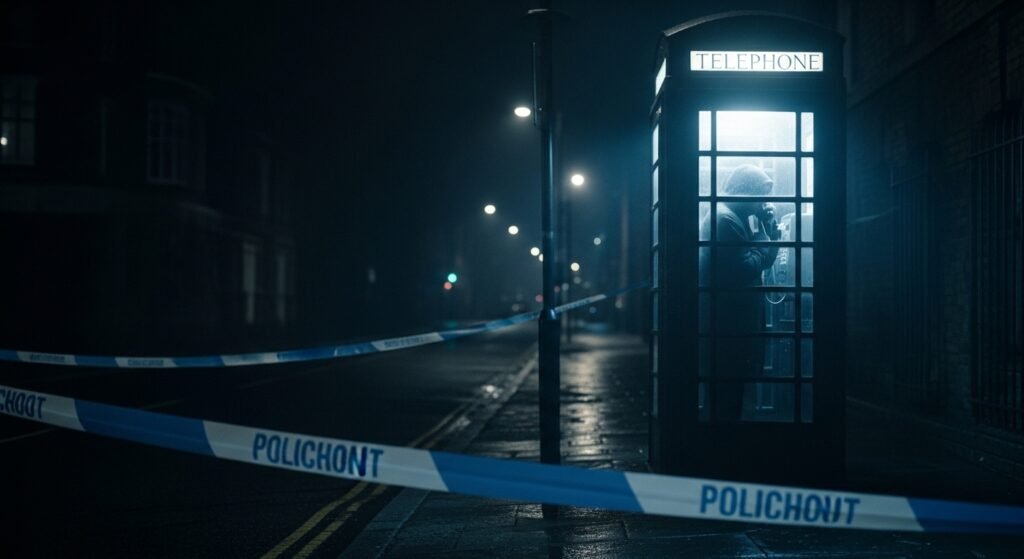
- The Discovery: In 2021, the BBC discovered grainy CCTV footage of a man resembling Benguit using a phone box on Charminster Road roughly 25 minutes after the murder.
- The Timeline: If this man was Benguit, he could not have been at the “crack house” cleaning up blood as the prosecution claimed. It would make the timeline of the murder accusation impossible.
- The Connection: Benguit was known to use that specific phone box to call his drug dealer. Panorama obtained phone records showing a call was made to Benguit’s dealer at the exact time the man was seen on CCTV.
- Police Knowledge: Crucially, documents show the police knew about this at the time. They knew a call was made to his dealer and that the man on CCTV looked like Benguit. Instead of investigating this exonerating evidence, they buried it.
- Missing Tapes: The Criminal Cases Review Commission (CCRC) found that 135 CCTV tapes from the original investigation have gone missing, further obscuring the truth.
The Serial Killer Next Door
While police were seemingly framing a local addict, a notorious murderer was living just three streets away from the crime scene.
- Danilo Restivo: An Italian national suspected of murdering a student in Italy before moving to Bournemouth in 2002.
- The Pattern: Restivo was an early suspect in Oki’s murder. A witness reported hearing him discuss non-public details of the killing. Italian police even warned Dorset detectives about him.
- The Alibi: Detectives dropped the investigation into Restivo after his girlfriend gave him an alibi.
- The Consequences: Four months later, Restivo brutally murdered his neighbor, Heather Barnett. He was eventually convicted of her murder and the earlier Italian murder.
- New Evidence: Panorama found CCTV footage of a man cycling near Oki’s murder scene just 10 minutes before the attack. The man bears a resemblance to Restivo. Had police pursued this lead instead of tunneling on Benguit, Heather Barnett might still be alive today.
“I’d Rather Die in Prison”
Omar Benguit, now 53, remains incarcerated. He is eligible for parole, but there is a catch: he must admit guilt to be released.
- Refusal to Lie: Benguit, who is now clean of drugs, refuses to confess to a crime he says he didn’t commit.
- The Declaration: “I’d rather die in prison saying I didn’t do it, than get released now saying that I did do it. It’s not going to happen. I’m an innocent man. Why should I lie just to get out?”
Former Detective Chief Inspector Brian Murphy, who reviewed the Panorama evidence, stated unequivocally: “This cries out for a review without a doubt.” He believes the conviction is unsafe. Yet, Dorset Police maintain that the case has been reviewed and dismissed by the Court of Appeal, placing the burden back on the CCRC.
Why It Matters
This story matters because it exposes a potential miscarriage of justice that has stolen 23 years from a man’s life while a serial killer was left free to kill again. For the common man, it erodes faith in the system; if evidence can be manufactured and alibis buried to satisfy political pressure, then the courtroom is not a place of truth, but of theater. It forces us to ask: how many other “closed” cases are built on coerced lies?
Leave a Reply