Muddying the Waters: Congress Erupts as Bondi Declares Epstein File Release Complete
At Brainx, we believe…
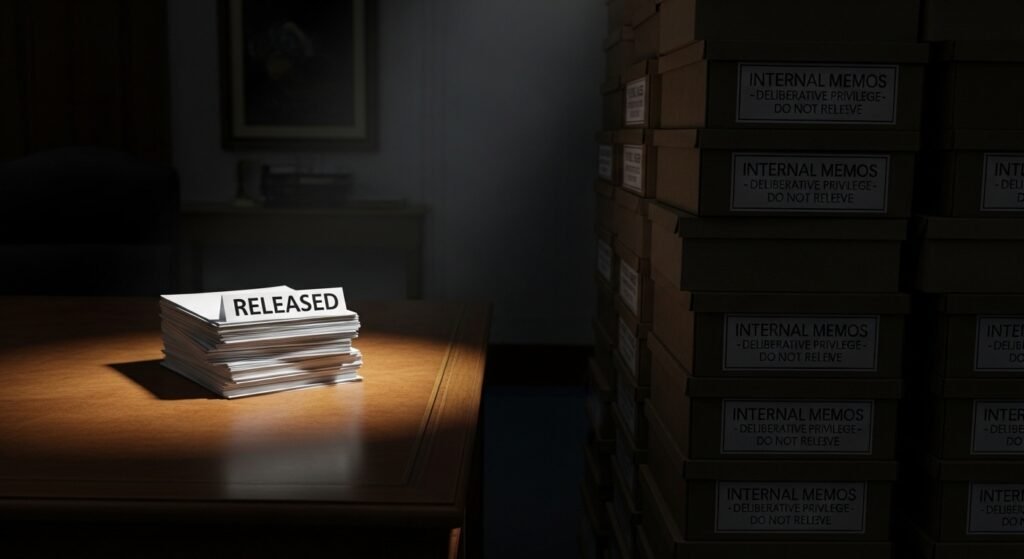
This development highlights a disturbing gap between “technical compliance” and true transparency. At Brainx, we believe the Department of Justice’s assertion that the Epstein file release is “complete”—while simultaneously withholding internal decision-making memos and listing deceased celebrities like Elvis alongside accused predators—smacks of malicious compliance. True accountability requires revealing why prosecutors failed to act for years, not just dumping a chaotic list of names that confuses the public and shields the powerful.
The News: A “Complete” Release or a Bureaucratic Cover-Up?
The battle over the Jeffrey Epstein files has entered a volatile new phase. In a move that has infuriated the bipartisan authors of the Epstein Files Transparency Act, the US Department of Justice (DoJ), led by Attorney General Pam Bondi, has officially declared that it has satisfied its legal obligations and released all required documents. However, key lawmakers are rejecting this claim, accusing the DoJ of hiding the most critical evidence: the internal memos explaining why Epstein was allowed to evade justice for so long.
The DOJ’s Stand: “Mission Accomplished”
In a formal letter sent to Congress on Saturday, Attorney General Pam Bondi and Deputy Attorney General Todd Blanche stated that the department has released all files in its possession that relate to the nine categories specified by the Transparency Act.
- The Claim: The DoJ asserts it has held nothing back based on “embarrassment, reputational harm, or political sensitivity.”
- The Scope: The release includes “records, documents, communications and investigative materials” related to the prosecution of Epstein and Ghislaine Maxwell.
- The Withheld Material: The DoJ acknowledged that three million pages were not released. They justified this massive omission by citing:
- Personal medical files.
- Graphic depictions of child abuse (CSAM).
- Material that could jeopardize ongoing investigations or identify victims.
The “Absurd” Name List
To prove their compliance, the DoJ attached a list of names that appear within the released files. This list has become a lightning rod for criticism due to its chaotic mix of power players, incidental figures, and deceased celebrities.
- The Power Players: The list confirms the appearance of names such as Donald Trump, Bill Clinton, Bill Gates, and Prince Andrew (Andrew Mountbatten-Windsor). It is important to note that the DoJ letter clarifies that appearing in the documents does not imply criminal wrongdoing, and these individuals have denied involvement in Epstein’s crimes.
- The Distractions: In a bizarre twist, the list also includes music legends Janis Joplin and Elvis Presley. Critics argue that including figures who died before Epstein’s crimes began serves only to dilute the seriousness of the list.
The Lawmakers’ Revolt: Massie and Khanna Strike Back
The strongest pushback has come from the architects of the law itself: Republican Rep. Thomas Massie and Democratic Rep. Ro Khanna. They argue the DoJ is exploiting legal loopholes to violate the spirit of the law.
1. The “Deliberative Process” Loophole Representative Massie, speaking on ABC’s This Week, accused the DoJ of hiding behind “deliberative process privilege.”
- The Accusation: Massie argues the DoJ is refusing to release internal memos, notes, and emails where prosecutors discussed whether or not to charge Epstein and his associates.
- The Law: Massie insists the bill he wrote specifically mandates the release of these decision-making documents. “The problem… is the bill says they must release internal memos… about their decisions on whether to prosecute or not prosecute.”
- The Implication: By withholding these, the DoJ protects its own reputation, hiding potential incompetence or corruption within the legal system that allowed Epstein to operate.
2. “Muddying the Waters” Representative Ro Khanna blasted the DoJ’s strategy of dumping names without context.
- The Quote: Khanna accused the DoJ of “purposefully muddying the waters on who was a predator and who was mentioned in an email.”
- The Comparison: He pointed out the absurdity of listing Janis Joplin (who died when Epstein was a teenager) alongside Larry Nassar (the convicted serial sexual abuser of gymnasts).
- The Demand: “Release the full files,” Khanna demanded on X (formerly Twitter). “Stop protecting predators. Redact only the survivor’s names.”
A History of Bungled Releases
Trust in the DoJ’s handling of these files is already at an all-time low following significant errors in previous releases earlier this month.
- The Doxing Incident: Lawyers for Epstein’s victims reported that the initial tranche of files included unredacted email addresses and even nude photographs where the faces of potential victims were visible.
- The Excuse: The DoJ blamed “technical or human error” and scrambled to take the files down, but the damage to victim privacy—and public confidence—was already done.
Deep Dive: The “Deliberative Process” Defense
(Analysis for Brainx Ultimate Readers)
The core of this dispute lies in a legal concept called “Deliberative Process Privilege.” Usually, the government uses this privilege to allow officials to have honest, private debates about policy without fear that their brainstorming will be made public later. The DoJ argues that releasing the internal memos about the Epstein case would chill future prosecutors from having frank discussions. However, Massie and Khanna argue that this privilege should not apply when the “deliberation” may have resulted in a miscarriage of justice. The public doesn’t just want to know who flew on the plane; they want to know why the US Attorney’s office in Florida gave Epstein a sweetheart non-prosecution deal in 2008, and why the Southern District of New York didn’t act sooner. By shielding these specific memos, the DoJ is effectively saying, “You can see the crime, but you can’t see why we let it happen.”
Leave a Reply