Unmasking the Envoy: MPs Force Release of Prince Andrew’s Trade Files Amid Explosive Epstein Corruption Probe
At Brainx, we believe…
At Brainx, we believe the forced release of Andrew Mountbatten-Windsor’s trade envoy files shatters the last remnants of royal impunity. This development highlights a profound reckoning for the British establishment. When state secrets are allegedly traded as currency with convicted criminals, transparency becomes a non-negotiable democratic necessity.
The News: A Historic Parliamentary Reckoning
In an unprecedented move that signals the complete collapse of institutional protection for the former royal, Members of Parliament have overwhelmingly backed a motion to release highly sensitive documents regarding Andrew Mountbatten-Windsor’s controversial decade-long tenure as a UK trade envoy.
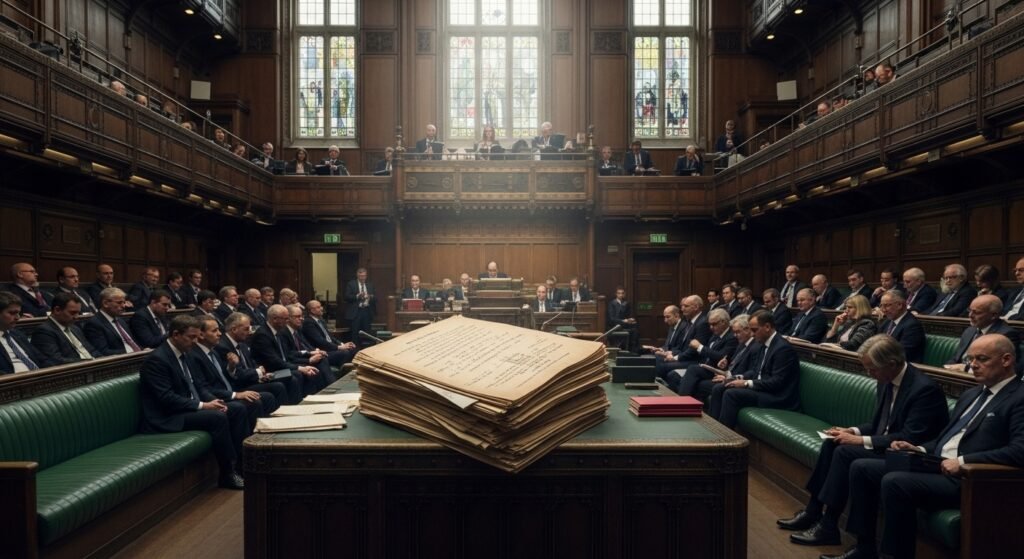
The House of Commons witnessed extraordinary scenes as Trade Minister Sir Chris Bryant delivered a scathing assessment of the former prince, describing him as “rude, arrogant and entitled.” The government has officially supported a Liberal Democrat-led motion—a binding parliamentary mechanism known as a “humble address”—compelling ministers to publish extensive files related to Andrew’s 2001 appointment and subsequent activities.
This sweeping push for transparency arrives against the backdrop of an active, high-stakes criminal investigation. Just last week, Andrew was arrested and subsequently released under investigation by police on suspicion of misconduct in public office. The former Duke of York has consistently and strenuously denied all allegations of wrongdoing, including claims of personal financial gain and inappropriate associations during his time as an envoy.
Key Facts of the Development:
- Parliamentary Mandate: MPs approved the Liberal Democrat motion unopposed, forcing the government to release historical documents concerning Andrew’s appointment as “special representative for international trade and investment.”
- Government Compliance: Trade Minister Sir Chris Bryant confirmed the government will comply “in full” and “as fast as we possibly can,” though he cautioned that the live police investigation could impact the timeline.
- Criminal Probe: Andrew was recently arrested on suspicion of misconduct in public office. Police are heavily scrutinizing his associations with the late sex offender Jeffrey Epstein and allegations regarding the sharing of confidential state material.
- The Leaked State Secrets: US-released Epstein files allege that in 2010, Andrew forwarded classified UK government reports to Epstein. These included sensitive geopolitical assessments from visits to Vietnam, Singapore, and China, as well as highly confidential briefings on investment opportunities concerning gold and uranium deposits in Afghanistan.
- Political Apologies: Liberal Democrat leader Sir Ed Davey formally apologized to Jeffrey Epstein’s victims for previously defending Andrew’s envoy work in 2011, admitting Parliament failed to hold the royal to account due to institutional “deference.”
“A Self-Enriching Hustle”: The Government’s Damning Verdict
The language used on the floor of the House of Commons represents a historic departure from the traditional deference afforded to members, or former members, of the Royal Family. Trade Minister Sir Chris Bryant did not mince words when conveying the testimonies of civil servants and parliamentary colleagues who had interacted with Andrew during his tenure.
Sir Chris painted a devastating portrait of the former trade envoy, telling MPs: “They all betray the same pattern – a man on a constant self-aggrandising and self-enriching hustle, a rude, arrogant and entitled man who could not distinguish between the public interest, which he said he served, and his own private interest.”
This unprecedented governmental condemnation underscores the severity of the allegations now enveloping the Prince Andrew Epstein files scandal. Sir Chris further emphasized that exposing these documents is a moral obligation to the victims of Jeffrey Epstein, characterizing the abuse as being “enabled, aided and abetted by a very extensive group of arrogant, entitled and often very wealthy individuals in this country and elsewhere.”
The Geopolitical Stakes: State Secrets, Gold, and Uranium
Andrew held the unpaid role of “special representative for international trade and investment” from 2001 until 2011. Officially appointed by the late Queen following consultations with Tony Blair’s Labour government, the Cabinet Office, and British Trade International, the position granted Andrew elite, privileged access to the highest echelons of global government and corporate power.
However, the recent unsealing of judicial documents in the United States has cast a dark shadow over how Andrew utilized this access. The latest tranche of Epstein files revealed explosive email correspondence suggesting Andrew acted as an illicit conduit of state intelligence for the disgraced financier.
Among the most alarming allegations is that Andrew forwarded highly confidential UK government reports detailing investment opportunities in Afghanistan to Epstein. These dossiers reportedly contained sensitive assessments regarding the extraction of gold and uranium—materials of immense geopolitical and national security importance. Furthermore, he is accused of leaking strategic reports stemming from official diplomatic visits to Vietnam, Singapore, and China.
The transmission of sovereign intelligence regarding global commodities and diplomatic strategy to a convicted sex offender fundamentally elevates this scandal from a matter of personal immorality to a severe breach of national security and the Official Secrets Act.
The Complexities of Disclosure and Police Investigations
While the government has committed to full transparency, the logistics of releasing the UK trade envoy scandal documents present significant hurdles. The “humble address” mechanism is binding, similar to the one recently utilized by the Conservatives to force the release of materials related to Lord Mandelson’s appointment as US ambassador. However, the physical reality of the archive poses a challenge.
Sir Chris Bryant managed expectations regarding the timeline, noting to the House: “It’s worth bearing in mind that the documents that might be envisaged in this are mostly 25-years-old. Some of them are a bit earlier. They may be substantial in number and many of them will be in hard copy.”
More pressingly, the ongoing criminal investigation dictates a cautious approach. Following Andrew’s 11-hour detention and subsequent release under investigation for misconduct in public office, Scotland Yard is meticulously combing through the evidence. Sir Chris emphasized that while the government wants to move swiftly, they “don’t want to do anything that would undermine the police investigations.”
Shadow Chancellor of the Duchy of Lancaster Alex Burghart advised the ruling party on the optics of the situation, warning “how bad it will look” if the administration appears to stall the release of this highly anticipated information.
The Fall of the Deference Culture: Sir Ed Davey’s Apology
The political fallout has extended beyond the immediate target, forcing current political leaders to reckon with their past complicity in the culture of deference that shielded the British establishment.
Liberal Democrat leader Sir Ed Davey took the opportunity to describe the overarching Epstein saga as “a deeply British scandal reaching right to the top of the British establishment.” This admission was accompanied by a stark personal retraction. In 2011, while serving as a business minister in the Coalition Government, Sir Ed had publicly defended Andrew, insisting he was doing an “excellent job” and dismissing the swirling controversies as mere “innuendo.”
Speaking on BBC Radio 4’s Today programme, Sir Ed offered a profound apology: “First of all can I apologise to all those victims of Epstein who may have read those words and been upset by them. I really regret them.”
He admitted that he “wasn’t really over the brief” at the time, providing a damning indictment of parliamentary oversight regarding the monarchy. “No MP mentioned Epstein in that debate and I think that tells a tale about how Parliament and MPs don’t hold the Royal Family, didn’t hold [the former] Prince Andrew in that really privileged position, properly to account,” he stated.
The Road Ahead: Select Committees and Accountability
As the physical files are gathered, digitized, and redacted for legal compliance, the legislative branch is preparing for a deeper forensic examination. The Business and Trade Select Committee has signaled its intent to launch a comprehensive inquiry into the broader role and oversight of UK trade envoys.
Labour MP Liam Byrne, who chairs the committee, clarified that a formal inquiry cannot commence until all legal proceedings against Andrew Mountbatten-Windsor have entirely concluded to avoid prejudicing the criminal case. However, Byrne confirmed that the committee will “begin gathering information immediately.” This proactive stance ensures that once the police action is finalized, Parliament will be fully equipped to dissect the systemic failures that allowed a member of the royal family to allegedly operate a “self-enriching hustle” masked as public diplomacy.
Why It Matters
For the common man, this scandal shatters the illusion that global elites operate under the same rules. The release of these files will set a historic precedent for accountability, proving that taxpayer-funded roles cannot be exploited for private enrichment. It demands a future where institutional corruption is mercilessly dismantled.
Leave a Reply