Google’s Algorithmic Nightmare: Tech Giant Apologizes for Pushing Racist Baftas News Alert
Brainx Perspective
At Brainx, we believe this algorithmic catastrophe exposes the dangerous blind spots in automated content curation. While the industry rushes toward AI dominance, Google’s failure to filter a highly offensive racial slur from a Baftas news alert proves that even sophisticated safety guardrails are alarmingly fragile without strict human oversight.
The News: A Technical Failure with Severe Social Repercussions
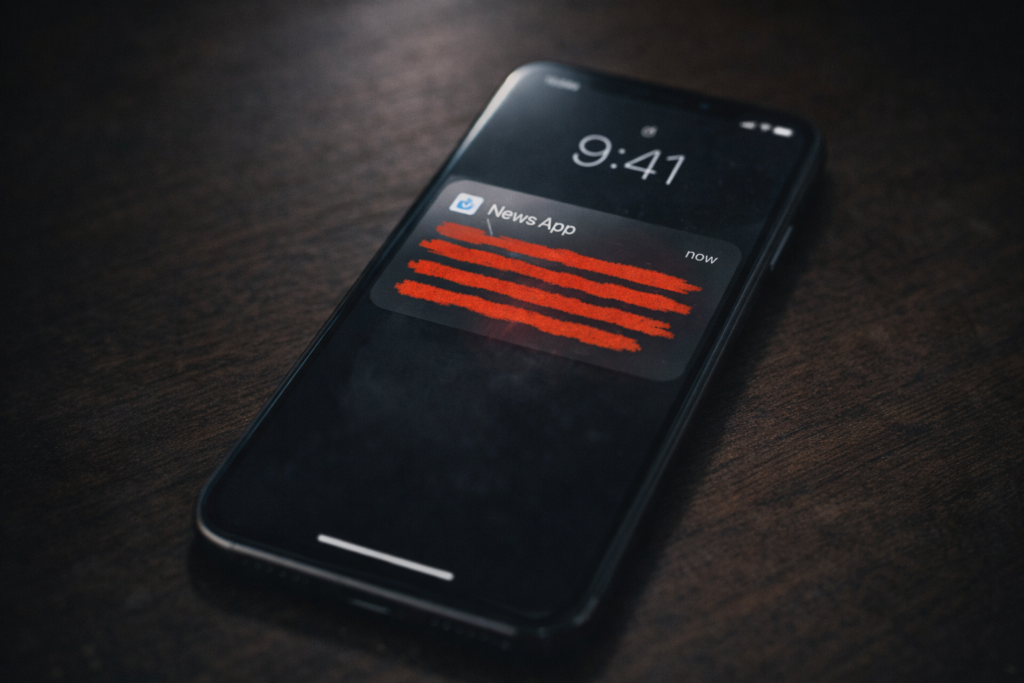
In an unprecedented blunder that has sparked widespread outrage, tech giant Google has issued a formal apology after its News application sent out a push notification containing a highly offensive racial slur. The alert, distributed to users’ smartphones, callously suggested that readers “see more” regarding the specific derogatory term.
The incident originated from the fallout of this year’s Baftas (British Academy Film Arts and Television) ceremony. During the prestigious event, an audience member suffering from Tourette’s syndrome experienced an involuntary vocal tic, shouting the slur just as acclaimed Black actors Michael B. Jordan and Delroy Lindo took to the stage. While the BBC and Bafta leadership moved swiftly to apologize and scrub the racist language from subsequent broadcasts, Google’s automated systems inadvertently amplified the trauma.
Key Facts of the Incident:
- The Triggering Event: An audience member with Tourette’s syndrome involuntarily yelled a racial slur during the Baftas ceremony when actors Michael B. Jordan and Delroy Lindo appeared on stage.
- The Algorithmic Error: Google News sent a push notification summarizing the event’s fallout, utilizing its “see more” feature to actively prompt users to read further into the specific racial slur.
- Google’s Response: A Google spokesperson confirmed the incident, stating: “We’re deeply sorry for this mistake. We’ve removed the offensive notification and are working to prevent this from happening again.”
- Debunking the AI Rumor: Despite rampant social media speculation blaming Generative AI for the alert, Google clarified the error stemmed from older safety feature failures within its push notification content systems, not a Gen-AI hallucination.
- The Root Cause: The automated aggregation system recognized the slur being frequently referenced in online news reports about the Baftas, and subsequently used the term as a characterizing keyword to push out content.
- Social Media Backlash: The incident went viral after online creator Danny Price posted a screenshot on Instagram, pointing out the painful irony of the notification arriving during US Black History Month.
Deep Dive: The Mechanics of the Algorithmic Failure
To understand how one of the world’s most advanced technology companies could broadcast a racial slur, we must examine the architecture of automated news aggregation. Google News, which stands as one of the most downloaded news applications in the United States and globally, relies on complex natural language processing (NLP) algorithms to scan, categorize, and distribute breaking news without human intervention.
When the Baftas incident occurred, thousands of digital publishers rushed to report on the disruption. As these articles populated the internet, Google’s content crawlers analyzed the text to identify the trending topic. The system successfully identified that the specific racial slur was the focal point of the rising news cycle. However, the critical failure occurred in the application of this data.
Instead of recognizing the term as a toxic, restricted word that should trigger safety guardrails, the algorithm treated it as a neutral, high-volume keyword. Consequently, the automated user interface generated a “see more” tag utilizing the exact slur, effectively weaponizing an involuntary medical tic into a clickbait push notification. Google admitted that this “shouldn’t have happened” and that the necessary safety triggers—designed specifically to catch hate speech and profanity in UI elements—failed completely.
The Intersection of Disability, Media, and Automation
This controversy highlights a deeply complex intersection between medical conditions, live broadcasting, and unfeeling technology. Tourette’s syndrome is a neurological disorder characterized by sudden, involuntary movements or sounds known as tics. Coprolalia, the involuntary outburst of obscene or socially inappropriate words, is a rare but highly stigmatized symptom of the condition.
The BBC and Bafta handled the live, unpredictable nature of the outburst by apologizing and manually removing the audio from replays—a human-led editorial decision that applied empathy and context. Google’s system, devoid of contextual awareness, did the exact opposite. It stripped away the medical context of the Tourette’s syndrome and the editorial context of the news reports, isolating the slur and feeding it directly to users’ lock screens.
The Public Outcry and Corporate Accountability
The public reaction was swift and unforgiving. Online creator Danny Price was among the first to bring widespread attention to the notification via Instagram. Expressing his outrage, Price noted the severe irony of the situation, writing, “What an interesting Black History month this has turned out to be.”
While Google assured the public on Tuesday that the offending notification was removed quickly and only reached a “small number of users,” the damage to brand trust is palpable. The incident has reignited fierce debates regarding the tech industry’s reliance on automation. As platforms scale to serve billions of users, the sheer volume of data makes manual human curation impossible, forcing reliance on algorithms. Yet, when these algorithms fail to parse the difference between reporting on a slur and promoting a slur, the platforms risk amplifying hate speech under the guise of news distribution.
Google is now reportedly overhauling the specific guardrails associated with its push notification infrastructure. This involves retraining their safety classifiers to ensure that highly sensitive, derogatory, or racist language is hard-coded into blocklists that prevent their usage in auto-generated text, tags, or “see more” suggestions, regardless of their frequency in the daily news cycle.
Why It Matters
This development highlights the severe real-world impact of automated curation errors. For the common man, it erodes trust in the digital platforms we rely on daily for information. Ultimately, it serves as a stark warning that technology companies must prioritize robust, human-centric ethical safeguards over sheer speed and algorithmic automation.
Leave a Reply