An orphan’s brutal murder shines a spotlight on child abuse in Somalia
Beyond the Galkayo Verdict: Is Somalia Witnessing a Watershed Moment for Child Protection and Legal Reform?
Brainx Perspective
At Brainx, we believe that the conviction of Hodan Mohamud Diiriye represents a tectonic shift in Somali jurisprudence. This case isn’t just about a single tragedy; it is a direct challenge to the “behind-closed-doors” clan settlements that have historically silenced the most vulnerable, signaling a new era of state-led accountability and the prioritisation of individual human rights over traditional mediation.
The News: A Deep Dive into the Saabirin Case and Its Socio-Legal Echoes
The death of 14-year-old Saabirin Saylaan has become a haunting symbol of the systemic failures and emerging hopes within Somalia’s justice system. What began as a local tragedy in Galkayo has evolved into a national catalyst for reform, pitting the evolving formal judiciary against centuries of traditional clan-based customs.
I. The Tragedy in Galkayo: Evidence That Shook a Nation
Saabirin Saylaan, an orphan who had been placed in the care of Hodan Mohamud Diiriye as a domestic worker, suffered a fate that has horrified the Somali public. For months, behind the walls of a private residence, the young girl was subjected to systematic physical and psychological torture.
The case took a chilling turn when investigators discovered that the abuse had been meticulously documented. Video evidence found on Diiriye’s mobile phone served as a silent witness to the atrocities, showing a level of brutality that the prosecution described as “incomprehensible.” This digital evidence proved insurmountable, leading to a swift and severe verdict in a region where such crimes often go unpunished.
II. The Rare Verdict: A Judicial Statement
In a sentence that resonated across the Horn of Africa, the court sentenced 34-year-old Hodan Mohamud Diiriye to death. Her husband was also sentenced to a significant prison term for criminal negligence, establishing a legal precedent that those who witness abuse and fail to intervene are equally liable under the law.
Key aspects of the legal proceedings included:
- Live Broadcast: In an unprecedented move, authorities broadcast the trial live, ensuring that the evidence and the verdict were visible to every Somali with a television or smartphone.
- Transparency as a Tool: By making the trial public, the state aimed to restore faith in the formal judiciary, which has long been viewed as weak or corrupt compared to traditional systems.
- The Death Penalty Debate: While international human rights groups often oppose capital punishment, many local activists saw the death sentence as the only “proportionate response” to such extreme cruelty, reflecting a public demand for harsh deterrence.
III. The Friction Point: Xeer vs. The Formal Court
Historically, Somalia has relied on the Xeer system—a traditional, polycentric legal system where clan elders mediate disputes. In cases of murder or abuse, the Xeer often dictates the payment of “blood money” (Diya) to the victim’s family to prevent inter-clan warfare.
However, the Saabirin case marks a significant departure from this norm:
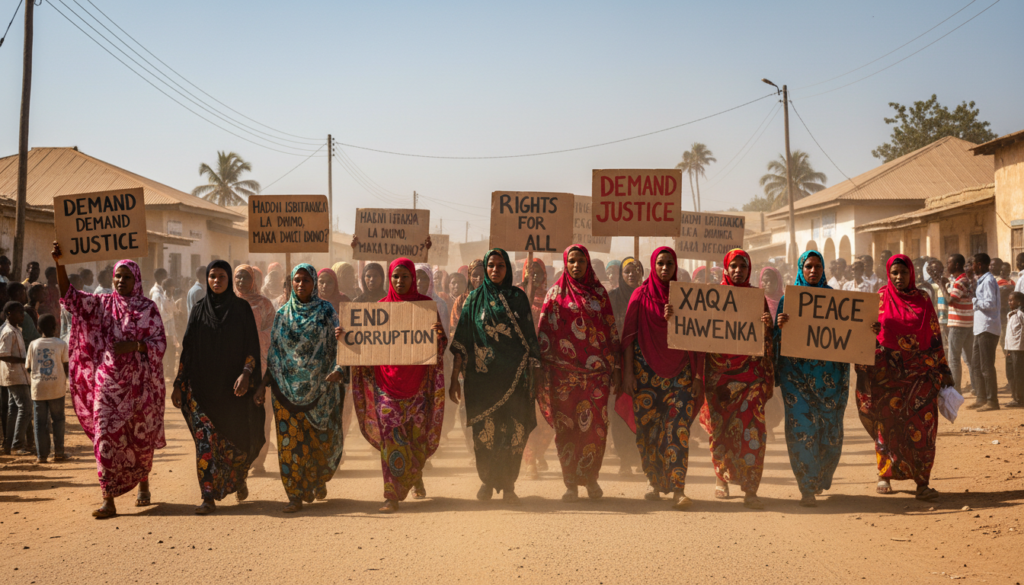
- The Rejection of “Blood Money”: Public outrage, led predominantly by women’s groups and youth activists in Puntland, forced the state to bypass clan mediation. Protesters argued that compensation money should not be a substitute for criminal justice.
- Victim Marginalization: Activists point out that under traditional settlements, the “compensation” rarely benefits the victim (especially a deceased orphan with no immediate protectors), but rather serves to pacify the elders of the involved clans.
- The Shift in Public Sentiment: The mass protests following the discovery of Saabirin’s body demonstrated that a growing segment of Somali society—particularly the urbanized youth—no longer accepts traditional justice for egregious human rights violations.
IV. Legislative Milestones and the African Charter
The timing of the verdict coincides with a major legislative shift in Mogadishu. In late 2025, the Somali Parliament ratified the African Charter on the Rights and Welfare of the Child (ACRWC). Somalia is now the 52nd African nation to adopt this treaty, which mandates strict protections against child labor, abuse, and torture.
However, the implementation of this Charter faces a complex legal landscape:
- The Sharia Lens: The Somali government has explicitly stated that the Charter will be interpreted through the lens of Islamic Law (Sharia) and the national constitution.
- The Definition of “Child”: While the Charter defines a child as anyone under 18, Somali officials have noted reservations, particularly regarding the age of marriage and religious maturity, which are traditionally governed by Islamic jurisprudence.
- Article 21a Challenges: The Charter’s call to end “harmful cultural practices” and set the minimum marriage age at 18 remains a point of contention between secular reformers and conservative religious leaders.
V. The Vulnerability of Domestic Workers
Saabirin’s status as an orphan and a domestic worker highlights a massive regulatory gap. In Somalia, thousands of children are employed in “informal” domestic roles, often sent by poor rural families to work in urban households in exchange for food, shelter, or small stipends sent back home.
- Lack of Oversight: There is currently no state mechanism to monitor the welfare of children in domestic service.
- The “Extended Family” Fallacy: Many children are placed with distant relatives under the guise of “support,” but the lack of formal contracts or social service check-ins leaves them vulnerable to exploitation and hidden abuse.
- Economic Drivers: High poverty rates (estimated at 60% of the population) continue to push families into sending children into the workforce, often before they reach the age of 10.
VI. The Role of NGOs and International Partners
Organizations like Save the Children and the UNICEF have been pivotal in pushing for the ratification of the African Charter and providing support for the Galkayo investigation. Their reports indicate that while the Galkayo verdict is a step forward, the broader picture remains grim:
- Rising Violence: Recent UN data suggests that sexual and physical violence against children in conflict zones in Somalia has seen a worrying uptick between 2024 and 2026.
- Need for Social Services: Legal verdicts are only one side of the coin; activists are calling for the establishment of safe houses, hotlines for reporting abuse, and specialized child protection units within the police force.
VII. The Future: A New Legal Culture?
The legacy of Saabirin Saylaan will be measured by whether the Somali government can turn this moment of outrage into a sustainable system of protection.
The Galkayo case has proven that:
- Technology is a Game Changer: Mobile phone evidence and live-streamed trials have made it harder for perpetrators to hide and for authorities to ignore public demand.
- State Power is Growing: The ability of the Puntland and Federal governments to override clan elders in this instance shows an increasing centralization of judicial power.
- Public Advocacy Works: The women and youth of Galkayo who took to the streets were the true architects of this verdict. Their refusal to stay silent broke the traditional cycle of impunity.
As Somalia moves into 2026, the challenge will be to codify these shifts into permanent law. The proposed Sexual Offences Bill and Child Rights Act are currently the subjects of intense debate in Parliament. The success of these bills will determine if the “Justice for Saabirin” movement leads to a fundamental change in the Somali social contract.
Why It Matters
For the average citizen, this verdict marks the beginning of the end for legal impunity within domestic settings. It empowers families to seek formal justice rather than settling for “blood money,” ensuring that the value of a human life is no longer a matter of clan negotiation. If this momentum continues, it will force a total overhaul of child labor and protection standards across East Africa, making the domestic sphere safer for the most vulnerable.



Leave a Reply