BBC to make shows for YouTube in landmark new deal
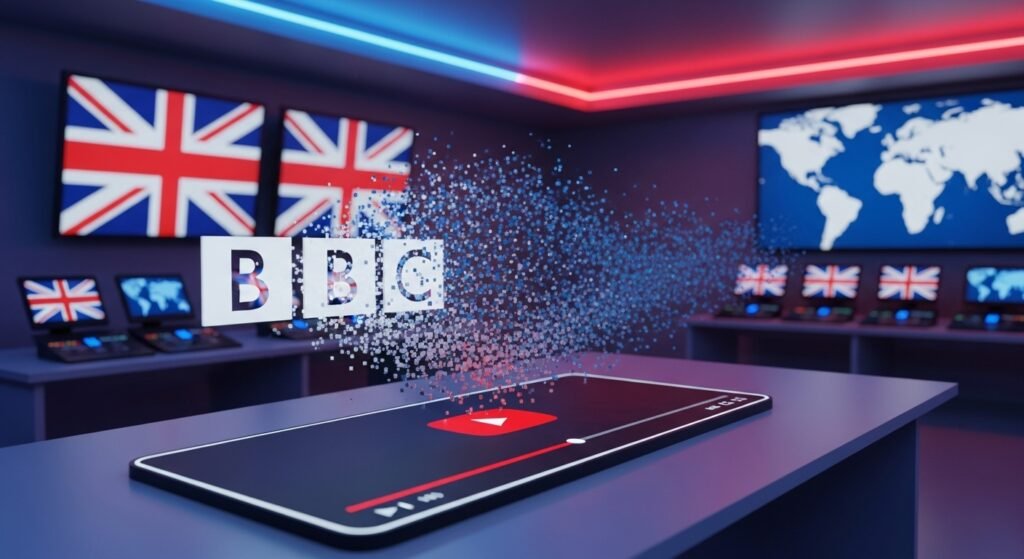
BBC’s Digital Revolution: Historic YouTube Deal Set to Monetize Global Views and Save Future Funding
2. Brainx Perspective
At Brainx, we believe this landmark partnership represents more than just a content deal; it is a survival strategy for the digital age. This development highlights the inevitable shift public broadcasters must make to remain relevant. By pivoting to “digital-first” production and monetizing international eyeballs, the BBC is acknowledging a hard truth: the audience has moved, and to save its future, the corporation must follow them.
3. The News
In a move that signals a fundamental shift in its operational strategy, the British Broadcasting Corporation (BBC) has announced a groundbreaking partnership with Google-owned video giant YouTube. For the first time in its history, the BBC will produce original content specifically tailored for YouTube’s platform, rather than simply using it as a repository for trailers and promotional clips.
This strategic pivot aims to capture the “digital-native” younger audience that has increasingly drifted away from traditional television, while simultaneously opening up new revenue streams during a period of financial uncertainty for the broadcaster.
The Core of the Deal
The agreement fundamentally changes how the BBC interacts with the world’s largest video platform.
- Original Content Creation: Unlike previous strategies which focused on reposting TV highlights, this deal will see the BBC commissioning and creating programmes specifically for YouTube.
- Target Audience: The primary focus is on younger viewers who consume media almost exclusively via streaming services and social platforms.
- Platform Integration: While YouTube is the primary destination for this new content, these shows may also be distributed via the BBC’s own iPlayer and BBC Sounds platforms, creating a funnel to bring users back to BBC services.
- Launch Timeline: The initiative will officially kick off with content covering the Winter Olympics in February, followed by a rollout across genres including entertainment, documentaries, news, and children’s programming.
The Financial Strategy: Ads for the World, Ad-Free for the UK
A critical component of this partnership is its potential to generate revenue outside of the traditional TV license fee.
- Global Monetization: When viewed from outside the United Kingdom, this new BBC YouTube content will carry advertisements. This allows the BBC to monetize its massive global reach without violating its public service charter at home.
- Domestic Purity: For viewers within the UK, the content will remain free of advertising, adhering to the current funding model constraints.
- Channel Expansion: It is understood that the BBC plans to expand its footprint significantly, eventually operating up to 50 distinct channels on YouTube.
Upskilling the Next Generation
Beyond content, the partnership includes a major investment in the UK’s creative economy, supporting the government’s Creative Industries Sector Plan.
- The Training Programme: Led by the prestigious National Film and Television School (NFTS), the initiative will train 150 media professionals.
- Goal: The aim is to “upskill” these creators in specific YouTube production techniques, ensuring the UK remains a global leader in the “creator economy.”
- Pedro Pina’s Vision: The Vice President of YouTube EMEA stated that this training represents a “deep investment in the UK’s creative pipeline,” effectively building the stage for the “storytellers of tomorrow.”
The Context: A Battle for Relevance
This deal comes at a time when the BBC’s dominance is being challenged by shifting consumption habits and political pressure.
- The Viewership Flip: In a symbolic tipping point last December, data from rating agency Barb revealed that the number of people watching YouTube in the UK (52 million) overtook the BBC’s combined reach (51 million) on certain metrics for the first time.
- Funding Crisis: The BBC’s funding model is under intense scrutiny. Culture Secretary Lisa Nandy recently described the current license fee as “unenforceable,” signaling that the government is reviewing all options for the corporation’s financial future.
- Tim Davie’s Stance: BBC Director General Tim Davie framed the move as a way to “connect with audiences in new ways,” admitting that while the BBC has a strong start on the platform (with 15 million subscribers on its main channel), this deal takes their digital presence to “the next level.”
Deep Dive Analysis: The “Netflix-ification” of Public Service
(Expanded Context for Industry Observers)
1. The “Digital-First” Imperative For decades, the BBC operated on a “broadcast-first” model, where TV was the primary product and digital was a catch-up service. This YouTube deal flips that logic. By creating content for YouTube, the BBC is admitting that for Generation Z and Alpha, YouTube is the television. If the BBC wants to fulfill its mandate to “inform, educate, and entertain” the entire nation, it can no longer expect the youth to come to iPlayer; it must go to where they live.
2. The Economics of Survival The “Global Ad Revenue” strategy is the most significant aspect of this news. With the license fee frozen and inflation rising, the BBC faces a massive budget deficit. By placing ads on content viewed internationally, the BBC is effectively behaving like a commercial entity abroad to subsidize its public service obligations at home. This is a model successfully used by BBC Studios (which sells shows like Doctor Who and Bluey globally), but applying it to short-form digital content is a new frontier.
3. The Risk of Brand Dilution Critics may argue that by partnering so closely with a tech giant like Google/YouTube, the BBC risks diluting its brand or becoming dependent on an external algorithm. However, the alternative—irrelevance—is far worse. The challenge will be maintaining the distinctive “BBC Quality” in a YouTube format that often rewards sensationalism and clickbait.
4. “Why It Matters”
For the common man, this means high-quality, trustworthy content will soon be more accessible on the apps you use daily, rather than locked behind a TV schedule. For the future, it signals the likely end of the traditional “TV License” model, paving the way for a BBC funded by a hybrid of global commercial success and digital innovation.


Leave a Reply