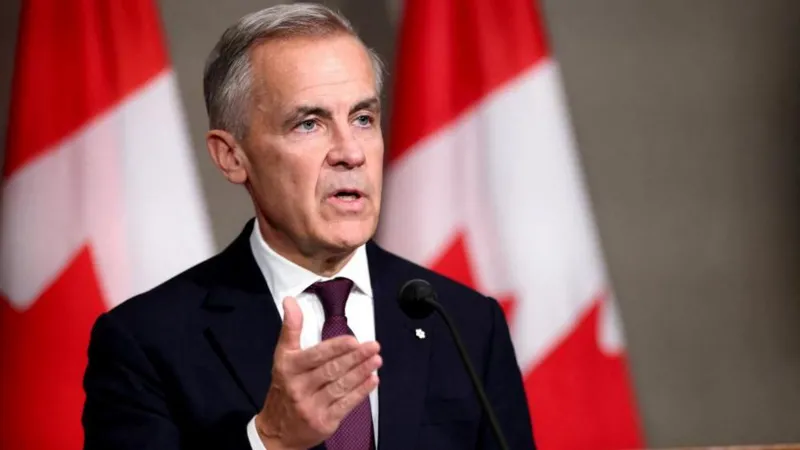
Canada PM Mark Carney to visit China next week for trade talks
1. Catchy Headline
Canada’s Pivot East: PM Carney Bets on Beijing to Escape Washington’s Trade Grip
2. “Brainx Perspective” (Intro)
At Brainx, we believe Prime Minister Mark Carney’s upcoming mission to Beijing represents a decisive, albeit risky, recalibration of Canadian foreign policy. This development highlights a harsh new reality: with traditional alliances straining under the weight of American protectionism, Canada is forced to seek economic stability elsewhere, turning a “distance” problem into a diplomatic gamble.
3. The News (Body)
In a move that signals a seismic shift in North American geopolitics, Canadian Prime Minister Mark Carney is set to embark on a historic state visit to China next week. This journey marks the first time a Canadian head of state has visited Beijing in nearly a decade, underscoring the urgency of Ottawa’s search for new markets amidst growing economic isolationism from its southern neighbor.
The Historic Itinerary
Prime Minister Carney will be in China from January 13 to January 17. The agenda is packed with high-level dialogues focused on stabilizing a relationship that has been in freefall for years. According to the Prime Minister’s Office (PMO), key discussions will center on:
- Trade Normalization: Removing barriers for Canadian exports.
- Energy Cooperation: Discussing future energy needs and transition strategies.
- Agriculture: Resolving the crippling tariffs on Canadian farming outputs.
- International Security: Addressing global stability and regional tensions.
This formal invitation follows a crucial sideline meeting between Carney and Chinese President Xi Jinping in South Korea last October, where the groundwork for a “reset” was laid.
The Trump Factor: Why Now?
The timing of this visit is inextricably linked to the political climate in the United States. With US President Donald Trump imposing aggressive tariffs and pausing trade talks, Canada finds itself in a precarious position.
- US Trade Uncertainty: The US remains Canada’s largest market, but the “America First” approach has hurt Canadian industries.
- Tariff Blowback: Canadian steel, aluminum, and auto sectors have suffered under reinstated US levies.
- USMCA Review: A formal review of the free trade agreement between Canada, the US, and Mexico is underway but remains fraught with tension.
Carney’s strategy is clear: diversification. He has publicly committed to doubling Canada’s non-US exports over the next decade to reduce reliance on an increasingly unpredictable American partner.
Anatomy of the Trade War (2024-2025)
To understand the significance of this trip, one must look at the recent economic hostilities that froze relations between Ottawa and Beijing.
- The Catalyst (Oct 2024): Following the US lead, Canada imposed a 100% surtax on Chinese electric vehicles (EVs) and a 25% tariff on Chinese steel and aluminum.
- The Retaliation (March 2025): China responded with targeted fury, hitting Canada’s agricultural heartland. Beijing imposed:
- A 76% levy on Canadian canola seed imports.
- A 100% levy on canola oil, meal, and peas.
The Economic Toll on the West
The trade war has not been abstract; it has been devastating for Western Canada.
- Farmers in Crisis: China is historically the largest buyer of Canadian canola. The retaliatory levies effectively locked Canadian farmers out of their most lucrative market.
- The Goal: Carney aims to dismantle these barriers. During the October meeting in South Korea, he described the relationship as being at a “turning point,” emphasizing that “distance is not the way to solve problems.”
A New “Correct Track”?
Both leaders appear ready to de-escalate. President Xi has expressed a willingness to push relations back onto a “healthy, stable, and sustainable correct track.” For Carney, this trip is about translating that diplomatic sentiment into signed agreements that reopen ports to Canadian grain and secure the country’s economic sovereignty.
4. “Why It Matters” (Conclusion)
This pivot matters because it directly affects the grocery bills and job security of the common Canadian. If Carney succeeds, it could rescue Western farmers from financial ruin and lower consumer costs; if he fails, Canada risks being squeezed between an indifferent Washington and a hostile Beijing for years to come.



Leave a Reply