Gold and silver hit records as investors hunt for safety
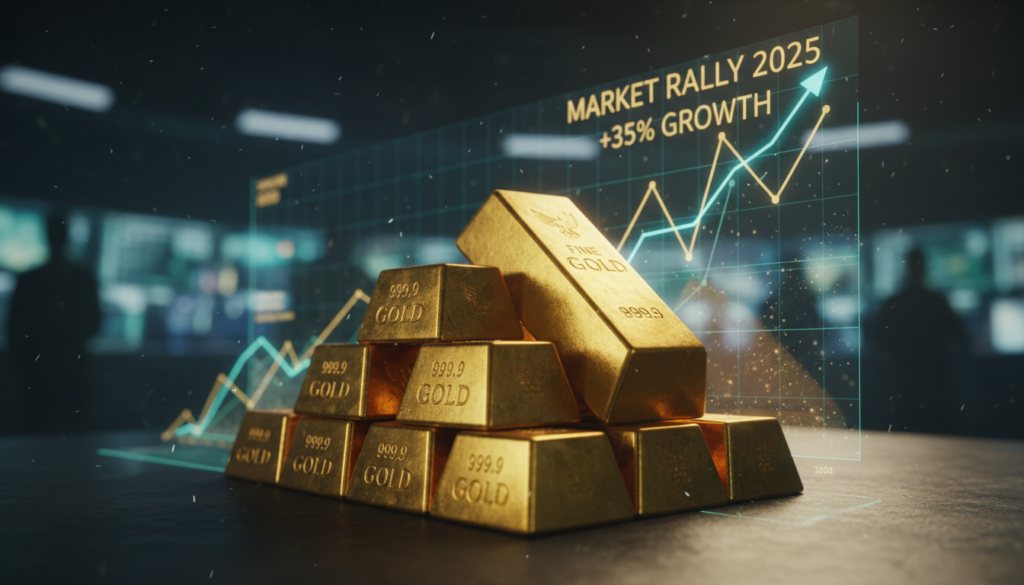
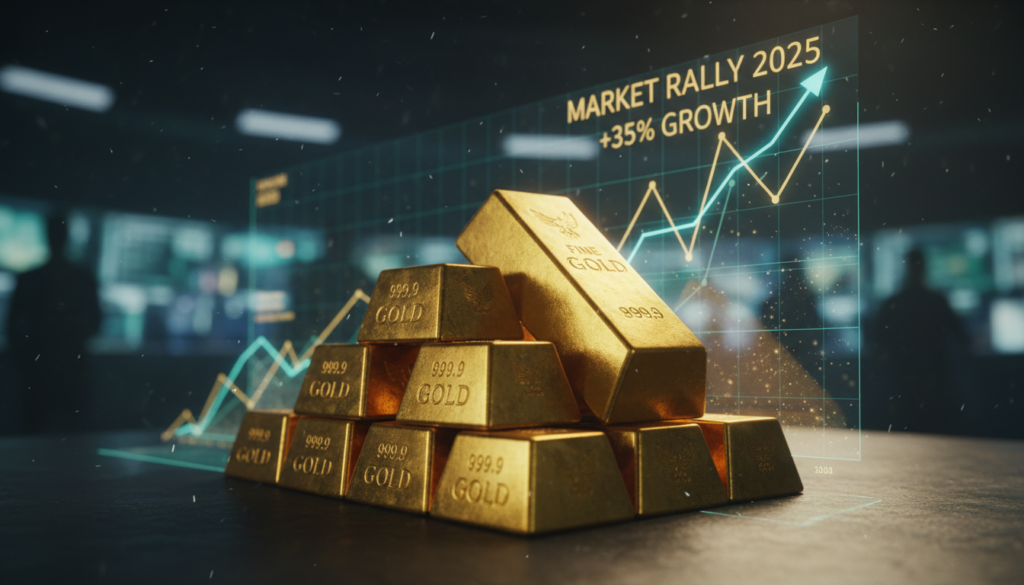
Gold Breaches $4,400: Inside the Historic 2025 Supercycle and the Shift to Tangible Wealth
Brainx Perspective
At Brainx, we believe this unprecedented surge is not merely a market correction but a fundamental restructuring of the global financial order. The breach of the $4,400 barrier signifies a collapsing trust in traditional fiat stability and geopolitical cohesion. This development highlights a definitive pivot where sovereign and retail investors alike are abandoning “paper promises” in favor of tangible history, signaling that the era of easy money is ending and a new cycle of asset preservation has begun.
The Historic Milestone: A New Financial Reality
In a financial landscape currently defined by extreme volatility and shifting geopolitical tectonic plates, the global commodities market has just witnessed what historians may later call the “Great Pivot of 2025.” Gold, the world’s oldest and most trusted store of value, has not only broken records but has completely shattered the ceiling of expectations.
Trading above $4,400 (£3,275) an ounce for the first time in history, this surge marks a pivotal moment in monetary history. It signals a profound shift in investor sentiment, central bank strategy, and the global economic outlook as we approach 2026. This is no longer just a bull market; it is a statement on the health of the global economy.
The Velocity of the Ascent
To truly grasp the magnitude of this moment, one must analyze the sheer velocity of the price movement.
- Start of Year: Gold began the year trading at approximately $2,600 an ounce.
- Current High: As of Monday’s trading session, the spot price hit a staggering high of $4,426.66.
- The Gain: This represents a rise of more than 68% within a single calendar year.
According to Adrian Ash, director of research at BullionVault, this is the most significant percentage increase the metal has experienced since 1979. That era serves as a grim historical parallel to our current moment: it was a time characterized by crippling stagflation (stagnant growth coupled with high inflation) and severe oil shocks. The fact that the market is replicating these metrics suggests that investors are bracing for a similar economic winter in 2025-2026.
The “Perfect Storm”: Catalysts Behind the Rally
Analysts across the board have identified a confluence of “slow-burning trends” that have finally ignited into a full-scale bonfire of demand. It is rare for economic drivers to align so perfectly, creating what many are calling a “Perfect Storm” for precious metals.
The primary drivers fueling this ascent include:
- Aggressive Interest Rate Expectations: The prevailing consensus among major financial institutions is that the US Federal Reserve is backed into a corner and will be forced to cut interest rates further in the coming year.
- The Logic: High interest rates usually hurt gold because gold pays no dividends or interest. However, when rates fall, the “opportunity cost” of holding gold drops, making it more attractive than bonds. The market is pricing in a scenario where the Fed must cut rates to save a slowing economy, sending capital fleeing into hard assets.
- Geopolitical Fractures and Trust Erosion: We are witnessing a deterioration of the post-WWII order. Ongoing regional conflicts and escalating trade tensions have eroded trust in the stability of traditional fiat currencies. When investors fear that their currency might be weaponized or devalued due to war, they retreat to the neutrality of gold.
- The Return of Volatility via the “Trump Effect”: The reintroduction of aggressive tariff policies and trade wars has injected a massive dose of volatility into global supply chains. Markets hate uncertainty, and the current political climate offers it in spades.
Politics, Tariffs, and the “Monetary Metal”
Finance and politics have never been mutually exclusive, but in 2025, they are inextricably linked. The resurgence of protectionist policies, specifically the “Trump tariffs,” has added a layer of complexity to the global trade environment that cannot be ignored.
Adrian Ash notes that the precious metals market is signaling a violent reaction to these provocations. “The precious metals market says that President Trump has really triggered something – and gold has gone crazy this year,” Ash observed. He points to a trifecta of instigators:
- Trade Wars: Disrupting the flow of goods and services.
- Attacks on Federal Independence: Political pressure on the US Federal Reserve undermines faith in the dollar.
- Escalating Tensions: A general sense of geopolitical unease.
The Flight from Counterparty Risk
When a global superpower engages in economic brinkmanship, investors instinctively flock to assets that do not possess counterparty risk.
- Bonds and Currencies: These are liabilities of a government. If that government is unstable or acts erratically, the value of the asset is at risk.
- Gold: It is not a liability of any government. It is an asset that exists outside the banking system. Consequently, as faith in policy stability wobbles, gold acts as the “primary monetary metal,” responding instantly to economic tremors.
The Silent Outperformers: Silver and Platinum
While the headlines are dominated by gold’s breach of $4,400, the “Brainx” analysis suggests the real story of 2025 lies in the aggressive outperformance of the white metals. Silver and Platinum are not just riding gold’s coattails; they are actively outpacing it.
Silver: The Volatile Cousin
Silver has lived up to its reputation as “gold on steroids.”
- Record High: The metal hit a record $69.44 an ounce on Monday.
- Performance: Year-to-date, silver is up a staggering 138%, more than doubling the percentage gain of gold.
Platinum: The Industrial Powerhouse
Platinum is currently trading at a 17-year high, driven by a resurgence in industrial demand that supply cannot meet.
The Dual Utility Factor
Why are these metals outperforming gold? The answer lies in their Dual Utility.
- Gold is almost exclusively a monetary and jewelry asset. Its value is derived from wealth preservation.
- Silver and Platinum are monetary assets, but they are also critical industrial components.
Silver is essential for photovoltaics (solar panels), high-end electronics, and medical applications. Platinum is vital for the automotive industry (catalytic converters) and the burgeoning hydrogen economy. As global supply chains tighten due to tariffs and blockades, the supply constraints for these industrial metals have stoked demand feverishly. Investors are not just buying silver for wealth preservation; they are speculating on a severe shortage of essential industrial materials needed for the green energy transition.
Central Banks: The “Whales” Creating a Floor
Beyond retail investors and speculators, a massive structural shift is occurring at the sovereign level. Central banks globally are aggressively expanding their physical gold holdings, acting as “Silent Whales” in the market.
This trend is driven by three strategic imperatives:
- Countering Economic Turbulence: Nations are protecting their reserves from global recessionary pressures.
- De-Dollarization: The “weaponization” of the US dollar through sanctions has encouraged nations (particularly in the BRICS bloc) to diversify into neutral assets that cannot be frozen or seized.
- Portfolio Diversification: Moving away from US Treasuries as yields fluctuate and debt levels rise.
The Goldman Sachs Verdict: Analysis from Goldman Sachs predicts this pattern of accumulation will continue well into 2026. This creates a solid “price floor” for gold. Even if retail demand softens, sovereign buying provides sustained support for high valuations, making a crash less likely.
Investment Outlook: Navigating 2026
What does this supercycle mean for the average investor or portfolio manager?
Anita Wright, a chartered financial planner at Ribble Wealth Management, suggests that the steady increase is a defensive maneuver. “When confidence in financial assets and policy stability starts to wobble, gold tends to respond first,” Wright explains. The weaker US dollar has further catalyzed this move, making dollar-denominated gold cheaper for overseas buyers, thereby fueling global demand.
The Consensus on Rate Cuts
Looking ahead, the market is pricing in significant monetary easing. The current analyst consensus is that the US will lower interest rates twice in 2026.
- The Mechanism: As rates fall, bond yields decrease. When safe government bonds offer lower returns, capital flows naturally toward commodities.
- The Conclusion: This macroeconomic gravity suggests that the bull run for precious metals has structural longevity. It is not a fleeting bubble, but a reaction to a long-term shift in monetary policy.
The Energy Divergence: Oil vs. Gold
Finally, the energy sector offers a contrasting narrative that validates the “safety over growth” thesis. While precious metals soar, oil markets are struggling with a different reality.
Oil prices rose slightly on Monday following a US-ordered “blockade” of sanctioned oil tankers linked to Venezuela (Brent Crude rose to $61.78, US Oil to $57.77). However, despite this short-term spike caused by geopolitical intervention, oil is set to end 2025 at prices lower than where it started.
The Takeaway: This divergence—gold breaking records while oil struggles—highlights a market that is prioritizing safety and asset preservation over growth-sensitive commodities. High oil prices usually signal a booming economy (high demand for energy). Low oil prices coupled with record gold prices suggest a global economy that is bracing for stagnation rather than preparing for expansion.
Why It Matters
Conclusion
For the common man, the breach of $4,400 is a warning siren regarding the purchasing power of currency. When gold rises this aggressively, it often indicates that money is losing value faster than wages can keep up. This news suggests that the cost of living may remain high and that the global economy is entering a defensive crouch. Tangible assets are now king in an era of digital uncertainty. As we look toward 2026, the question is not whether to protect wealth, but how quickly one can adapt to a reshaping global order.




Leave a Reply