‘It’s 2C in our flat’: Inside Kyiv apartment as Russia targets power and heating
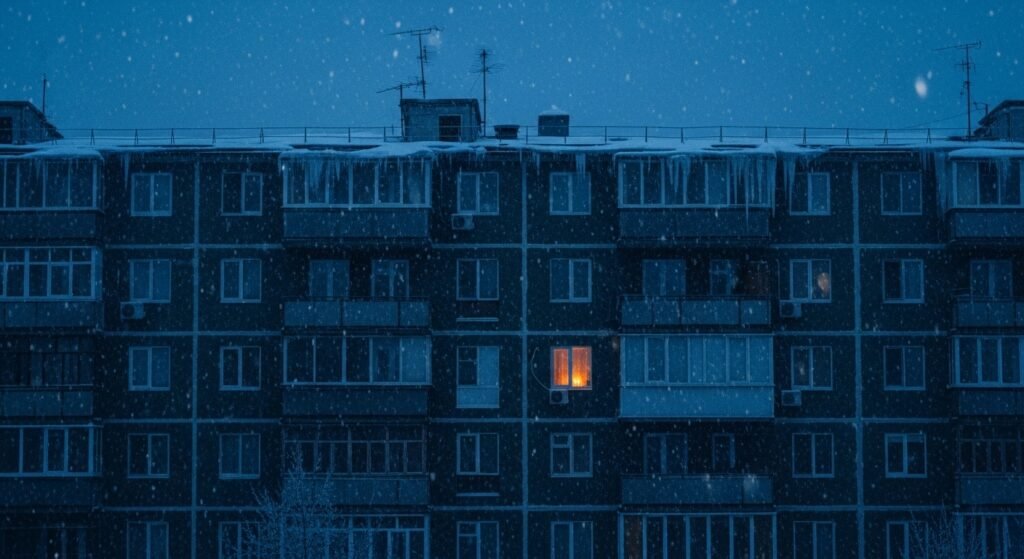
Weaponizing Winter: Millions Freeze as Russia Unleashes Total War on Ukraine’s Energy Grid
2. Brainx Perspective
At Brainx, we believe this calculated assault on civilian infrastructure highlights a brutal evolution in modern warfare: the weaponization of the climate itself. By timing these relentless strikes to coincide with the harshest winter in years, the strategy shifts from seizing territory to systematically dismantling the livability of Ukraine’s cities, turning every unheated apartment into a battleground for survival.
3. The News
The Siege of Cold: A Nation in the Dark
Russia has launched a devastating campaign to exploit Ukraine’s harshest winter conditions in years, systematically pummeling the country’s energy infrastructure. The objective appears to be a total collapse of the heating and electrical grids while temperatures remain dangerously low.
The Current Situation on the Ground:
- Extreme Weather Conditions: For the third consecutive week, temperatures across Ukraine have hovered around -15°C (5°F). This prolonged deep freeze has turned the loss of heating from a discomfort into a life-threatening crisis.
- Targeted Infrastructure Destruction: Russian forces are focusing their firepower on critical power stations and substations. The strikes are not random; they are precision-timed to inflict maximum misery during the coldest nights.
- The Repair Cycle (Cat and Mouse): Ukrainian electrical engineers are engaged in a heroic but exhausting cycle. They work round-the-clock to repair damaged transformers and lines, only for Russian drones and missiles to strike the same targets again the following night, undoing their progress instantly.
Life in the “Icebox”: Inside Kyiv’s Apartments
The capital city, Kyiv, has become a symbol of this freezing endurance. Initially, residents managed to cope using electric heaters and thermal layers. However, the sheer duration of the cold snap—combined with the relentlessness of the attacks—has overwhelmed these defenses.
- Uninhabitable Homes: Without consistent heating, the thermal mass of concrete apartment blocks has cooled to dangerous levels. Homes are gradually becoming uninhabitable caves of ice.
- Fleeing the Cold: The inability to warm living spaces is forcing residents to face impossible choices: stay and freeze, or risk dangerous travel to find warmth.
- The “Two-Hour” Window: Even when power is restored, it is often largely symbolic. Supply usually lasts only a few hours—enough to charge phones or boil a kettle—but insufficient to run electric heaters long enough to raise the ambient temperature of a freezing room.
The Human Cost of “Thermal Warfare”
The impact of this strategy goes beyond the immediate cold. It strikes at the psychological fortitude of the population.
- Sleep Deprivation: The constant air raid sirens at night, combined with the bitter cold, mean millions are sleep-deprived.
- Health Crisis: Hospitals are operating on backup generators, and the risk of hypothermia and respiratory illnesses is skyrocketing among the elderly and children.
- Economic Paralysis: With the grid unstable, businesses cannot operate, further straining an economy already battered by war.
Analysis: A Strategy of Attrition
This campaign represents a shift in Russian tactics. Unable to achieve decisive victories on the frontline, the focus has moved to breaking the civilian rear. By targeting energy, the aggressor aims to trigger a new wave of refugees into Europe and force the Ukrainian government to divert critical military resources to air defense for cities, rather than the front lines.
4. “Why It Matters” (Conclusion)
This crisis matters because it redefines the rules of engagement for future conflicts. The deliberate targeting of heating systems during a -15°C freeze tests the limits of international humanitarian law and the resilience of modern urban societies. For the common man in Ukraine, this winter is no longer just a season; it is a daily fight for survival that relies entirely on the stability of a fragile, bombarded power grid.
Deep Dive: The Mechanics of an Energy War
(Extended Analysis for Context)
The Vulnerability of the Grid An electrical grid is a delicate balance of supply and demand. When Russia strikes a transformer, it doesn’t just cut power to a neighborhood; it destabilizes the frequency of the entire national network. This forces emergency shutdowns (blackouts) in unaffected areas to prevent a total system collapse. The fact that Ukraine has kept the grid running at all under these conditions is a testament to engineering miracles, but engineering has physical limits.
The Drone Threat The report mentions “drones and missiles.” The use of cheap, Iranian-designed Shahed loitering munitions is key here. These drones are slow but are launched in “swarms.” Their purpose is often to exhaust Ukrainian air defense missiles. Once the expensive air defense is depleted shooting down cheap drones, the heavier cruise missiles follow to strike the power plants. This economic disparity in warfare—cheap drones vs. expensive defense—is central to the current crisis.
The “Invincibility Points” To counter this, Ukraine has set up thousands of “Points of Invincibility”—tents or shelters with generators, Starlink internet, and heat. However, for a city of millions like Kyiv, these are life rafts, not a solution. They cannot house the entire population. The current situation, with weeks of -15°C weather, is pushing this survival network to its absolute breaking point.


Leave a Reply