MPs would vote on using troops in Ukraine, Starmer says
1. Catchy Headline
Boots on the Ground? Starmer Pledges Parliament Vote Before Sending UK Troops to Ukraine
2. Brainx Perspective (Intro)
At Brainx, we believe this pledge represents a pivotal moment for British democracy and global security. This development highlights the tension between executive military power and parliamentary sovereignty, signaling that any long-term commitment of British lives to a potential flashpoint with Russia requires not just a government order, but a national mandate.
3. The News (Body)
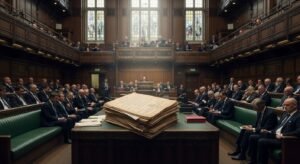
Prime Minister Sir Keir Starmer has formally committed to giving Members of Parliament (MPs) a vote on the deployment of British soldiers to enforce any future peace agreement in Ukraine. This announcement marks a significant nod to parliamentary convention amidst rising geopolitical stakes.
The pledge follows a high-level summit in Paris, where the UK and France solidified their willingness to deploy troops as a “deterrent force” to prevent future Russian aggression, should a ceasefire be negotiated.
The Core Pledge: Democracy Meets Defense
During Prime Minister’s Questions, Sir Keir addressed the growing speculation regarding British involvement in post-conflict Ukraine.
- The Commitment: The Prime Minister confirmed that seeking parliamentary approval would be consistent with “recent practice” regarding military action.
- The Caveat: While a vote is promised for “long-term deployment,” the government has not confirmed if a “No” vote would be legally binding, nor if a vote would happen prior to emergency deployments.
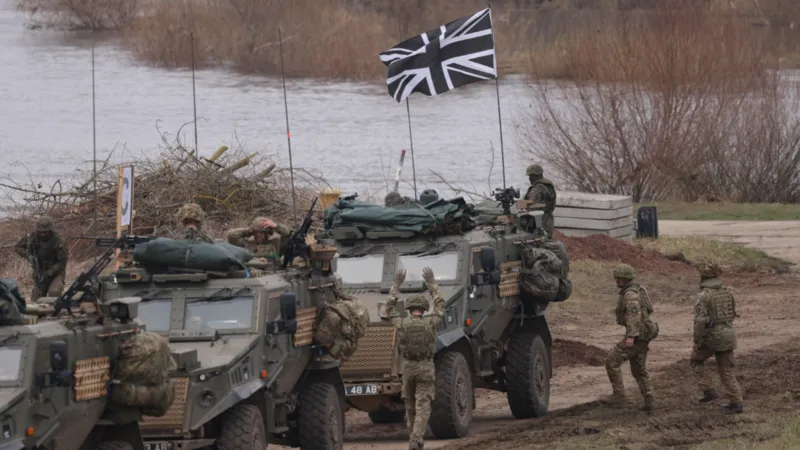
- The Mission: British personnel would not be sent to fight on the front lines of an active war, but rather to conduct “deterrence operations” and protect new military “hubs” established by allies within Ukraine.
- Operational Security: Specific troop numbers remain classified, with Starmer stating only that deployments would be “in accordance with our military plans.”
The “Paris Declaration”: A New Coalition of the Willing
The context for this parliamentary debate is the strengthening military alliance between London and Paris. Following a summit in Paris, the UK and France signed a “declaration of intent” that outlines a robust security posture.
- Multi-Domain Deployment: The agreement covers the potential deployment of troops across air, land, and sea domains.
- Authorization of Force: Crucially, the statement notes that Ukraine would authorize allies to use “necessary means, including the use of force” within its territory to maintain the peace.
- The Goal: The primary objective is to guarantee Ukraine’s security and prevent a repeat of the February 2022 invasion. Starmer emphasized that a peace deal “will not happen” without these guarantees, which must also be backed by the United States.
The “Thorny” History of War Powers
The promise of a vote reignites a long-standing constitutional debate in the UK regarding who has the power to wage war.
- Royal Prerogative: Legally, the Prime Minister authorizes military action on behalf of the Monarch. Parliament has no formal legal role in this process.
- The 2013 Precedent: The convention of consulting MPs was cemented—and tested—in 2013, when David Cameron became the first PM in centuries to lose a vote on military action (regarding Syria), forcing him to back down.
- Inconsistent Application: The convention is not a law. Theresa May bypassed MPs for strikes in Syria in 2018, and both Rishi Sunak and Keir Starmer have authorized strikes against Houthi targets in Yemen without prior parliamentary votes.
The Geopolitical Risks
The deployment of NATO troops to Ukraine, even in a peacekeeping capacity, carries immense risk.
- Moscow’s Warning: The Kremlin has repeatedly stated that any foreign troops on Ukrainian soil would be considered “legitimate targets.”
- Current State of War: With Russia currently controlling approximately 20% of Ukrainian territory, the line between “peacekeeping” and “active combat” could blur rapidly if a truce fails.
4. “Why It Matters” (Conclusion)
This news impacts every citizen because it moves the UK closer to direct military involvement in Eastern Europe. For the common man, it raises the stakes from financial support to potential direct conflict. It ensures that if British soldiers are put in harm’s way, it will be a decision made by elected representatives, not just the Cabinet.
Extended Analysis: The Future of British Interventionism
To provide a deeper context for our readers, we have analyzed the historical and strategic implications of this decision below.
1. The Ghost of Iraq and the “War Powers” Debate
To understand why Sir Keir Starmer is offering a vote, one must look at the shadow cast by the 2003 Iraq War. Public trust in intelligence and unilateral executive military action was severely damaged during the Blair era. Since then, successive governments have felt politically compelled—though not legally obliged—to seek the “blessing” of the House of Commons.
- Why it matters now: Starmer is insulating his government from political backlash. By sharing the decision with Parliament, the responsibility for the deployment—and any potential casualties—becomes a collective burden of the legislature, rather than solely the Prime Minister’s.
2. What Would “Deterrence Operations” Look Like?
The phrase “deterrence operations” is military shorthand for a high-stakes tripwire force. Unlike traditional UN peacekeepers (who are often lightly armed and neutral), the proposed UK-French force would likely be:
- Combat-Ready: Equipped with heavy weaponry, air defense systems, and armored vehicles.
- Strategic Hubs: Situated at key logistical points, likely away from the current front lines but close enough to critical infrastructure to deter Russian advances.
- A “Tripwire”: The strategic logic is that Russia would be afraid to attack these hubs because killing British or French soldiers would trigger a direct war with NATO powers—a scenario Moscow wants to avoid.
3. The Fragility of a Potential Truce
The article mentions that these troops would police an “agreement to end the conflict.” However, history shows that ceasefires in this region are fragile.
- The 2014 Warning: The Minsk Agreements (2014/2015) failed to stop fighting in Donbas.
- The Risk: If British troops are deployed to police a “Line of Control,” and Russian proxies or artillery violate that line, British commanders will have mere seconds to decide whether to return fire. This creates a hair-trigger environment where a local skirmish could escalate into World War III.
4. The US Factor: Leading from Behind?
The Paris summit indicated that while the UK and France are willing to provide boots on the ground, the United States is proposed to “take the lead in monitoring a truce.” This division of labor is significant.
- European Strategic Autonomy: This signals a shift where European powers (UK/France) are taking more direct physical risks on the continent, while the US provides the overarching intelligence and diplomatic framework. This aligns with recent US calls for Europe to do more for its own defense.
5. Economic Implications for the UK
Deploying a significant force abroad is expensive.
- Defense Spending: This commitment will likely fuel arguments for increasing the UK defense budget to 2.5% of GDP or higher.
- Long-Term Cost: Sustaining “military hubs” in Ukraine could cost billions annually, money that will need to be diverted from other public services or funded through borrowing.
Final Thought
Sir Keir Starmer’s pledge is a victory for parliamentary procedure, but it opens the door to the most dangerous British military deployment since the Korean War. The vote, when it comes, will not just be about “peacekeeping”—it will be a vote on the UK’s willingness to physically stand between a sovereign Ukraine and the Russian war machine.


Leave a Reply