NASA Artemis Program: The Complete Guide to Humanity’s Return to the Moon
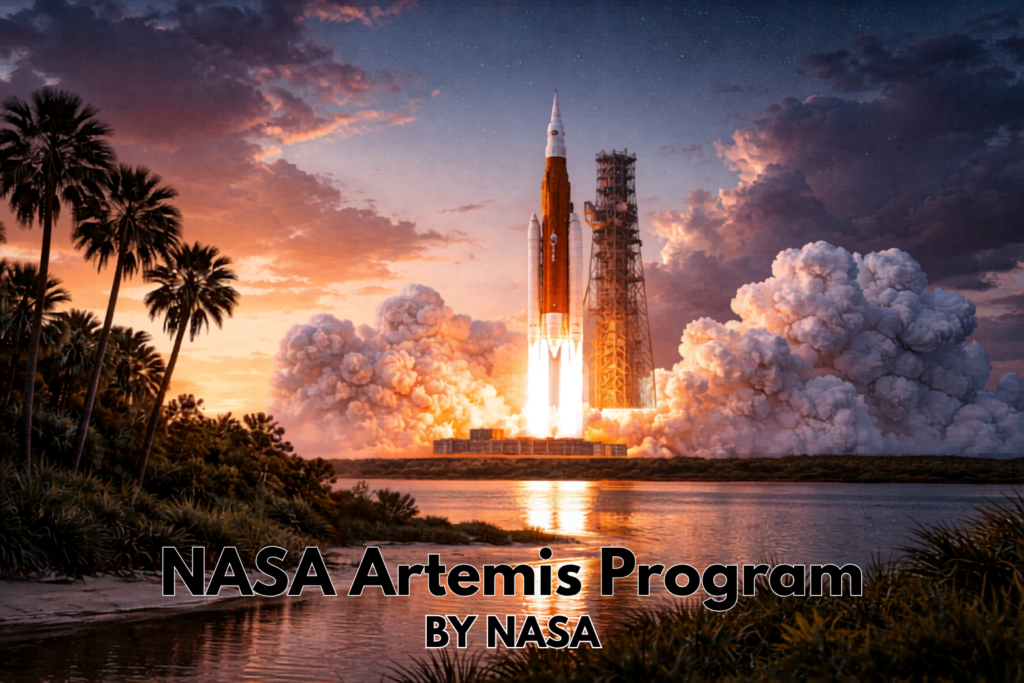
After more than five decades since the last Apollo astronaut left the lunar surface, NASA is preparing for humanity’s most ambitious return to the Moon. The Artemis program, named after the twin sister of Apollo in Greek mythology, represents a new era of space exploration that promises to establish a sustainable human presence on the Moon and serve as a stepping stone for future Mars missions.
Unlike the Apollo missions of the 1960s and 70s, which were brief visits focused on national prestige, Artemis aims to create a permanent lunar ecosystem. This program involves cutting-edge technology, international partnerships with 27 countries, and collaboration with private companies like SpaceX. With a budget exceeding $35 billion, Artemis represents NASA’s most significant investment in deep space exploration since the Space Shuttle program.
The stakes couldn’t be higher. Success means opening the Moon for scientific research, economic development, and as a testing ground for technologies needed to send humans to Mars. This comprehensive guide explores everything you need to know about the Artemis program, from its ambitious timeline to the revolutionary technology making it possible.
What is the Artemis Program?
The Artemis program is NASA’s crewed spaceflight initiative designed to land the first woman and first person of color on the Moon. Announced in 2017, the program consists of three main phases, each building upon the previous to establish sustainable lunar exploration.
Artemis I, completed in November 2022, was an uncrewed test flight of the Space Launch System (SLS) rocket and Orion spacecraft. This 25-day mission successfully orbited the Moon, testing critical systems and paving the way for crewed missions. The spacecraft traveled 1.4 million miles, the farthest any spacecraft designed for humans has ever flown.
Artemis II, scheduled for November 2025, will be the first crewed mission. Four astronauts will orbit the Moon without landing, testing life support systems and crew operations in deep space. This mission will follow a similar trajectory to Apollo 8, taking humans farther from Earth than ever before.
Artemis III, planned for 2026, will mark humanity’s first return to the lunar surface since 1972. Using SpaceX’s Starship as the lunar lander, two astronauts will spend approximately one week on the Moon, conducting scientific experiments and exploring the South Pole region where water ice has been discovered.
Beyond these initial missions, NASA plans annual lunar landings through Artemis VII, with the ultimate goal of establishing the Lunar Gateway—a space station orbiting the Moon—and a sustainable base camp on the surface.
Why Return to the Moon Now?
You might wonder why we’re investing billions to return to a place we’ve already visited. The answer lies in what we’ve learned since Apollo and what the Moon offers for humanity’s future.
Scientific Discovery
The Moon is a scientific treasure trove. Its surface preserves records of the early Solar System that have been erased on Earth due to geological activity. The far side of the Moon offers an unparalleled radio-quiet environment for astronomy. Most importantly, the discovery of water ice at the lunar poles in 2009 changed everything. This water can be used for drinking, growing food, creating breathable oxygen, and most crucially, as rocket propellant.
Economic Opportunities
The Moon contains valuable resources, including rare earth elements and helium-3, a potential fuel for future fusion reactors. Estimates suggest lunar mining could become a trillion-dollar industry within decades. Additionally, the Moon’s low gravity makes it an ideal launch point for missions deeper into space.
Mars Preparation
NASA views the Moon as a proving ground for Mars. Technologies and operational procedures tested on the Moon will be essential for the much more challenging journey to the Red Planet. The three-day journey to the Moon allows for quick return to Earth if problems arise, unlike the months-long Mars mission.
International Collaboration
Unlike the space race of the 1960s, Artemis represents peaceful international cooperation. The Artemis Accords, signed by 27 nations, establish principles for responsible lunar exploration. This collaborative approach shares costs and brings together the best minds worldwide.
Revolutionary Technology Behind Artemis
The Artemis program showcases some of the most advanced space technology ever developed.
Space Launch System (SLS)
Standing at 322 feet tall, the SLS is the most powerful rocket ever built. It generates 8.8 million pounds of thrust—15% more than the Saturn V rocket that carried Apollo astronauts. The rocket uses proven space shuttle main engines combined with upgraded solid rocket boosters. Its Block 1 configuration can lift 95 tons to low Earth orbit, with future upgrades increasing this capacity to 130 tons.
Orion Spacecraft
Orion is NASA’s most advanced crew vehicle. It features life support systems capable of sustaining astronauts for up to 21 days, advanced radiation shielding, and a launch abort system that can pull the crew to safety in milliseconds. The European Service Module, built by the European Space Agency, provides propulsion, power, and thermal control.
SpaceX Starship Lunar Lander
Perhaps the most innovative component, SpaceX’s Starship will serve as the human landing system. This fully reusable spacecraft will transfer astronauts from lunar orbit to the surface and back. Standing at 50 meters tall, it’s the largest lander ever built for human spaceflight. Its Raptor engines use methane and liquid oxygen, which can potentially be manufactured on Mars for return journeys.
Lunar Gateway
The Gateway will be a small space station orbiting the Moon, serving as a staging point for surface missions. It will support longer stays, provide communications relay, and enable access to the entire lunar surface. The first modules are scheduled for launch in 2025.
Advanced Spacesuits
NASA’s new Exploration Extravehicular Mobility Unit (xEMU) represents a major upgrade from Apollo-era suits. These suits offer better mobility, allowing astronauts to squat and pick up objects—movements impossible in previous suits. They also feature advanced life support and can accommodate a wider range of body sizes.
Challenges and Controversies
Despite its promise, the Artemis program faces significant challenges.
Budget Overruns
The program has experienced substantial cost increases. The SLS rocket and Orion spacecraft development has cost over $37 billion, nearly triple original estimates. Each SLS launch costs approximately $4.1 billion, raising questions about sustainability.
Schedule Delays
Artemis II has been delayed multiple times, originally scheduled for 2023. Technical issues with the Orion heat shield and other systems have pushed the timeline back. Some experts question whether the 2026 lunar landing goal is realistic.
Competition from Private Sector
SpaceX’s Starship program is progressing rapidly, with some suggesting it could achieve lunar landing sooner and cheaper than NASA’s approach. This has sparked debate about the best path forward for space exploration.
Political Risk
Space programs historically face cancellation risks with changing administrations. Maintaining bipartisan support across multiple presidential terms remains crucial for long-term success.
The Future: Beyond Artemis
The Artemis program is just the beginning of humanity’s expansion into the solar system. NASA’s long-term vision includes:
Sustainable Lunar Base
By 2030, NASA plans to establish the Artemis Base Camp near the lunar South Pole. This facility will support long-duration stays, enabling scientists to conduct extensive research and test systems for Mars missions.
Mars Missions
All Artemis technology is designed with Mars in mind. The experience gained from lunar operations will be directly applied to the first human Mars mission, tentatively planned for the late 2030s.
Commercial Development
NASA is encouraging private companies to develop lunar services. From transportation to habitat construction, the goal is to create a self-sustaining lunar economy where NASA is one customer among many.
Conclusion
NASA’s Artemis program represents more than a return to the Moon—it marks the beginning of humanity’s expansion beyond Earth. With revolutionary technology, international partnerships, and ambitious goals, Artemis is laying the foundation for a multi-planetary future. Whether you’re a space enthusiast or simply curious about humanity’s next giant leap, the coming years promise to be the most exciting in space exploration since the Apollo era. The Moon is just the beginning.
Leave a Reply