New Trump envoy says he will serve to make Greenland part of US
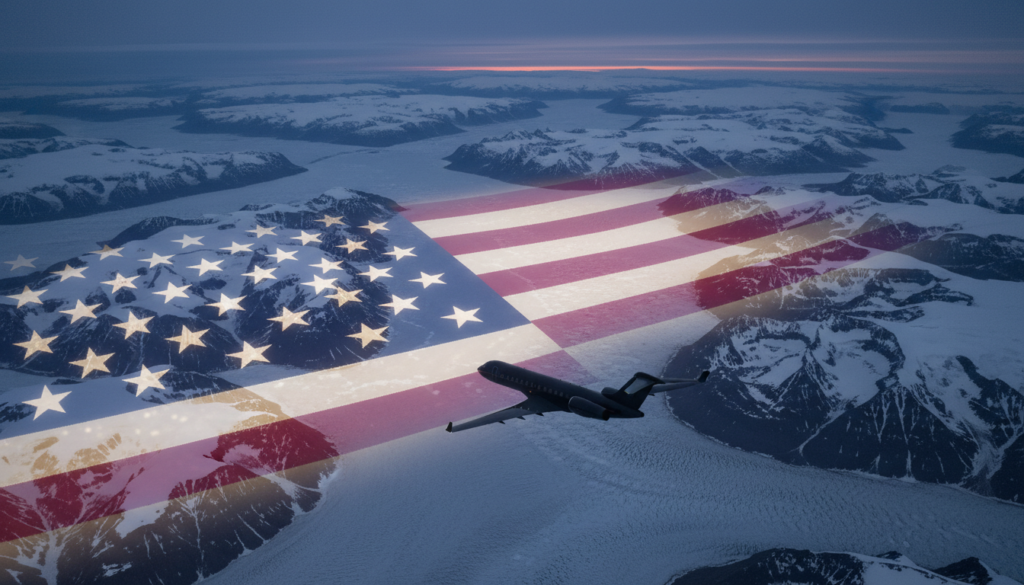
Arctic Power Play: The Strategic Truth Behind the US-Denmark Rift Over Greenland
At Brainx, we believe this development highlights a pivotal shift in global geopolitics, where resource scarcity and military strategy are beginning to override traditional diplomatic alliances. We observe that the aggressive US push for Greenland isn’t merely about expanding territory; it is a calculated, high-stakes move to secure the Western Hemisphere’s northern flank against rising competitors like China and Russia.
The News: A Diplomatic Breach in the High North
The appointment of Louisiana Governor Jeff Landry as a special envoy to Greenland by President Donald Trump has triggered a significant diplomatic standoff, signaling a departure from standard international protocol. This move is being interpreted not as a routine assignment, but as a direct challenge to the sovereignty of the Kingdom of Denmark.
Key Developments:
- The Appointment: Governor Jeff Landry, a staunch proponent of the “America First” doctrine, has been tasked with representing US interests in Greenland. His rhetoric has been explicitly annexationist, previously stating that acquiring Greenland would be “Great for us!”
- Denmark’s Furious Response: The move has sparked a firestorm in Copenhagen. Danish Foreign Minister Lars Løkke Rasmussen characterized the appointment as “deeply upsetting.”
- The Core Conflict: By appointing a special envoy to a semi-autonomous territory without the express “agrément” (approval) of the sovereign state (Denmark), the US is effectively bypassing Copenhagen to establish a direct line to Nuuk, Greenland’s capital.
- Greenland’s Stance: Prime Minister Jens-Frederik Nielsen has firmly rejected the notion of US annexation, reiterating that “Greenland belongs to Greenlanders.” While the island seeks independence, swapping Danish oversight for American control is widely unpopular among its 57,000 residents.
The Strategic Motivation: Why Greenland?
To understand why the US is risking a rift with a NATO ally, one must look at the immense strategic value Greenland holds in the 21st century. It is the “gatekeeper” of the Arctic.
1. The Rare Earth Mineral Race As climate change melts the ice sheet, Greenland’s vast interior is becoming accessible. Geologists estimate the island holds some of the world’s largest undeveloped deposits of Rare Earth Elements (REEs).
- Critical Usage: These minerals (e.g., neodymium, dysprosium) are essential for fighter jets, EV batteries, and smart technology.
- Breaking Reliance: Currently, China controls the global REE supply. Securing Greenland is a national security imperative for the US to break this dependence.
2. Military Dominance and the “GIUK Gap” Greenland is geographically critical for North American defense.
- The Choke Point: It sits at the “GIUK Gap” (Greenland-Iceland-UK), a naval choke point vital for tracking Russian submarines entering the Atlantic.
- Missile Defense: It lies on the shortest flight path for Intercontinental Ballistic Missiles (ICBMs) between Russia and the US. The US already operates the Thule Air Base (Pituffik Space Base) here, but political control would cement this advantage permanently.
3. Control of Future Trade Routes The melting Arctic is opening the Northwest Passage, a shipping lane that cuts travel time between Asia and Europe by 40%. Controlling the landmasses flanking this route is comparable to controlling the Suez Canal in the 20th century.
Historical Context: The Revival of the Monroe Doctrine
This move represents a modern expansion of the Monroe Doctrine, a 19th-century policy asserting US dominance over the Western Hemisphere.
- 1946 Offer: President Harry S. Truman formally offered Denmark $100 million in gold to buy Greenland, recognizing its value against the Soviet Union.
- Modern Shift: Unlike the transactional offers of the past, the current strategy employs “coercive diplomacy,” treating the Arctic as an extension of the American security zone and warning off European and Chinese influence.
Why It Matters
For the common man, this news signifies that the Arctic is no longer just a remote wilderness, but the next major theater of global conflict. This struggle will directly influence the cost of future technology (via mineral access) and global security stability. Ultimately, it forces a re-evaluation of the NATO alliance, proving that in the race for resources, even old friends can become rivals.



Leave a Reply