Next Minecraft Update Release Date And Contents Speculation
1. Catchy Headline
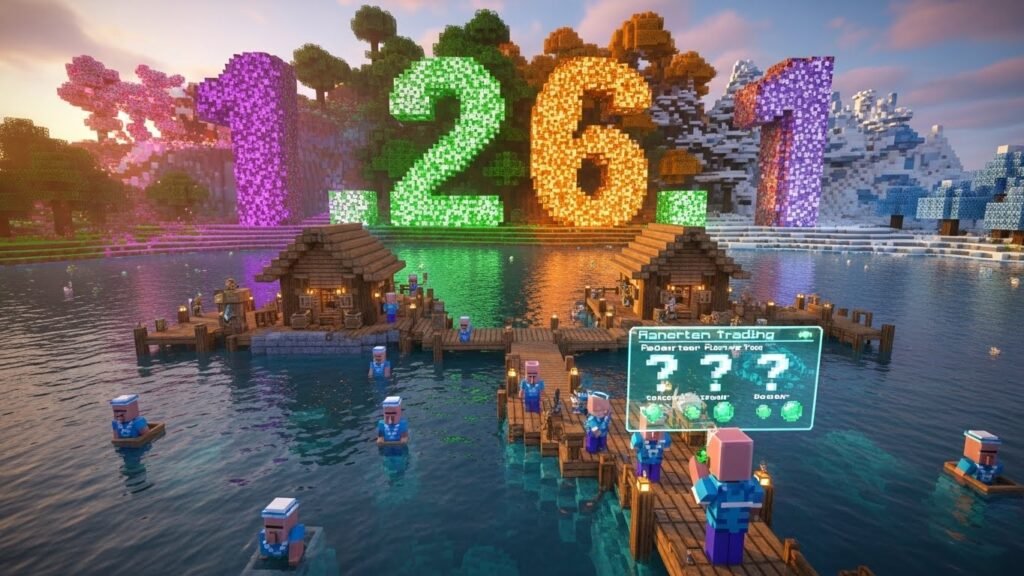
Minecraft 2026 Roadmap Revealed: New Versioning System, March Release, and the End of Annual Waits
2. Brainx Perspective (Intro)
At Brainx, we believe the shift to a quarterly update cycle marks a maturing point for the world’s best-selling game. This development highlights Mojang’s pivot from massive, pressure-filled annual events to a sustainable “steady drip” of content. By prioritizing frequent engagement and cleaning up technical debt—like the confusing version numbers—Minecraft is positioning itself not just as a game, but as an ever-evolving utility for creativity.
3. The News (Body)
The landscape of Minecraft is shifting significantly in 2026. Following the release of the “Mounts of Mayhem” update in late 2025, Mojang is preparing to deploy its first major content drop of the new year. Based on the developer’s new commitment to a quarterly release schedule, the next update is projected to arrive in early March 2026.
This update represents more than just new blocks; it signals a fundamental change in how the game is numbered, managed, and customized by the community.
The New Release Cadence: Goodbye Annual Waits
The era of waiting 12 months for a single massive update (like “Caves & Cliffs”) appears to be over. Mojang has committed to releasing four distinct updates per year.
- Target Release: Early March 2026.
- Logic: The previous update launched in early December; a three-month cadence places the next drop squarely in Q1 2026.
- Strategy: This ensures players have a constant stream of new features rather than long periods of stagnation.
A Historic Shift in Version Numbering
Perhaps the most significant structural change is the overhaul of the versioning system. For over a decade, Minecraft used a sequential numbering system (1.20, 1.21) that often confused casual players regarding when an update was released. The new system aligns strictly with the calendar year.
- The New Format:
1.YY.D(Year + Drop Number). - First 2026 Update: Will be labeled 1.26.1 (Year 2026, Drop 1).
- Future Drops: Expect to see 1.26.2, 1.26.3, and 1.26.4 throughout the year.
- Java vs. Bedrock:
- Java Edition: Will follow the
1.26.xformat strictly. Patches for bugs will add a fourth digit (e.g.,1.26.2.1). - Bedrock Edition: Will largely follow suit, though the final digit may go higher than Java’s due to the platform’s need for more frequent hotfixes and platform-specific tweaks.
- Java Edition: Will follow the
Design Philosophy: The “Timeless” Rule
In a recent developer video, the team clarified their stance on keeping Minecraft unique. Unlike games such as Fortnite or Roblox that rely heavily on trends, Minecraft is doubling down on its own identity.
- No Pop Culture: The team explicitly stated they avoid real-world references like “hot dogs” or specific modern trends.
- The “Minecrafty” Filter: Ideas are filtered to fit the game’s lore. For example, developers rejected “pirates” but hinted that “Villagers that live on the sea” could be a viable alternative. This maintains the fantasy aesthetic without breaking immersion.
- Educational Tweaks: The team often balances fun with subtle education. The introduction of the “Suspicious Stew” came from a desire to teach players that the Lily of the Valley flower is poisonous in real life, turning a safety lesson into a gameplay mechanic.
Revolutionizing Villager Economics
For the technical community and map makers, the update brings a massive change to the trading system.
- Randomized Trading Sequences: Villager trades are no longer hard-coded static lists. They will now use random sequences similar to loot tables.
- Datapack Power: This unlocks the ability for modders and datapack creators to fully customize what Villagers buy and sell.
- Wandering Traders: Even the often-maligned Wandering Trader can now be customized to sell specific, valuable items depending on the server or modpack settings.
4. “Why It Matters” (Conclusion)
This shift democratizes game development and respects player time. For the common player, it means no longer waiting a year for new content—the game will feel “alive” year-round. For the future, the simplified numbering (1.26.1) makes it easier for parents and gamers to know if they are playing the latest version, lowering the barrier to entry for the next generation.
Deep Dive: Analysis of the 2026 Strategy
(Detailed Analysis for context and depth)
The End of “Feature Creep” By moving to a quarterly schedule (1.26.1 through 1.26.4), Mojang is solving a critical issue in software development known as “feature creep.” Previously, when updates took a year to produce, the pressure to add everything at once often led to delays and split releases (as seen with the Caves & Cliffs update). This new modular approach allows the developers to release a finished feature (like a new biome or mob) immediately, rather than holding it back for a larger bundle. This results in a more stable game with fewer bugs upon release.
The “Vanilla” Aesthetic vs. Modding The news regarding Villager trading is a quiet revolution. Previously, customizing trades required complex mods or external tools. By integrating this into the native “datapack” system, Mojang is effectively giving server owners (the lifeblood of Minecraft’s longevity) the tools to create custom RPG experiences without requiring players to download third-party software. This bridges the gap between the “Vanilla” experience and the “Modded” experience, keeping the ecosystem healthy.
The Psychology of Version Numbers While changing “1.22” to “1.26.1” seems cosmetic, it is a crucial marketing move. In the software world, clear versioning helps consumers understand obsolescence. Seeing “1.26” immediately tells a parent or player that the software is from 2026. If they see “1.21” in 2026, they instantly know they are outdated. This reduces fragmentation in the player base, ensuring more people are playing together on the same version, which is vital for a multiplayer-centric game.
What the “Sea Villager” Hint Tells Us The developer’s comment about “Villagers that live on the sea” suggests a focus on biome diversity. Currently, oceans in Minecraft are populated by ruins and temples, but lack “civilization.” If the team is brainstorming sea-based societies, we could see an expansion of the exploration pillar of gameplay later in 2026. This aligns with their strategy of taking real-world concepts (pirates) and twisting them to fit the blocky, peaceful-yet-perilous world of Minecraft.
In summary, 2026 is shaping up to be the year Minecraft focuses on consistency, clarity, and customization. The game is no longer just growing larger; it is growing smarter.



Leave a Reply