NGOs fear Israel registration rules risk collapse of Gaza aid operations
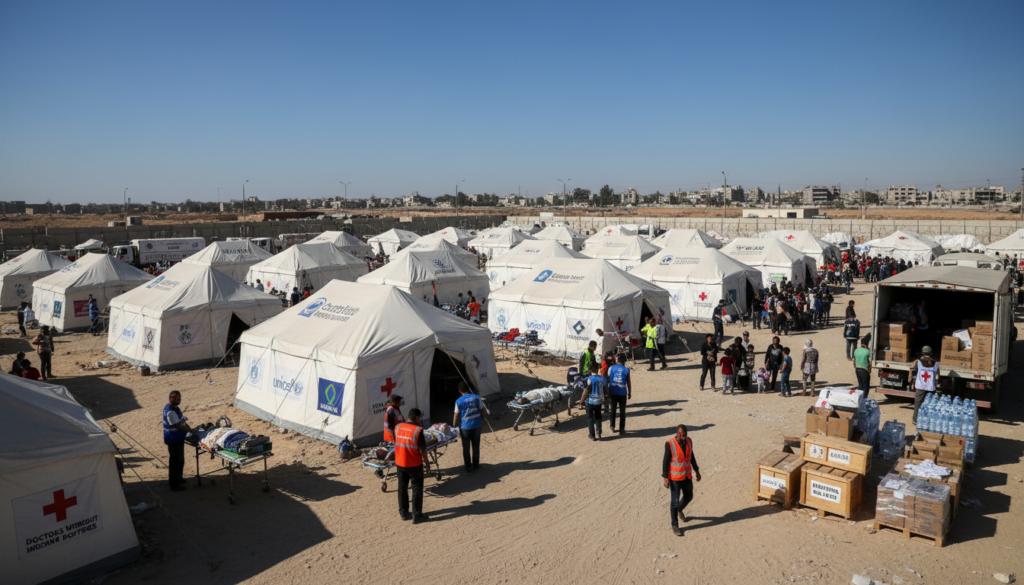
The Bureaucratic Siege: How Israel’s New NGO Registration Rules Could Trigger a Humanitarian Blackout in Gaza
Brainx Perspective
At Brainx, we believe the weaponization of administrative red tape represents a dangerous new frontier in modern conflict. This development highlights a shift where “security vetting” becomes a tool of geopolitical leverage, potentially dismantling the very systems—like field hospitals and clean water—that keep millions of non-combatants alive during a fragile ceasefire.
The News: A Ticking Clock for the Humanitarian Response
As of January 2026, the humanitarian landscape in the Gaza Strip and the West Bank has entered a state of profound uncertainty. Following the expiration of a critical December 31 deadline, the Israeli government has initiated a de-registration process for nearly four dozen International Non-Governmental Organizations (INGOs). This move has sent shockwaves through the United Nations and the global diplomatic community, with experts warning of a “total systemic collapse” within the next 60 days.
I. The Midnight Deadline: 37 Agencies on the Brink
On December 30, 2025, just hours before the New Year, 37 leading international aid groups received official notification that their legal authorization to operate had expired. Under the framework established by Israel’s Ministry of Diaspora Affairs and Combating Antisemitism, these organizations now enter a mandatory 60-day “wind-down” period. By March 2026, they must cease all operations, evacuate international staff, and abandon critical supply chains unless a last-minute legal or diplomatic breakthrough occurs.
II. The “Political Litmus Test”: Understanding the New Rules
The controversy is rooted in a registration system introduced in March 2025. While Israel maintains its right to regulate foreign entities, aid agencies argue the criteria are designed to filter out organizations that report on the ground reality of the conflict. The grounds for rejection include:
- Delegitimization Campaigns: Broadly interpreted to include any organization that publicly criticizes Israeli military policy.
- International Legal Actions: Any support for the prosecution of Israeli security forces in foreign or international courts (such as the ICC or ICJ).
- Political Definitions: Denying Israel’s status as a “Jewish and democratic state” or the events of the October 7, 2023, attacks.
- Boycott Advocacy: Any record of supporting Boycott, Divestment, and Sanctions (BDS) movements.
The Humanitarian Country Team (HCT) has noted that these criteria are “vague and highly politicized,” making it impossible for neutral organizations to comply without violating the core humanitarian principle of impartiality.
III. The Anatomy of a Collapse: Sector-by-Sector Impact
The potential exit of these INGOs is not merely an administrative shift; it is a life-threatening reality for over 2 million Palestinians. The data released by the UN and donor governments illustrates a catastrophic gap that cannot be filled by other actors.
1. The Healthcare Crisis
- Field Hospitals: INGOs currently run or support approximately 60% of Gaza’s remaining field hospitals.
- Facility Closures: Experts predict that one in three health facilities in the Strip will close their doors permanently by March.
- Specialized Care: Each month, over 20,000 patients requiring specialized surgeries or maternal care will lose access to life-saving services.
2. Nutrition and Survival
- Malnutrition: INGOs support 100% of Gaza’s stabilization centers for children with severe acute malnutrition. Without these five centers, there is no existing capacity to treat the most critical cases of starvation.
- Food Security: In 2025, international charities delivered over half of all food assistance, including the majority of hot-meal distribution points.
3. Water, Sanitation, and Hygiene (WASH)
- Disease Prevention: Roughly 42% of all water and sanitation services are managed by the de-registered groups.
- Infrastructure: With the collapse of sanitation systems, 740,000 people are currently vulnerable to “toxic flooding” caused by overflowing sewage, a risk exacerbated by the severe winter storms of early 2026.
IV. Case Study: The Rejection of Save the Children
Among the most prominent rejections is Save the Children, a charity that has operated in the region for over seven decades. The organization currently supports 120,000 children in Gaza, providing newborn baby kits, hygiene supplies, and psychosocial support.
Following their rejection, a spokesperson stated that they are “pursuing all legal avenues,” including petitions to the Israeli High Court. However, the 60-day clock continues to tick. The loss of such an established actor signals that no organization, regardless of its history or scale, is immune to the new vetting procedures.
V. Israel’s Stance: Sovereignty and Anti-Terrorism
The Israeli government has remained firm. Spokesmen for the Ministry of Diaspora Affairs have dismissed the “collapse” narrative, labeling it as a “disinformation campaign” by “rogue organizations.”
The government’s arguments include:
- Good Faith: Officials point out that the deadline was extended from September to December, giving groups “ample time” to comply.
- Security Oversight: The vetting process involves all Israeli security bodies to ensure that aid funds are not diverted to Hamas or other extremist groups.
- Replacement Capacity: Israel asserts that the remaining approved organizations, combined with commercial cargo flows, will ensure that humanitarian aid continues “uninterrupted.”
VI. The UN’s Admission: “We Cannot Fill the Void”
Perhaps the most alarming aspect of this crisis is the United Nations’ frank admission of its own limitations. The HCT has stated unequivocally that the UN system will not be able to compensate for the departure of INGOs.
International charities often provide the specialized technical expertise—ranging from mine action (explosive hazard clearance) to high-level surgical teams—that UN agencies do not maintain at the same scale. In the sector of mine action alone, INGOs provide over 50% of the funding and nearly 100% of the operational capacity. If they leave, the clearance of unexploded ordnance will effectively stop, making it impossible to safely rebuild infrastructure.
VII. A Global Diplomatic Rift
The policy has opened a significant rift between Israel and its traditional allies. In a joint statement issued on December 31, the Foreign Ministers of ten nations—including the United Kingdom, Canada, France, and Japan—expressed “serious concerns” about the de-registration. They highlighted that Gaza’s healthcare system is already “largely destroyed” and warned that these bureaucratic hurdles violate the terms of the internationally recognized legal framework governing the occupied territories.
VIII. The Winter Factor: A Perfect Storm
This administrative battle is playing out against the backdrop of a brutal winter. In early January 2026, heavy rains have already turned displacement camps into quagmires.
- Hypothermia: There are rising reports of infants dying from hypothermia in makeshift tents.
- Shelter Needs: Approximately 1.3 million people still require urgent shelter support, yet 74% of all shelter activities are implemented by the very INGOs now facing expulsion.
- Logistical Paralysis: $50 million worth of essential winterization goods (blankets, heaters, and tents) are currently stockpiled at border crossings, unable to move because the “receiving” organizations are no longer authorized to accept them.
IX. Looking Ahead: The 60-Day Countdown
The international community now watches with bated breath as the two-month countdown begins. Diplomatic pressure is mounting on the Israeli Prime Minister’s office to issue a “humanitarian waiver” or to further extend the registration window.
Without a compromise, the “Gaza Aid Crisis” of 2026 will transition from a shortage of supplies to a total absence of people qualified to distribute them. The outcome of this bureaucratic struggle will likely determine the survival of hundreds of thousands of civilians throughout the coming year.
Why It Matters
For the common man, this is the ultimate test of international humanitarian law. If bureaucratic vetting can legally dismantle an entire aid ecosystem, then no disaster zone is safe from political interference. For the residents of Gaza, the loss of these agencies means the difference between a functioning clinic and a locked door during a medical emergency.



Leave a Reply