“Parisian Nightmare”: Illia Zabarnyi Slammed with Lowest Ratings as PSG Crumble Against Rennes
At Brainx, we believe…
This development highlights the ruthless, magnifying nature of modern football analytics. At Brainx, we believe that at the elite level of Paris Saint-Germain, there is nowhere to hide—not even behind a 94% pass completion rate. Illia Zabarnyi’s statistical dismantling by WhoScored and Sofascore serves as a stark reminder: in 2026, an algorithm can damage a player’s reputation just as severely as a conceded goal. The pressure is now on the Ukrainian star to prove that data doesn’t always tell the whole story.
The News: A Statistical Deep Dive into PSG’s Defensive Collapse
The 22nd matchday of the 2025/2026 Ligue 1 season will be one to forget for Paris Saint-Germain, and specifically for their central defender, Illia Zabarnyi. In a shocking turn of events at Roazhon Park, Rennes dismantled the Parisian giants with a convincing 3-1 victory.
While the result itself sends shockwaves through the French title race, the post-match discourse has centered heavily on the performance of the Ukrainian international. Despite playing the full 90 minutes, Zabarnyi found himself at the bottom of the analytical barrel, receiving the lowest match ratings from the world’s leading sports data platforms.
The Analytical Verdict: A Dual Low
The consensus among data analysts was brutal. Both major statistical aggregators identified the Ukrainian center-back as the weak link in the Parisian armor.
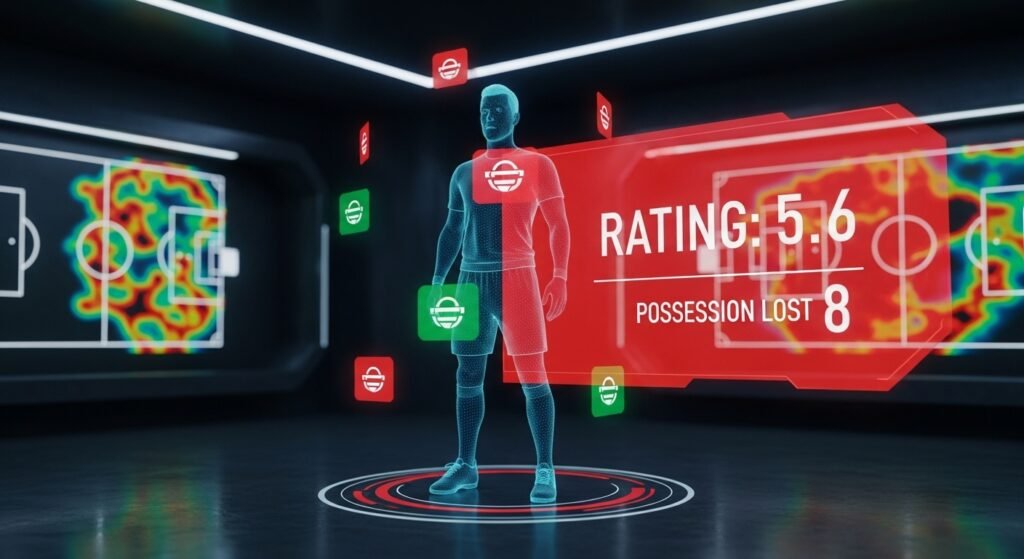
- WhoScored Rating:5.6
- This was the absolute lowest score awarded to any player on the pitch, including both Rennes and PSG starters and substitutes. A score below 6.0 is generally considered a “failure” in football analytics terms, indicating a performance that actively hurt the team’s chances.
- Sofascore Rating:6.2
- While slightly higher than WhoScored, this was still the joint-lowest score of the match. Zabarnyi shared this unfortunate distinction with his teammate, Désiré Doué, suggesting a systemic failure on PSG’s side of the ball.
Deconstructing the Numbers: Possession vs. Impact
To understand why the algorithms punished Zabarnyi so severely, one must look beyond the surface-level metrics. On paper, some of his stats look respectable, but the contextual data reveals the cracks in his game during this specific encounter.
The “Safe” Stats:
- Pass Accuracy: 94% (72 accurate passes out of 77 attempts).
- Touches: 85 (Indicating high involvement in the build-up play).
- Recoveries: 1 ball recovery.
The “Damaging” Stats (Why the Rating Dropped):
- Possession Lost: 8 times. For a center-back whose primary job is security, losing the ball 8 times is a critical metric that heavily penalizes algorithmic scores.
- Duels Won: 3 out of 5 (60%). While not terrible, in a game where PSG conceded three goals, the inability to dominate 100% of defensive duels is costly.
- Defensive Actions: Only 2 tackles and 2 clearances in 90 minutes. In a game where the team conceded three times, this suggests a lack of proactive defensive intervention.
- Fouls Committed: 1.
The Tactical Context: Rennes Exposes the Flaws
The match at Roazhon Park exposed specific vulnerabilities in Zabarnyi’s integration into the high line often favored by PSG.
- Passive Possession: The high volume of touches (85) combined with a high passing percentage (94%) but a low match rating usually indicates “sterile possession.” The algorithms likely penalized him for passing sideways or backwards rather than breaking the lines or progressing the play effectively when PSG was chasing the game.
- The Counter-Attack Issue: Rennes is historically known for lethal transitions. The 3-1 scoreline suggests that the PSG defense was repeatedly caught out. The low duel count for Zabarnyi implies he may have been out of position, forcing teammates to cover or allowing Rennes attackers space, rather than engaging them directly.
Comparative Struggles
It wasn’t just Zabarnyi who struggled, though he bore the brunt of the statistical criticism.
- Désiré Doué: The young talent matched Zabarnyi’s 6.2 on Sofascore. This highlights a disconnect between the defensive unit and the midfield transition, leaving the backline exposed.
- The Opposition: In contrast to Zabarnyi’s struggles, the Rennes attackers likely received ratings in the high 7.0s or 8.0s, further widening the gap and driving Zabarnyi’s comparative score down.
Analysis: The Weight of the PSG Badge
This match report is more than just numbers; it is a narrative about the ceiling of expectations at a club like PSG.
1. The Algorithm’s Ruthlessness Modern football scouting and fan engagement are driven by platforms like WhoScored and Sofascore. These algorithms do not care about “effort” or “bad luck.” They calculate value based on every touch. A 5.6 rating is a red flag that global scouts and pundits notice immediately. For a player of Zabarnyi’s caliber—who built his reputation on consistency at Dynamo Kyiv and Bournemouth before this high-profile move—this is a significant stumbling block.
2. The “Loss of Possession” Metric The most damning stat is the 8 losses of possession. In the Premier League or Bundesliga, a center-back clearing the ball long might count as a lost possession but is seen as a safety measure. At PSG, where the philosophy is usually total dominance and playing out from the back, losing the ball 8 times is viewed as a technical failure. It suggests that Rennes’ pressing triggers were specifically targeting the Ukrainian, and the tactic worked.
3. The Psychological Blow February is a crucial month in European football, often coinciding with the return of the Champions League. A performance like this, publicly quantified as the “worst on the pitch,” tests the mental fortitude of a defender. The French media is notoriously unforgiving, and data-backed criticism is harder to refute than subjective opinion.
Why It Matters
For the common man and the future of sports consumption, this story matters because it validates the Data Era of accountability. We no longer rely solely on a commentator’s opinion to know who played poorly; we have objective, granular data that can pinpoint exactly where a millionaire athlete failed. This level of scrutiny changes the relationship between fans and players. For Zabarnyi, and young professionals in any field, it is a lesson that consistency is the only currency that matters. You are only as good as your last spreadsheet, and bouncing back from a “5.6 performance” requires mental resilience as much as physical skill.




Leave a Reply