Six killed in Pakistan shopping mall fire
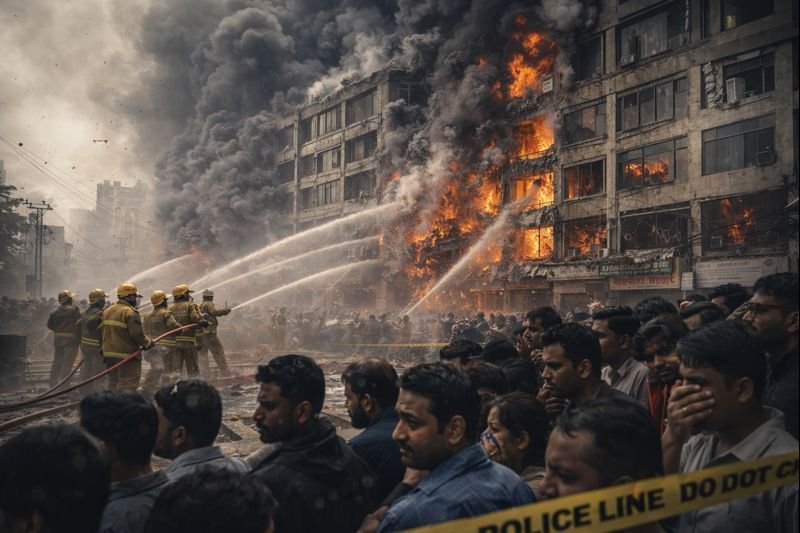
Inferno in Karachi: Gul Plaza Collapses as Fire Kills 6, Leaving Dozens Missing in Smoke and Ash
2. Brainx Perspective
At Brainx, we believe the tragedy at Gul Plaza is not merely an accident but a stark indictment of systemic regulatory failure. This heartbreaking event highlights the urgent, often ignored, need for rigorous enforcement of building safety codes in Pakistan’s commercial hubs. It forces a painful question: how many more lives must be lost before safety becomes a priority over profit?
3. The News
A catastrophic fire has engulfed the Gul Plaza shopping centre in Karachi, turning a bustling commercial hub into a scene of devastation and grief. The blaze, which began on Saturday, has resulted in significant loss of life and structural collapse, posing a severe challenge to emergency responders.
The Incident: A Timeline of Destruction The fire reportedly broke out on the ground floor and spread with terrifying speed. By the time rescue teams arrived, local emergency services noted that “almost the entire building was already engulfed in flames.” The speed of the spread has been attributed to the nature of the goods stored within.
- Flammable Inventory: Rescue 1122 spokesperson Hassan Khan confirmed the mall was packed with highly combustible materials, including plastic foam, huge stocks of cloth, carpets, and perfumes (which often contain alcohol).
- Rapid Escalation: The fire traveled vertically, trapping occupants on upper floors before they could evacuate.
Casualties and The Human Cost The toll of the tragedy is rising as smoke continues to billow from the wreckage.
- Confirmed Deaths: Six people have been confirmed dead. Tragically, this includes a heroic firefighter who lost his life battling the flames.
- Injuries: More than 20 individuals have been hospitalized with burns and smoke inhalation.
- The Missing: A heartbreaking scene has developed outside the plaza, where families of over 30 missing persons are waiting for news. A registration desk has been set up by city administrators to track the missing.
- Medical Response: Dr. Summaiya Syed, the police surgeon at Civil Hospital, stated that mass disaster protocols have been invoked to handle the influx of victims and identify bodies.
Structural Collapse and Rescue Challenges The physical integrity of Gul Plaza has been compromised, turning the rescue mission into a perilous operation.
- Partial Collapse: Large sections of the 8,000 sq m (86,111 sq ft) structure have caved in.
- Hampered Access: A senior police official told the BBC that authorities cannot yet fully search the building for bodies due to the intense heat and the risk of further collapse.
- Ongoing Danger: As of Sunday morning, parts of the building were still burning, and structural engineers fear a total collapse if the heat weakens the remaining support beams.
Official Response Pakistan President Asif Ali Zardari has expressed deep condolences to the bereaved families. He has directed the Sindh provincial government to conduct an immediate and comprehensive review of safety arrangements in all commercial and residential buildings to prevent future disasters.

Deep Dive: The Anatomy of a Man-Made Disaster
To understand the scale of the Gul Plaza tragedy, one must look beyond the immediate flames. This incident is a symptom of a broader urban crisis affecting Karachi, a megalopolis of over 20 million people.
1. The “Commercial Hub” Risk Factor Gul Plaza is not just a building; it is an ecosystem of small businesses. With over 1,200 stores packed into a relatively confined space, the density of combustible load is astronomically high. In markets like these, shopkeepers often store inventory floor-to-ceiling, blocking ventilation paths and, critically, fire exits. The sheer volume of synthetic materials—plastics, polyesters, and chemicals—creates a fire that burns hotter and faster than standard structural fires, overwhelming sprinkler systems (if they even exist).
2. The Challenge for Rescue 1122 The bravery of Karachi’s firefighters is often unmatched, but they are fighting a war with inadequate weaponry. Narrow access roads around Gul Plaza likely delayed the positioning of snorkels and water bowsers. Furthermore, the collapse of the building structure indicates sustained, intense heat that compromised the steel or concrete reinforcements. When a building enters this phase, firefighters are forced into a defensive posture—fighting the fire from the outside—which tragically reduces the chances of saving those trapped inside.
3. The Psychological Toll The image of families waiting outside the smoking ruins is a recurring nightmare for the city. For the common citizen, these markets are sources of livelihood and affordable goods. To see them turn into tombs creates a sense of helplessness. The “mass disaster protocols” invoked by Civil Hospital involve DNA testing and forensic identification, processes that are slow and agonizing for families waiting for closure.
4. Economic Fallout The destruction of 1,200 stores represents a massive economic blow. For thousands of families relying on daily sales from Gul Plaza, their livelihoods have literally gone up in smoke. Insurance penetration in local markets is historically low, meaning many traders have lost their life savings with no safety net. This economic despair will ripple through the community long after the fire is extinguished.
4. “Why It Matters” (Conclusion)
This tragedy matters because it exposes the lethal cost of negligence. For the common man, it is a terrifying reminder that public spaces in Pakistan often lack basic safety guarantees. Unless this disaster forces a radical overhaul of building codes, regular inspections, and mandatory fire drills, the cycle of grief in Karachi will continue, leaving citizens vulnerable in the very places they go to earn a living.




Leave a Reply