UN-backed experts say Gaza food supplies improving but 100,000 still in ‘catastrophic conditions’
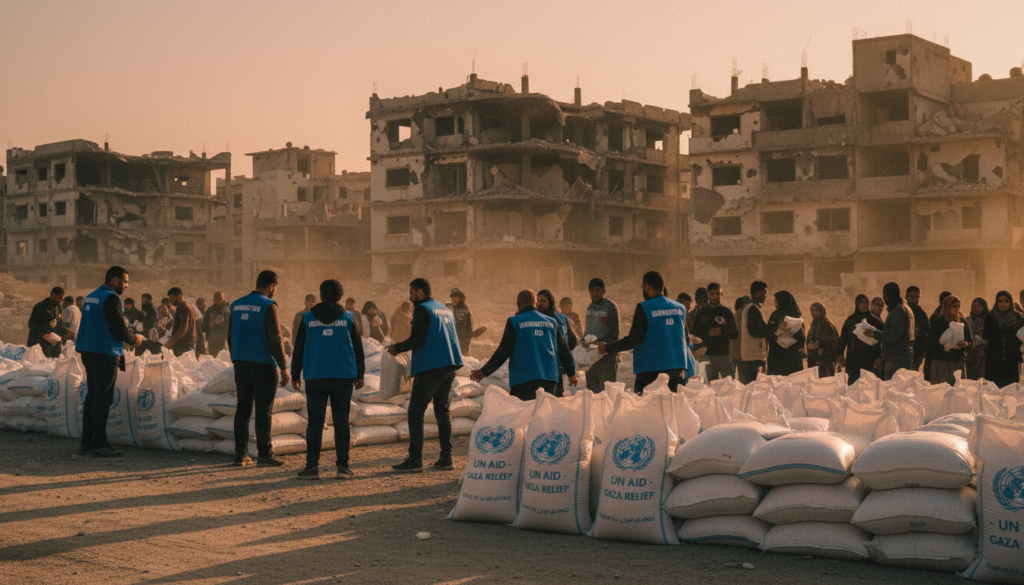
aza’s Fragile Recovery: 100,000 Face ‘Catastrophe’ Despite Aid Surge
Brainx Perspective
At Brainx, we believe the statistical retreat from “famine” in Gaza should not be mistaken for stability. This development highlights a perilous reality where survival is entirely dependent on external aid due to the total eradication of domestic agriculture. The crisis has shifted from immediate starvation to a systemic, long-term dependency that leaves millions vulnerable to the slightest geopolitical tremor.
The News
A new report by the Integrated Food Security Phase Classification (IPC) reveals that while the immediate threat of widespread famine in Gaza has receded following the October ceasefire, the humanitarian situation remains critically unstable. Although the number of people facing “famine-like” conditions has dropped since the August peak, deep pockets of catastrophic hunger persist.
Key Findings from the IPC Report:
- Persistent Catastrophe: While Gaza is technically no longer “in famine,” over 100,000 individuals remain in “Phase 5: Catastrophe,” facing extreme food gaps and exhaustion of coping capacities.
- Fragile Improvements: The number of people in Phase 5 has significantly decreased from 500,000 in August. The IPC projects this could fall to 1,900 by April, but only if the ceasefire holds and aid levels are sustained.
- Widespread Emergency: Approximately 500,000 people are still classified in “Phase 4: Emergency,” suffering from acute malnutrition and large consumption gaps.
- Regional Disparities: The crisis is most severe in northern Gaza, where malnutrition is at “critical” levels. Vulnerable groups, particularly children under five and pregnant women, face long-term developmental risks due to “hidden hunger” (micronutrient deficiencies).
The Collapse of Local Production: The report underscores that the crisis is structural, not just logistical.
- Agriculture Decimated: Over 96% of Gaza’s cropland has been destroyed or rendered inaccessible.
- Total Dependency: With greenhouses, orchards, and fishing fleets decimated, the population is 100% reliant on external aid, making them uniquely vulnerable to border closures.
The Data Dispute: A significant rift exists between international monitors and Israeli authorities regarding the severity of the crisis.
- Israel’s Stance: Cogat (the Israeli military body) rejects the IPC findings as “deliberately distorted,” arguing that aid trucks often exceed UN requirements and that the report ignores the true volume of food entering the strip.
- IPC’s Defense: The UN-backed body maintains its methodology is robust, citing satellite imagery of agricultural destruction and the reality that caloric availability does not equal equitable distribution in a war zone.
Why It Matters
For the common man in Gaza, the “famine” label is semantic; the reality is a daily battle for survival against price gouging and scarcity. This destruction of self-sufficiency ensures that even if the guns remain silent, the region will remain a humanitarian ward for years, with food security serving as a permanent lever of political pressure.
Leave a Reply