UK and France to send troops to Ukraine if peace deal agreed
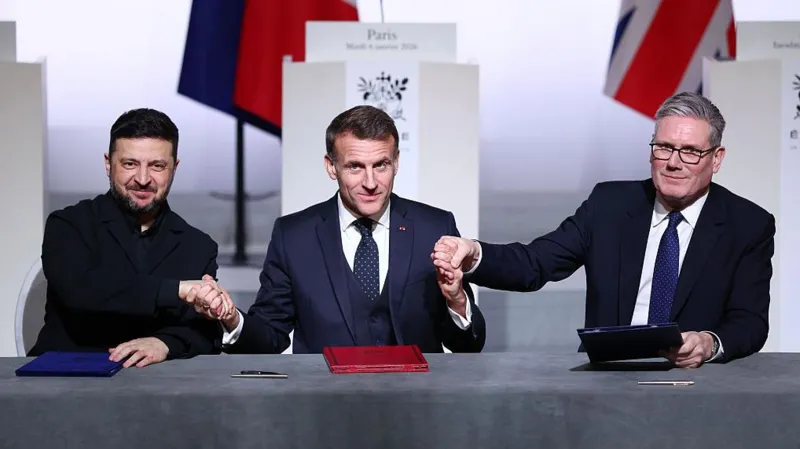
Historic Pact in Paris: UK and France Agree to Deploy Troops to Ukraine to Secure Future Peace Deal
Brainx Perspective
At Brainx, we believe this declaration marks a pivotal transformation in the global security architecture. It signals that major European powers are no longer relying solely on indirect aid but are preparing for direct, physical involvement to guarantee stability on the continent. This development highlights a shift from reactive support to proactive deterrence, fundamentally changing the stakes for any future aggression in the region.
The News: A New Security Paradigm for Europe
In a landmark development that could redefine the ending of the Russo-Ukrainian War, the United Kingdom and France have formally signed a declaration of intent to deploy troops on Ukrainian soil. This commitment, announced by UK Prime Minister Sir Keir Starmer following a high-stakes summit in Paris, is contingent upon the successful negotiation of a peace deal with Russia.
The summit, hosted by French President Emmanuel Macron, brought together the “Coalition of the Willing”—a group of key allies focused on forging a durable end to the hostilities that have ravaged Eastern Europe since February 2022.
Key Developments from the Paris Summit:
- The “Boots on the Ground” Pledge: Both London and Paris have agreed to establish “military hubs” across Ukraine. These are not intended for immediate combat but will serve as a permanent deterrent against future invasions once a ceasefire is in place.
- A Multinational Force: President Macron indicated that the scale of this operation could be massive, potentially involving thousands of European troops stationed within Ukraine’s borders to enforce the peace.
- US Monitoring Role: In a significant shift in responsibility, the United States is proposed to take the lead in “monitoring” the truce, while European allies handle the physical security guarantees.
- The “90% Ready” Peace Deal: Ukrainian President Volodymyr Zelensky revealed that the framework for a peace agreement is largely complete, with security protocols and prosperity commitments finalized.
- The Final Hurdle: The remaining 10% of the deal involves the contentious issue of territory, which remains the primary obstacle to signing a final treaty.
Deep Dive: The Mechanics of the Proposed Peace
The announcement in Paris represents a move from vague diplomatic promises to concrete military strategy. The details emerging from the summit paint a picture of a post-war Ukraine that is heavily fortified by its allies.
1. The Concept of “Military Hubs” Prime Minister Starmer’s reference to “military hubs” suggests a long-term strategic presence rather than a temporary peacekeeping mission.
- Purpose: To regenerate Ukraine’s armed forces and secure its skies and seas.
- Legal Framework: The declaration paves the way for a legal treaty that would protect British, French, and partner forces operating in Ukraine, shielding them from being classified as active combatants in an ongoing war, provided the ceasefire holds.
- Deterrence: The presence of NATO-member troops acts as a “tripwire.” Any future Russian attack on Ukraine would risk engaging British and French forces directly, drastically raising the cost of aggression for Moscow.
2. The Shift in American Involvement The presence of top US negotiators—specifically Jared Kushner, described as President Donald Trump’s special envoy, and Steve Witkoff—signals a distinct change in Washington’s approach.
- Protocols vs. Guarantees: American officials have been careful to use the term “security protocols” rather than binding “guarantees.” This linguistic nuance may offer the US administration political flexibility, allowing them to support the peace process without committing American soldiers to the front lines.
- Verification: The US role appears to be evolving into one of oversight and verification, leaving the physical enforcement of security to European powers. This aligns with a broader “America First” strategy of burden-sharing, where Europe is expected to take primary responsibility for its own continental security.
3. The “Thorny” Issue of Territory While security arrangements are settling, the map of Ukraine remains the most explosive point of contention.
- The Current Reality: Moscow currently controls approximately 20% of Ukrainian territory, including about 75% of the Donetsk region and nearly all of Luhansk.
- Putin’s Ultimatum: Russian President Vladimir Putin has repeatedly demanded the full withdrawal of Ukrainian troops from the Donbas region as a precondition for peace—a demand Kyiv has rejected.
- Zelensky’s Dilemma: President Zelensky has ruled out formally ceding territory. However, negotiators are exploring the possibility of a withdrawal to an “agreed point,” effectively freezing the conflict lines without legally recognizing Russian sovereignty over occupied lands. This is a bitter pill for many Ukrainians to swallow.
The Human and Strategic Context
The timing of this diplomatic breakthrough is driven by the harsh realities on the ground. As the article notes, the “snows fall and bitter winds sweep in from the east,” signaling another brutal winter.
The War of Attrition:
- Infrastructure Under Fire: Russia continues to strike Ukrainian cities and critical infrastructure daily. The cumulative effect of these attacks has placed immense pressure on Kyiv to find a resolution before the country faces total economic and grid collapse.
- Public Sentiment: While the Ukrainian public remains resilient, the prospect of an “endless war” is daunting. Zelensky hopes that the tangible promise of Western troops protecting the peace will convince his skeptical population that a ceasefire—even one involving painful compromises—is a victory for Ukraine’s survival.
The Wall of Silence from Moscow: Notably, the Kremlin has not yet commented on the Paris declaration. This silence is deafening.
- Strategic Ambiguity: Putin has previously warned that foreign troops in Ukraine would be “legitimate targets.” The introduction of NATO-nation forces, even in a peacekeeping capacity, crosses a historical red line for Russia.
- The Risk of Escalation: If Moscow views the “military hubs” as a forward deployment of NATO infrastructure, it could threaten to derail the peace talks entirely. However, the economic strain on Russia and the slow pace of its military advance may be forcing Putin to consider the off-ramp offered by this deal.
The Path Ahead: The Final 10%
President Zelensky’s assessment that the deal is “90% ready” is both hopeful and terrifying. In diplomatic negotiations, the final 10% is often the hardest to bridge because it contains the existential issues that started the war in the first place.
The “Coalition of the Willing” has managed to create a security architecture that satisfies Kyiv’s need for safety and Washington’s desire for reduced direct involvement. However, the question of borders—where the line between Ukraine and Russia is drawn in the snow—remains the arbiter of war and peace.
Negotiators are now racing against time and the elements. The goal is to lock in a ceasefire that stops the dying, backed by a credible European military force that ensures the war “ends forever,” as US negotiator Steve Witkoff put it.
The Paris declaration is a milestone, but as Zelensky admitted, it is not yet peace. It is, however, the clearest outline yet of what a post-war Europe might look like: a continent where the defense of the East is physically guaranteed by the powers of the West.
Why It Matters (Conclusion)
This development is a game-changer for the common man in Europe and beyond. It signifies a move towards a “hot peace” where security is maintained not just by treaties, but by the physical presence of allied troops. For the world, it represents a potential stabilizing end to a conflict that has disrupted global economics, energy, and food security for years, though it comes with the perpetual risk of a standoff between nuclear powers.
Leave a Reply