Online gaming escaped Australia’s social media ban – but critics say it’s just as addictive
The Glitch in the Law: Why Australia’s Social Media Ban Leaves a Dangerous Backdoor for Gaming and AI
Brainx Perspective
At Brainx, we believe that legislation must evolve as rapidly as the technology it seeks to regulate. Australia’s historic ban on social media for under-16s is a bold legislative step, yet it exposes a critical misunderstanding of modern digital habits. By targeting specific “social” apps while ignoring the immersive, addictive, and interactive worlds of gaming and AI, policymakers may be applying a “band-aid to a bullet wound,” leaving vulnerable youth exposed to the very algorithmic dangers the state sought to curb.
The Unseen Crisis: Beyond the Social Feed
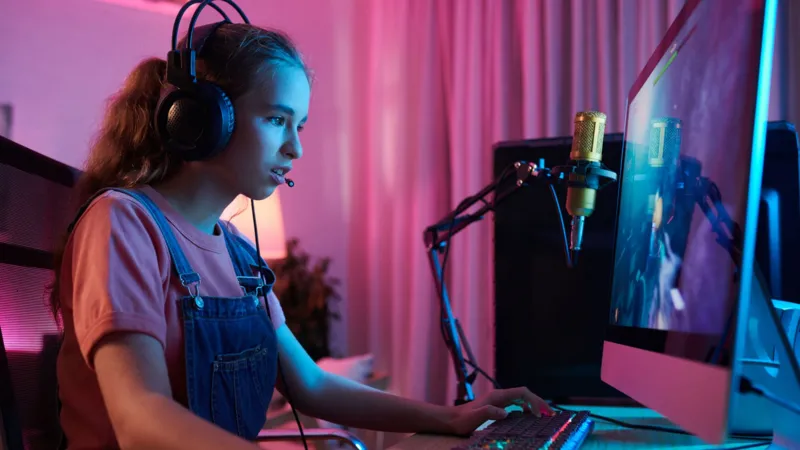
While the world focuses on the dangers of Instagram and TikTok, a quieter, perhaps more profound crisis is unfolding in living rooms across Australia. For 15-year-old Sadmir Perviz, the battleground isn’t a social media feed; it is the immersive world of online gaming.
Until recently, Sadmir’s life was dominated by a headset and a screen, consuming up to 10 hours of his day. Today, his Wednesday afternoons look very different. He travels to Fiona Stanley Hospital in Perth, home to Australia’s only publicly funded gaming disorder clinic. Here, the dopamine hits of digital victories are replaced by the tactile reality of board games like Dungeons & Dragons and Jenga.
Sadmir is one of 300 patients at this clinic, a facility that stands as physical proof of a growing digital epidemic. Dr. Daniela Vecchio, the psychiatrist who founded the clinic, emphasizes a critical nuance: gaming is not inherently evil. However, the mechanisms that drive modern gaming—sophisticated algorithms, endless content loops, and social pressure—are creating a generation at risk of what the World Health Organization (WHO) now officially classifies as “Gaming Disorder.”
This medical reality clashes sharply with Australia’s recent legislative moves. The government has banned under-16s from social media, yet the vast, unregulated landscape of gaming and AI platforms remains wide open.
The Psychology of “The Hook”: How Algorithms Capture the Mind
To understand why the exclusion of gaming from the ban is so controversial, one must understand the psychology of user engagement. Dr. Vecchio and other experts point out that gaming platforms utilize the exact same psychological triggers as social media to maximize time-on-device.
The “Brainx” analysis of these engagement traps includes:
- Variable Reward Schedules (The Slot Machine Effect): Games are designed to offer rewards—loot boxes, rare items, or level-ups—at unpredictable intervals. This inconsistency spikes dopamine levels in the brain, creating a compulsive feedback loop similar to gambling. The player keeps clicking, hoping the next attempt yields the prize.
- Social Validation and FOMO: Modern gaming is rarely a solitary activity. It is driven by “Fear of Missing Out” (FOMO). Guilds, clans, and rankings provide status and belonging. If a teenager logs off, they aren’t just stopping a game; they are abandoning their social tribe and losing status within their community.
- The Escapism Trap: For adolescents navigating the awkwardness and anxiety of the real world, digital realms offer a controlled environment where they can curate ideal identities. This escapism creates a subconscious loop: the more stressful real life becomes, the more attractive the digital refuge appears.
- The Infinite Scroll of Content: Just as TikTok offers an endless feed, modern games and streaming platforms (like Twitch) offer infinite content. There is no “Game Over” screen anymore; there are only endless updates, user-generated levels, and live streams, making it nearly impossible to find a natural stopping point.
Kevin Koo, a 35-year-old former patient of the clinic, describes the consequences of these mechanisms as paralleling substance abuse. Having lost his job and social connections to gaming isolation, Koo’s experience serves as a grim warning of where unchecked digital consumption leads.
The Legislative Loophole: Why Gaming Was Spared
Australia’s “world-first” ban prevents children under 16 from holding accounts on platforms like X (formerly Twitter), Instagram, and Snapchat. The intent is noble: to shield youth from predatory algorithms, cyberbullying, and grooming.
However, the legislation has been criticized for its “purpose-based” definition rather than a “risk-based” approach. The eSafety Commissioner excluded gaming platforms based on three rigid criteria:
- Is the platform’s sole purpose social interaction?
- Does it allow interaction with all users?
- Does it allow content posting?
Because gaming platforms are technically for “playing” rather than “socializing,” they were granted an exemption.
The Expert Verdict:
- Dr. Daniela Vecchio calls this distinction nonsensical. “The individual who plays games for excessive amounts of time also spends excessive amounts of time on social media platforms… it’s a way to connect.”
- Professor Marcus Carter (University of Sydney) describes the law as “reactionary” and reflective of incompetence regarding how tech actually works.
- Professor Tama Leaver (Curtin University) labels the ban a “blunt tool,” noting that it fails to distinguish between creative environments (like Minecraft) and exploitative ones.
The “Wild West” Platforms: Roblox and Discord
The exemption of gaming overlooks two of the most significant digital hubs for modern youth: Discord and Roblox. These platforms sit in the gray area between gaming, social media, and AI interaction, often hosting the very dangers the ban seeks to eliminate.
1. Discord: The Hidden Social Network Discord is the default communication tool for gamers, offering voice, video, and text chat.
- The Risk: Its decentralized structure allows users to create private servers that are difficult to moderate. It has faced repeated allegations regarding child safety, including exposure to extremist content, cyberbullying, and grooming.
- The Response: While Discord recently introduced a “teen-by-default” setting for Australian users to comply with safety standards, its core function remains a massive, unmoderated social web—exempt from the social media ban.
2. Roblox: The Metaverse of Misfires Roblox is not a game; it is a platform enabling users to create games.
- The Risk: Because content is user-generated, moderation is a monumental struggle. Reports have surfaced of children stumbling into “games” designed for sexual exploitation or radicalization.
- The Nuance: Professor Leaver points out that Roblox effectively provides “enabling tools” for anyone to build anything. While the company has promised new age-assurance features, the sheer volume of content makes it a digital minefield for unsupervised children.
A Generational Warning
The story of Kevin Koo—who grew up in the “wild west” of the early internet—provides a sobering backdrop to today’s debate. He wonders if earlier intervention could have saved him from years of addiction. “I got free rein on the internet basically. So I think that for me, the damage has already been done,” Koo laments.
However, the landscape Koo navigated was primitive compared to today. Modern platforms are not passive; they are active antagonists in the battle for attention, armed with billions of dollars of behavioral research.
The Australian Federal Police (AFP) have issued warnings that chatrooms within these exempt gaming platforms are becoming “hotbeds for radicalization and child exploitation.” By closing the front door (social media) but leaving the back door (gaming/AI) wide open, the legislation may simply redirect traffic rather than reducing harm.
Why It Matters
This development highlights a pivotal moment for global digital policy. For the common parent, it underscores that government bans are not a silver bullet; the responsibility of monitoring digital hygiene remains largely at home. As the lines between gaming, socializing, and AI blur, future regulations must prioritize “harm reduction” over rigid definitions. Without a comprehensive approach that includes gaming, we risk leaving a generation unprotected in the increasingly sophisticated “wild west” of the metaverse.
Leave a Reply