Israel court hears appeal over ban on independent media access to Gaza
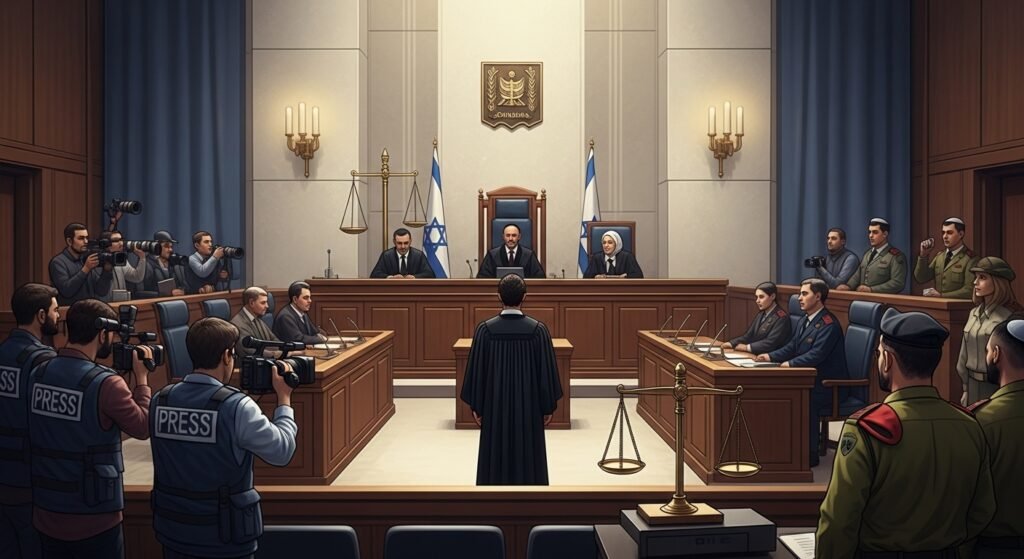
Gaza Media Blackout: Supreme Court Weighs Ending Two-Year Ban on Foreign Press
Brainx Perspective
At Brainx, we believe that the integrity of global history relies on independent witnesses. The continued refusal to allow foreign journalists into Gaza—three months after a ceasefire—suggests that “security concerns” may be morphing into an information blockade. This Supreme Court case is not just about logistics; it is a litmus test for the democratic principle that the public has a right to see the aftermath of war through unbiased eyes, not just through the lens of a military escort.
The News: A Legal Battle for the Truth
A pivotal legal confrontation is currently unfolding within the halls of Israel’s Supreme Court, a battle that will determine how—and if—the world gets to see the unvarnished reality of post-war Gaza. The Foreign Press Association (FPA), representing over 400 journalists from major international media outlets (including the BBC, CNN, and Reuters), has taken the Israeli government to court. Their demand is simple yet profound: end the ban on independent media access to the Gaza Strip.
Despite a ceasefire coming into effect in October 2025, the Israeli government has steadfastly refused to dismantle the restrictions introduced two years ago at the onset of the conflict. For the first time in decades of coverage in this region, the “eyes of the world” have been effectively blindfolded, reliant either on military-guided tours or the courageous, yet overwhelmed, local Palestinian press corps.
Here is a comprehensive breakdown of the situation, the arguments, and the stakes.
1. The Core Dispute: Security vs. Transparency
The hearing in Jerusalem has exposed a stark divide between the state’s security apparatus and the international press.
- The FPA’s Argument: Gilad Sher, the lawyer representing the Foreign Press Association, argued that the current policy is “absurd.” With active hostilities largely ceased, the continued blockade on journalists undermines the fundamental principles of press freedom. The FPA contends that without independent access, the global public is denied the “right to know” the full extent of the humanitarian and political situation on the ground.
- The State’s Defense: The Israeli government, represented by lawyer Yonathan Nadav, maintained that opening the crossings to unvetted media traffic would endanger both Israeli troops operating in the area and the journalists themselves. They argue that the security situation remains too volatile for civilians to roam freely without military protection.
2. The “Embed” System: A Keyhole View of the War
For the past two years, foreign correspondents have been forced to cover the most significant conflict of the century from the outside looking in.
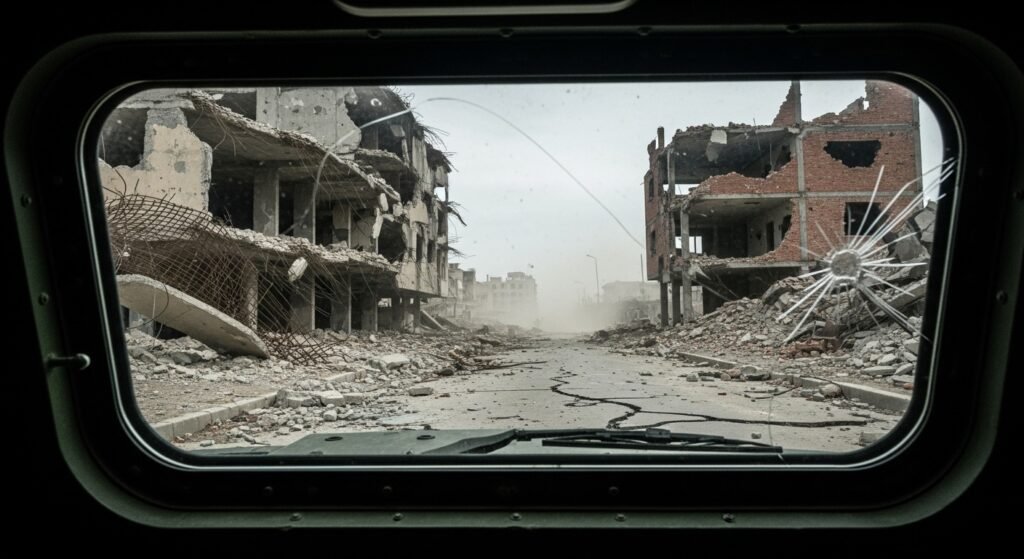
- Restricted Access: Currently, the only way a foreign journalist can enter Gaza is via a “military embed.” These are tightly controlled visits where journalists travel in armored personnel carriers (APCs) accompanied by the Israeli Defense Forces (IDF).
- The Limitations: While these embeds provide glimpses of the destruction or specific tunnels found by the military, they are not independent reporting. Journalists cannot interview civilians privately, cannot visit hospitals unannounced, and cannot verify claims made by either side independently.
- The Brainx Analysis: An embed is, by definition, a curated experience. It shows the world what the army wants it to see, rather than what needs to be seen.
3. The Heavy Burden on Palestinian Journalists
With the international press locked out, the colossal weight of documenting the war has fallen entirely on the shoulders of Palestinian journalists already living in Gaza.
- Living the Story: Unlike foreign correspondents who can leave the war zone, local journalists are living through the famine, displacement, and airstrikes while trying to report on them.
- The Death Toll: The cost has been astronomical. Media advocacy group Reporters Without Borders (RSF) reports that more than 220 Palestinian journalists have been killed since the war began. At least 68 of these were killed while actively working.
- Recent Tragedies: Just a week ago, an Israeli strike south of Gaza City killed three freelance journalists working for international agencies: Mohammed Qashta, Anas Ghneim, and Abdul Raouf Shaat. The IDF stated they targeted “suspects operating a drone,” a common tool for modern filming, highlighting the deadly confusion in the field.
4. Historical Context: A Dangerous Precedent
The FPA’s frustration stems from the fact that this total ban is a deviation from historical norms during previous escalations.
- 2009 & 2014 Precedents: In previous conflicts (2009 and 2014), the Israeli government eventually capitulated to pressure. Journalists were allowed to enter via the Erez Crossing after signing legal waivers absolving the IDF of responsibility for their safety.
- The System Worked: During the 2014 war, the BBC and other agencies coordinated their movements with the Israeli military’s press desk, sharing GPS coordinates of armored cars and hotels. While dangerous, this system allowed for independent verification of airstrikes, rocket fire, and civilian casualties.
- The Current Shift: The refusal to return to this “waiver system” suggests a shift in policy that goes beyond immediate safety concerns, potentially aiming to control the narrative of the post-war landscape.
5. The Implications of the “New Gaza”
The timing of this court case is critical. The US has recently unveiled conceptual plans for a “New Gaza,” featuring potential skyscrapers and reconstruction projects.
- Verification Needed: Without independent journalists on the ground, verify the progress of aid distribution, the clearing of rubble, or the reality of these reconstruction plans is impossible.
- The Ceasefire Paradox: Tania Kraemer, FPA chairperson and Deutsche Welle correspondent, noted the contradiction: “Now we have a ceasefire, we’re saying it’s rather difficult to understand these security arguments.”
Why It Matters
This ruling will set the benchmark for media freedom in the 21st century. If a democratic nation can successfully ban independent press from a conflict zone for over two years citing “security,” it provides a playbook for authoritarian regimes worldwide to do the same. For the common man, this means the news you consume about global conflicts may increasingly be state-sanctioned PR rather than objective truth. We are waiting for the Supreme Court’s decision, but the delay itself is a verdict on the fragility of transparency.
Leave a Reply