China executes 11 members of Myanmar scam mafia
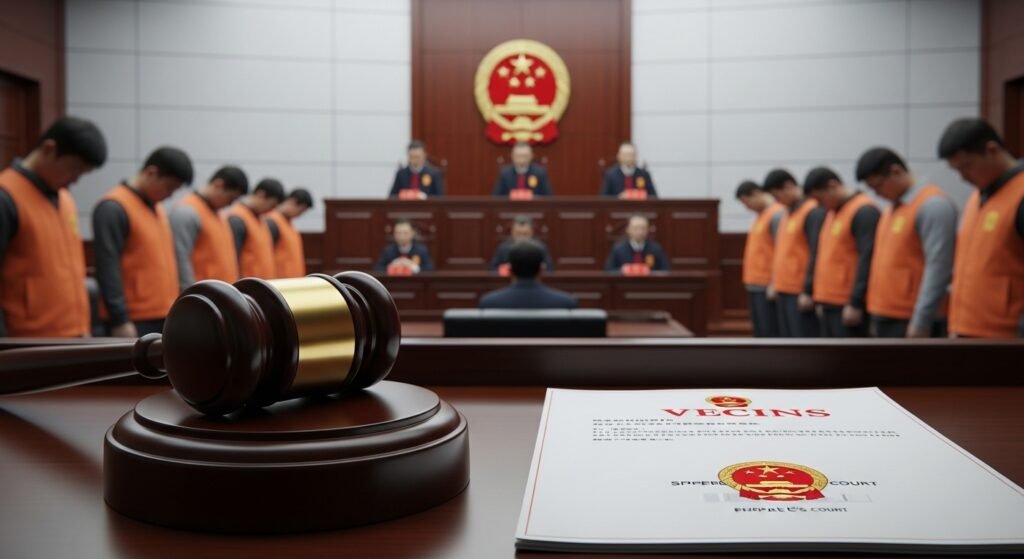

China Executes 11 Ming Mafia Bosses: Inside the Collapse of the $1.4 Billion ‘Crouching Tiger’ Scam Empire
2. Brainx Perspective
At Brainx, we believe this decisive action by Beijing signals a zero-tolerance shift in cross-border law enforcement that goes far beyond simple criminal justice. The execution of the Ming clan leadership highlights that the era of impunity for borderland warlords is ending, yet it also exposes a terrifying geopolitical game of “whack-a-mole” as cyber-slavery syndicates merely migrate to darker, lawless frontiers.
3. The News
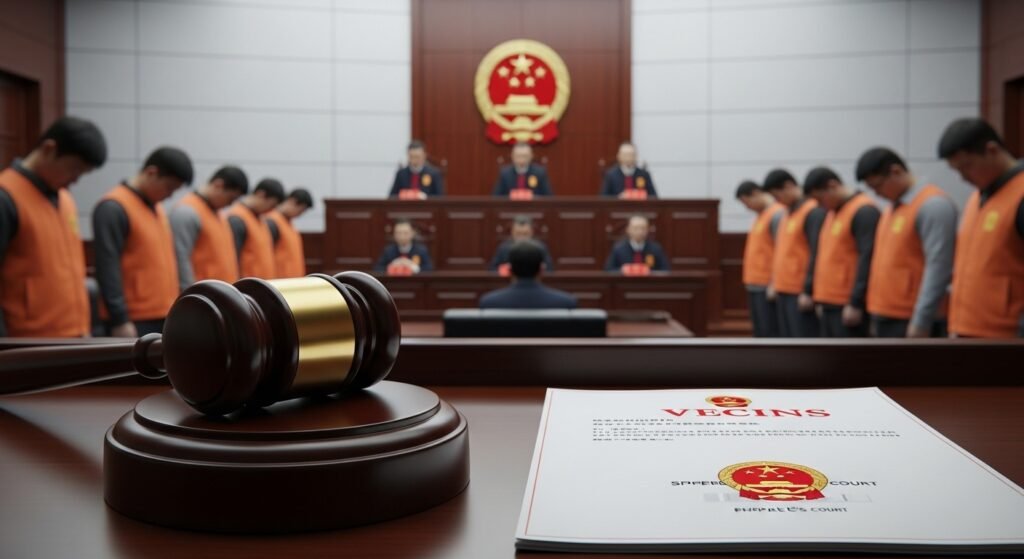
In a dramatic conclusion to one of the most notorious criminal sagas in Southeast Asia, China has executed 11 members of the Ming mafia family. This clan was responsible for running a brutal industrial-scale scam empire from the lawless border town of Laukkaing in Myanmar. The executions mark the final chapter for a syndicate that transformed an impoverished region into a neon-lit hub of fraud, torture, and vice.
The Verdict and Execution
The Ming family members were originally sentenced in September by a court in China’s Zhejiang province. Their crimes were extensive and violent, painting a picture of a ruthless organization that operated with absolute impunity for years.
- The Charges: The group was convicted of intentional homicide, illegal detention, fraud, and operating illegal gambling dens.
- The Financial Scale: According to China’s highest court, the Ming mafia’s operations generated over 10 billion yuan ($1.4 billion) between 2015 and 2023.
- The Human Cost: Their fraudulent activities targeted Chinese citizens, swindling billions, while their physical operations resulted in the deaths of at least 14 Chinese nationals and injuries to countless others.
The Rise and Fall of the Ming Dynasty
The Mings were one of the “Four Families” that ruled Laukkaing, a special administrative zone in Myanmar’s Shan State.
- From Warlords to CEOs: The family rose to power in the early 2000s after the local warlord was ousted in an operation led by Min Aung Hlaing, the current leader of Myanmar’s military junta.
- Crouching Tiger Villa: The family patriarch, Ming Xuechang, operated the infamous “Crouching Tiger Villa.” Initially a hub for gambling and prostitution, it evolved into a high-tech center for online fraud.
- The Collapse: The empire crumbled in late 2023. Frustrated by the Myanmar military’s protection of these gangs, Beijing tacitly backed an offensive by an alliance of ethnic insurgents. These rebels overran Laukkaing, detained the mafia bosses, and handed them over to Chinese authorities.
- The Patriarch’s End: Ming Xuechang committed suicide in 2023 to avoid capture, according to Myanmar’s military.
A Culture of Violence and Slavery
The court proceedings and state media documentaries revealed horrors hidden behind the walls of the Ming compounds.
- Human Trafficking: The United Nations estimates that hundreds of thousands of people have been trafficked into Myanmar and Southeast Asia to staff these scam centers.
- Forced Labor: Victims were often kidnapped or lured with promises of high-paying tech jobs, only to be imprisoned in well-guarded compounds and forced to defraud strangers online.
- Systemic Torture: Testimonies from freed workers described a routine culture of violence, including beatings, electrocution, and starvation for those who failed to meet scam quotas.
The “Hydra” Effect: The Crime Moves On
While the Ming family has been dismantled, experts warn that the industry is far from dead.
- Relocation: Intelligence suggests the scam industry is shifting geographically. Operations are moving away from the Chinese border toward Myanmar’s border with Thailand, as well as into Cambodia and Laos, where Chinese law enforcement has significantly less leverage.
- Other Families: The purge continues beyond the Mings. Five members of the rival Bai family were sentenced to death in November, while trials for the Wei and Liu families are ongoing.
4. “Why It Matters” (Conclusion)
This execution is a grim milestone that matters deeply to the common man, as it disrupts the machinery behind the “pig butchering” scams that have drained life savings from victims globally. However, it also serves as a warning: while the bosses are gone, the model of “cyber-slavery” persists, requiring global vigilance rather than just regional enforcement.

Deep Dive: The Mechanics of the “Pig Butchering” Economy
(Detailed Context for Brainx Readers)
To truly understand the significance of the Ming family executions, one must look at the economic engine they built. The term “Pig Butchering” (Sha Zhu Pan) refers to a long-con investment fraud. Scammers, often forced laborers themselves, spend months grooming victims on social media or dating apps, building a romantic or friendly rapport. Once trust is established (fattening the pig), they convince the victim to invest in fake cryptocurrency platforms before stealing everything (the butchering).
The Ming family industrialized this process. “Crouching Tiger Villa” was not just a criminal hideout; it was a corporate campus of crime. It had dormitories, canteens, and high-speed internet, all guarded by private militias. The 10 billion yuan revenue cited by the court likely represents only a fraction of the total economic damage, as many victims never report their losses due to shame.
Furthermore, the geopolitical ripple effects are massive. The fall of Laukkaing fundamentally altered the civil war in Myanmar. By allowing ethnic militias to crush the scam centers, China signaled that it values the safety of its citizens’ bank accounts over its traditional non-interference policy in Myanmar. This has weakened the Myanmar military junta, which relied on these border guard forces (BGFs) for revenue and territorial control.
The execution of 11 people is a harsh, final act of justice, but the digital infrastructure of fraud remains. As long as there are desperate people to be trafficked and lonely people to be scammed, new “Mings” will rise in the ungoverned spaces of the Golden Triangle.
Leave a Reply