Imran Khan not the only one silenced as Pakistan military stifles dissent

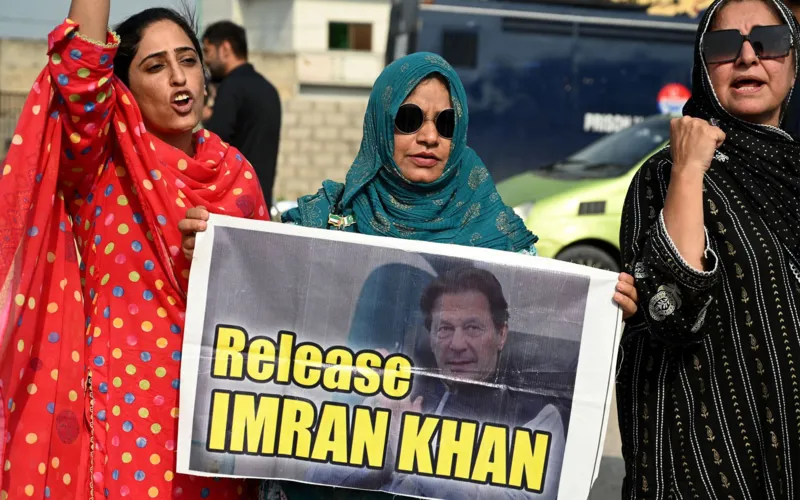
The Iron Curtain Falls: Imran Khan Silenced, Activists Jailed, and the Rise of Pakistan’s “Digital Terrorism” Laws
2. Brainx Perspective
At Brainx, we believe the hermetic isolation of a former head of state, coupled with the draconian sentencing of human rights lawyers, signals a definitive end to Pakistan’s hybrid democratic experiment. This development highlights a systemic pivot where “national security” is being weaponized to criminalize dissent. The unprecedented lifetime immunity granted to military leadership suggests a permanent restructuring of power, leaving the common citizen’s right to free speech precariously balanced against a state apparatus that now equates criticism with terrorism.
3. The News
The political landscape of Pakistan has undergone a seismic shift, characterized by the total isolation of former Prime Minister Imran Khan, a crackdown on the legal fraternity, and the elevation of military power to constitutionally protected heights.

The Isolation of Imran Khan According to party officials and family members, Imran Khan, the jailed former Prime Minister, has been cut off from the outside world for over five weeks. The government asserts that these restrictions are punitive measures resulting from Khan’s violation of jail protocols prohibiting political discussion. However, his family contends this is a calculated effort to erase his narrative from the public consciousness.
- Total Blackout: Khan has not seen a family member in eight weeks and has not met with legal counsel for over five weeks. His last legal meeting was restricted to a mere eight minutes.
- The “Two Names” Rule: Aleema Khanum, Khan’s sister, claims there is an undeclared ban in the media: “You can’t say anything nice about Imran Khan, and you can’t say anything bad about Asim Munir.”
- Proxy Communication Ended: Previously, Khan’s team would post messages on his X (formerly Twitter) account based on conversations held inside the jail. With visitation rights suspended, this channel has effectively gone silent.
- State Justification: The government, represented by figures like Talal Chaudhry, denies he is in isolation, labeling him “the most privileged prisoner in Pakistan” with access to amenities like a cook and gym equipment.
The Case of Imaan Mazari and the Legal Crackdown While Khan remains the most prominent figure under pressure, the state’s apparatus has widened its net to include those who defend human rights within the legal system. In a verdict that has sent shockwaves through the judicial community, human rights lawyer Imaan Mazari and her husband, Hadi Ali Chattha, have been sentenced to 10 years in prison.
- The Charges: The couple was convicted of sharing “anti-state” social media posts and “propagating narratives that align with hostile terrorist groups.”
- Government Stance: The Information Minister defended the verdict with the phrase, “As you sow, so you shall reap,” rejecting the notion that law-breaking can be camouflaged as human rights advocacy.
- International Outcry: Amnesty International had preemptively called for an end to “coercive tactics” used to intimidate defenders of human rights, a plea that appears to have gone unheeded.
The Rise of Field Marshal Munir and Military Immunity Perhaps the most significant structural change occurred in November 2025, with a constitutional amendment that fundamentally altered the balance of power in Pakistan.
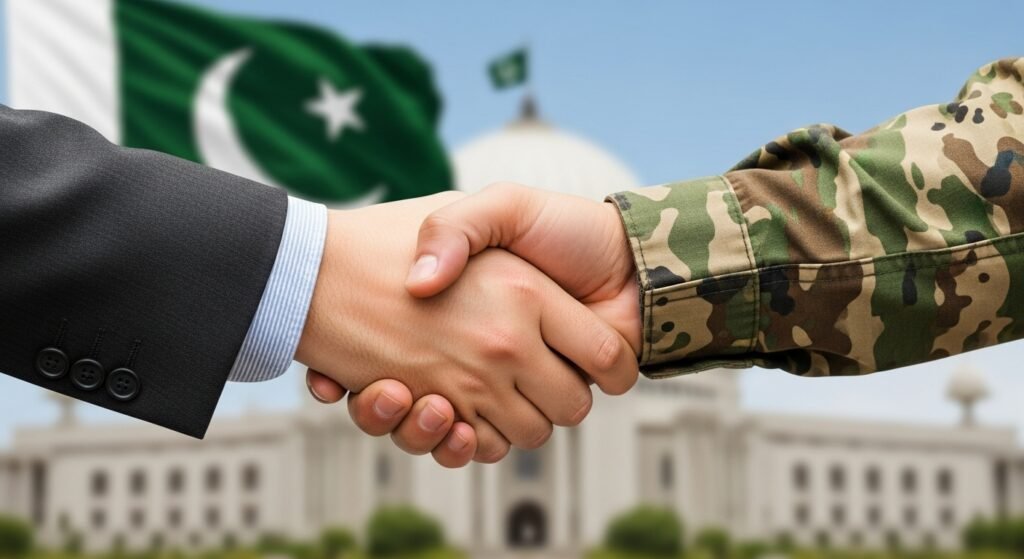
- Lifetime Immunity: The amendment granted Army Chief Asim Munir—now referred to as Field Marshal—lifetime immunity from prosecution and oversight regarding all of Pakistan’s defense forces.
- Consolidated Power: Analysts view this as the high-water mark of military influence under a civilian facade. The military, or “the establishment,” has always been a dominant force, but this legal shield formalizes their untouchability.
- The “Authortarian” Shift: Michael Kugelman of the Atlantic Council notes that the repression is currently worse than during any period of civilian rule, suggesting the country is drifting perilously close to overt authoritarianism.
The War on “Digital Terrorism” The state has deployed a new legal arsenal to combat what it terms “digital terrorism.” This narrative frames online criticism of the military, judiciary, or state institutions as an act of war against the state.
- Sentencing in Absentia: In early January, seven Pakistani journalists and YouTubers operating outside the country were tried in absentia. They received life sentences for “waging war against the state” and “incitement” linked to the protests of May 9, 2023.
- Vague Definitions: Media analysts like Adnan Rehmat argue that the amendments to the Prevention of Electronic Crimes Act (PECA) in early 2025 have made definitions of “national interest” dangerously vague.
- Disproportionate Penalties: The new laws carry steep fines and enhanced penalties, making criticism of the security establishment an explicit crime.
The Death of the Free Press The impact of these measures on traditional media has been devastating. Journalists report a transition from state-enforced censorship to a more insidious culture of “self-censorship.”
- Financial Crippling: The Dawn Media Group, founded by Pakistan’s founding father, faced an unannounced ban on government advertising—a financial lifeline for major outlets—as punishment for its independent reporting.
- Silence in the Newsroom: Reporters from major networks like Geo TV admit that even stories tangentially related to the military trigger warning calls. “Now there is self-censorship, which in many ways is worse because we are deceiving the audience,” one journalist noted.
- The Unspoken Rules: The HRCP (Human Rights Commission of Pakistan) reports harassment of staff and restrictions on holding discussions, indicating that the space for civil society to operate is shrinking rapidly.
The Security Perspective The government and security sources maintain that these measures are necessary for stability. They argue:
- Regulation is Global: Talal Chaudhry argues that the whole world is regulating social media to prevent fraud and terrorist recruitment.
- Constitutional Bounds: Security sources insist the military operates within legal bounds and that the constitution protects free speech subject to “reasonable restrictions.”
4. “Why It Matters” (Conclusion)
This consolidation of power matters because it represents a structural transformation of Pakistan’s governance. For the common man, the criminalization of “digital dissent” means that social media—once a valve for public frustration—is now a potential prison sentence. As the state effectively immunizes its military leadership from scrutiny while silencing its political opposition, the future of Pakistan looks less like a democracy and more like a security state where silence is the only safe option.
Leave a Reply