Israeli air strikes kill at least 32 Palestinians in Gaza, rescue officials say
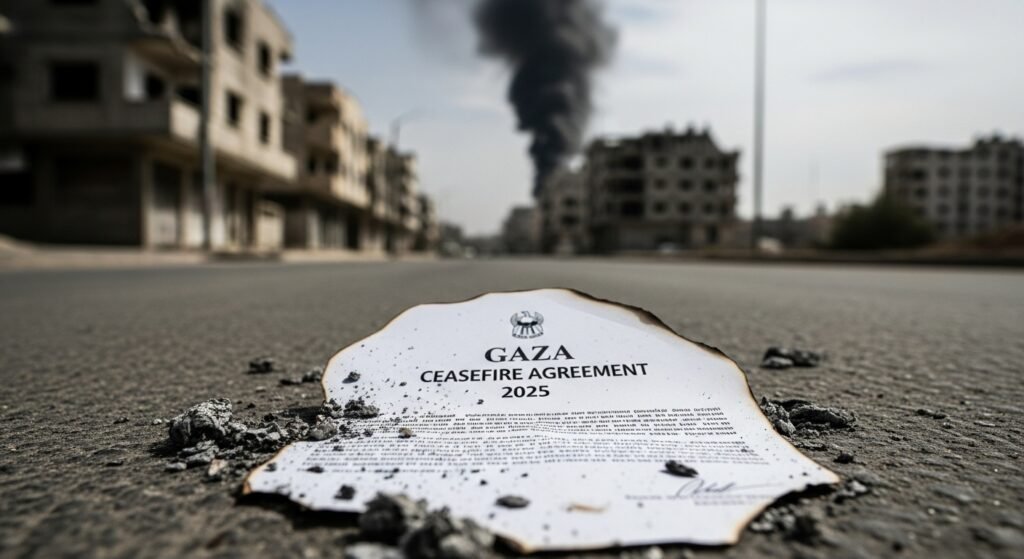
“Ceasefire” in Flames: 32 Dead in Gaza as Israeli Airstrikes Shatter Trump-Brokered Truce Following “Last Hostage” Recovery
2. Brainx Perspective
At Brainx, we believe the renewed violence in Khan Younis and Rafah serves as a grim reality check for the Trump administration’s foreign policy ambitions. This development highlights that a political signature on a ceasefire deal cannot suppress the kinetic reality of a war fueled by deep-seated existential fears. With the “last hostage” recovered, the strategic calculus has shifted, leaving the common Gazan vulnerable in a vacuum where diplomatic agreements seem to evaporate the moment helicopter blades start spinning.
3. The News
A fragile peace has once again been pierced by the sound of helicopter gunships and crumbling masonry. At least 32 people were killed on Saturday in a sweeping wave of Israeli air strikes across the Gaza Strip, marking the heaviest bombardment since the “second phase” of the ceasefire came into effect earlier this month.
The strikes have cast a long shadow over the truce brokered by US President Donald Trump in October of last year (2025), raising fears that the region is sliding back into full-scale conflict.
The Flashpoint: Khan Younis and Rafah
Local authorities and the Hamas-operated civil defense agency reported a coordinated series of attacks targeting multiple locations across the Strip.
- Khan Younis: In one of the most devastating incidents, helicopter gunships reportedly fired upon a tent sheltering displaced families. The strikes resulted in significant civilian casualties, with seven victims identified as members of a single displaced family.
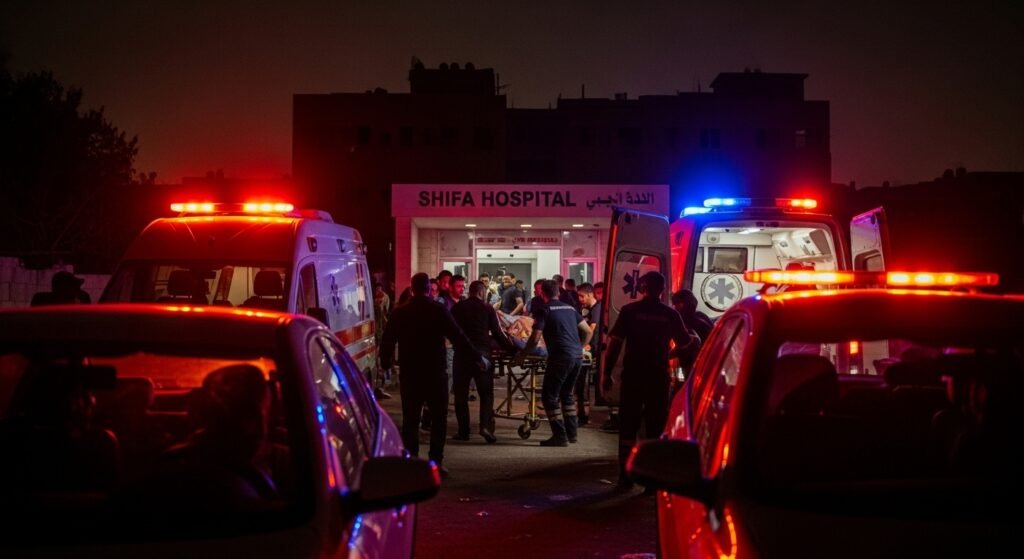
- Gaza City: Strikes hit residential apartments near the Shifa hospital. Eyewitnesses and medical officials confirmed the deaths of three children and two women in this specific attack.
- Central Gaza: The Israel Defense Forces (IDF) targeted what they described as weapons manufacturing and storage facilities, along with two launch sites.
Israel’s Justification: “Terror Infrastructure”
The Israeli military confirmed the operation, framing it as a necessary response to a Hamas violation of the agreement on Friday. The IDF released a detailed statement outlining their operational logic:
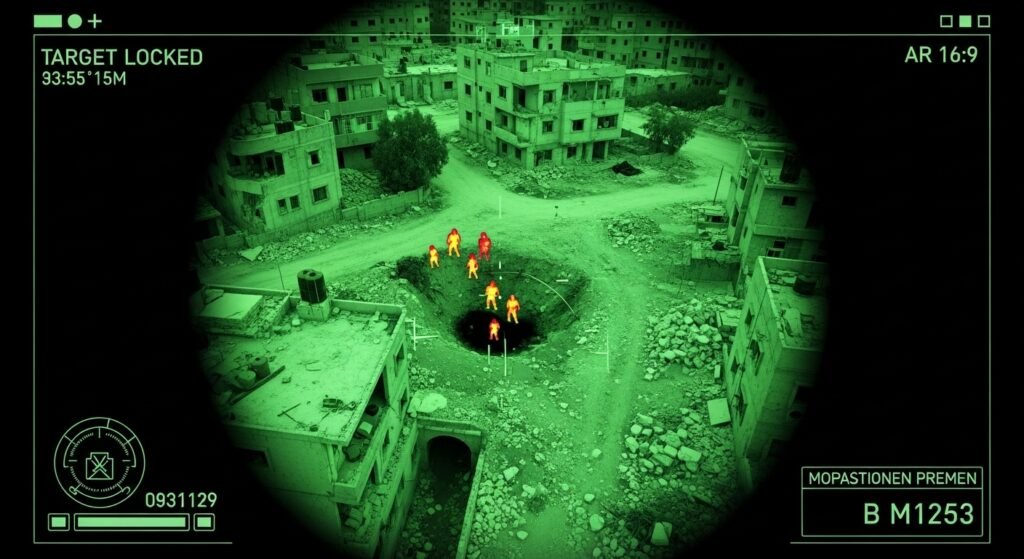
- Tunnel Activity: Surveillance identified “eight terrorists” exiting underground infrastructure in eastern Rafah—a sensitive zone where Israeli forces remain deployed under the terms of the October agreement.
- High-Value Targets: The IDF, in conjunction with the Israel Security Agency (ISA), claimed to have eliminated “four commanders” alongside other militants during the raids.
- Strategic Threat: The strikes were aimed at neutralizing imminent threats from weapon launch sites and storage depots.
Voices from the Rubble
The human cost of the escalation was immediate and visceral. Samer al-Atbash, a resident of Gaza City, described the horror of finding his young relatives dead on the street.
“We found my three little nieces in the street. They say ‘ceasefire’ and all. What did those children do? What did we do?” — Samer al-Atbash
Video footage from the scene corroborates reports of widespread destruction, showing civil defense workers pulling bodies from the rubble of destroyed residential buildings and a police station in Gaza City, where 12 people were reportedly killed.
The “Last Hostage” Context
These strikes occur against a highly significant backdrop: the recovery of the body of Israel’s last remaining hostage earlier this week.
- This milestone was meant to pave the way for the reopening of the Rafah crossing—Gaza’s border with Egypt—on Sunday.
- The recovery of the final hostage effectively closes one of the most painful chapters of the war for Israel, potentially altering their rules of engagement. With no hostages left to leverage or protect, analysts fear the IDF may feel less restrained in its operational choices.
International Fallout
The diplomatic response has been swift but weary.
- Hamas: Condemned the attacks as a continuation of a “brutal war of genocide,” urging the US to intervene immediately.
- Egypt: The Foreign Ministry issued a statement urging “utmost restraint,” fearing the violence could disrupt the planned reopening of the border.
- Qatar: As a key mediator, Qatar denounced the “repeated Israeli violations” of the truce.
The Grim Statistics
The conflict, which began on October 7, 2023, has now stretched into 2026 with a devastating toll.
- Total Casualties: The Hamas-run health ministry reports over 71,660 Palestinian deaths.
- Ceasefire Toll: Since the Trump-brokered truce began on October 10, 2025, at least 509 Palestinians and four Israeli soldiers have been killed.
- Verification: While casualty figures have historically been disputed, Israeli local media recently reported that a senior security source privately accepts the figure of more than 70,000 deaths as accurate.
4. “Why It Matters” (Conclusion)
This escalation matters because it exposes the fragility of top-down diplomacy in the face of ground-level friction. For the common man in Gaza, “ceasefire” has become a semantic distinction without a difference—it offers no shield against helicopter fire. Furthermore, with Israel’s last hostage recovered, the humanitarian restraints on the war machine may be loosening, signaling a dangerous new phase where the threshold for lethal force is significantly lower, threatening to turn a “truce” into a graveyard.
Leave a Reply