Gold and silver prices fall after Friday’s losses
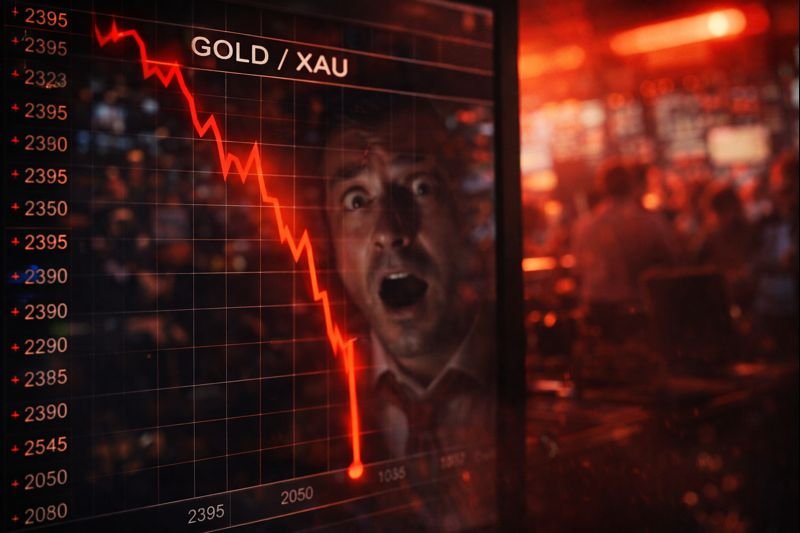
$7 Trillion Wipeout: Gold & Silver Crash as Trump’s “Hawkish” Fed Pick Shatters the Everything Bubble
At Brainx, we believe…
This historic market capitulation is not merely a correction; it is a violent reality check for the “Trump Trade.” The nomination of Kevin Warsh exposes the market’s dangerous assumption that the new administration would simply print money to fuel growth. This development highlights that liquidity is a double-edged sword: when leverage is pulled from “safe haven” assets, they can become as volatile as meme stocks. We believe this marks the end of the “easy money” phase and the beginning of a more disciplined, albeit painful, monetary era.
The News: The Great Precious Metals Unwind
In what analysts are calling “Black Friday” for commodities, the global financial system witnessed one of the most violent asset repricings in modern history. After months of parabolic gains driven by geopolitical fear and speculation on US monetary policy, the floor fell out from under the precious metals market.
As of Monday, February 2, 2026, the dust is still settling on a crash that erased an estimated $7 trillion in value from the sector. The panic began late Friday and bled into Asian trading sessions on Monday, leaving retail investors and institutional giants alike scrambling for liquidity.
The Scale of the Carnage
The numbers are staggering and historic:
- Gold’s Historic Plunge: Spot gold prices collapsed by nearly 10% in a single session, marking the sharpest one-day drop since 1983. Prices fell from record highs above $5,500 to briefly touch $4,790 per ounce.
- Silver’s Freefall: Silver, often more volatile than its yellow cousin, experienced a “meltdown,” crashing by 15% to 27% (depending on the exchange) before finding a floor near $82.50. This represents its worst performance since the Hunt Brothers crisis of 1980.
- Mining Stocks Decimated: The shockwave hit equities hard. Major miners like Fresnillo and Endeavour Mining saw double-digit percentage drops, while the FTSE 100 and South Korea’s Kospi (down 5%) led global equity losses.
The Trigger: The “Warsh Effect”
The primary catalyst for this reversal was President Donald Trump’s nomination of Kevin Warsh as the next Chair of the Federal Reserve.
- The Market’s Miscalculation: For months, traders had bet that Trump would appoint a loyalist who would aggressively cut interest rates to fund tariffs and fiscal expansion. This expectation weakened the dollar and sent gold soaring.
- The Reality Check: Kevin Warsh, a former Fed Governor, is viewed by Wall Street as a “sound money” advocate and an inflation hawk. His nomination signaled to the market that the Fed might not debase the currency to suit political whims.
- The Dollar Spike: Upon the news, the US Dollar Index (DXY) surged by over 1%, making dollar-denominated assets like gold instantly more expensive for foreign buyers.
The Accelerant: Margin Calls and “Gamma Squeezes”
While politics lit the fuse, market structure caused the explosion. The crash was exacerbated by technical factors that forced traders to sell, regardless of their long-term belief in the metal.
- CME Margin Hikes: In a move to curb excessive speculation, the CME Group (the world’s largest derivatives exchange) raised trading requirements. For silver, they implemented a new 9% percentage-based margin system. This forced leveraged traders to put up more cash immediately or face liquidation.
- Forced Liquidation: As prices dipped, thousands of traders received margin calls. To raise cash, they were forced to sell their positions, creating a “doom loop” of selling that drove prices lower, triggering more margin calls.
- The Gamma Squeeze: Options dealers, who had sold “put” options to investors, were forced to short-sell futures contracts to hedge their exposure as prices fell, adding massive selling pressure during the moments of lowest liquidity.
The China Connection: A Supply Shock Reversal
Adding fuel to the fire were developments in China, the world’s largest consumer of physical gold and silver.
- Silver Export Controls: China recently added silver to its list of “dual-use” strategic materials, restricting exports. While initially bullish (limiting supply), the uncertainty spooked industrial buyers who feared being caught in a trade war, leading to a rapid unwinding of inventory positions.
- The “Parabolic” Trap: Mark Matthews of Bank Julius Baer noted that the crash was inevitable simply because prices had gone vertical. “Once profit-taking started, it just snowballed,” he explained. The market had become “overcrowded,” with everyone on the same side of the boat.
Global Ripple Effects
The crash was not contained to metals; it spilled over into the broader economy:
- Oil Markets: Crude oil prices tumbled nearly 5%, driven by the stronger dollar and signs of de-escalating tensions between the US and Iran.
- Asian Equities: The “risk-off” sentiment hammered Asian markets, with Japan’s Nikkei 225 dropping over 1% and Hong Kong’s Hang Seng falling 2%.
- ETF Outflows: Major Exchange Traded Funds (ETFs) like the iShares Silver Trust and SPDR Gold Shares saw record outflows as retail investors panic-sold their holdings.
Deep Dive: Why the “Safe Haven” Failed
(Analysis for Brainx Ultimate Readers)
To understand why a “safe haven” asset like gold would crash during a period of uncertainty, one must understand the difference between solvency and liquidity. When markets are functioning normally, gold is a hedge against inflation. However, when a shock hits the system—like a surprise Fed nomination or a margin hike—traders need cash immediately. They don’t sell what they want to sell; they sell what they can sell. Gold and silver, being highly liquid and having performed incredibly well over the last year (up 70%), were the first assets to be raided for cash. This phenomenon, known as a “dash for cash,” ironically causes safe assets to plummet during moments of peak financial stress.
Furthermore, the “AI Bubble” narrative played a role. Fears that AI-related stocks were overpriced had pushed capital into metals. When the Warsh nomination suggested that interest rates might remain higher for longer (to combat inflation), the cost of holding non-yielding assets like gold became painful compared to holding bonds or cash.
Why It Matters
This crash matters because it signals the end of the “speculative fever” that has gripped markets for the last year. For the common man, this is a warning: the cost of borrowing (mortgages, auto loans) may not come down as fast as hoped, because Kevin Warsh is unlikely to slash rates recklessly. It also serves as a brutal lesson for retail investors chasing record highs—markets take the stairs up, but the elevator down. While gold remains a vital long-term store of value, today’s events prove that no asset is immune to the laws of leverage and gravity.
Leave a Reply