“Easily Won”: Trump Rejects Top General’s Iran War Warnings as Historic US Military Build-Up Escalates
Brainx Perspective
This development highlights a critical disconnect between the Oval Office’s aggressive public posturing and the Pentagon’s pragmatic military caution. As the US orchestrates a historic armed buildup in the Middle East, the tension between political ultimatums and tactical reality risks dragging the globe into an unpredictable, devastating, massive regional war.
The News
President Donald Trump has fiercely publicly denied reports that his top military adviser cautioned against initiating military strikes on Iran. Amidst one of the most significant United States military build-ups in the Middle East in recent decades, tensions are reaching a boiling point. The administration is balancing high-stakes diplomatic negotiations in Geneva with threats of imminent, targeted military action if a nuclear deal is not secured within days.
Key Facts at a Glance
- The Denial: President Trump took to Truth Social to label reports of military hesitancy as “fake news,” asserting that Chairman of the Joint Chiefs of Staff, Air Force General Dan Caine, believes a war with Iran would be “easily won.”
- The Reported Warning: Contrary to the President’s statements, outlets like Axios and The Washington Post report that General Caine and Pentagon officials have warned of severe risks, including prolonged regional conflict and retaliatory strikes by Iranian proxy groups.
- The Ultimatum: President Trump has issued a strict timeline, stating the world will know within “probably, 10 days” if a diplomatic deal will be reached or if the US will execute a military strike.
- Diplomatic Efforts: Special Envoy Steve Witkoff and Jared Kushner (Trump’s son-in-law) are currently scheduled to meet with Iranian negotiators in Geneva for critical talks.
- Massive Military Build-up: The US has mobilized a historic amount of firepower to the region, including heavy-lift aircraft, refueling planes, and a formidable naval presence.
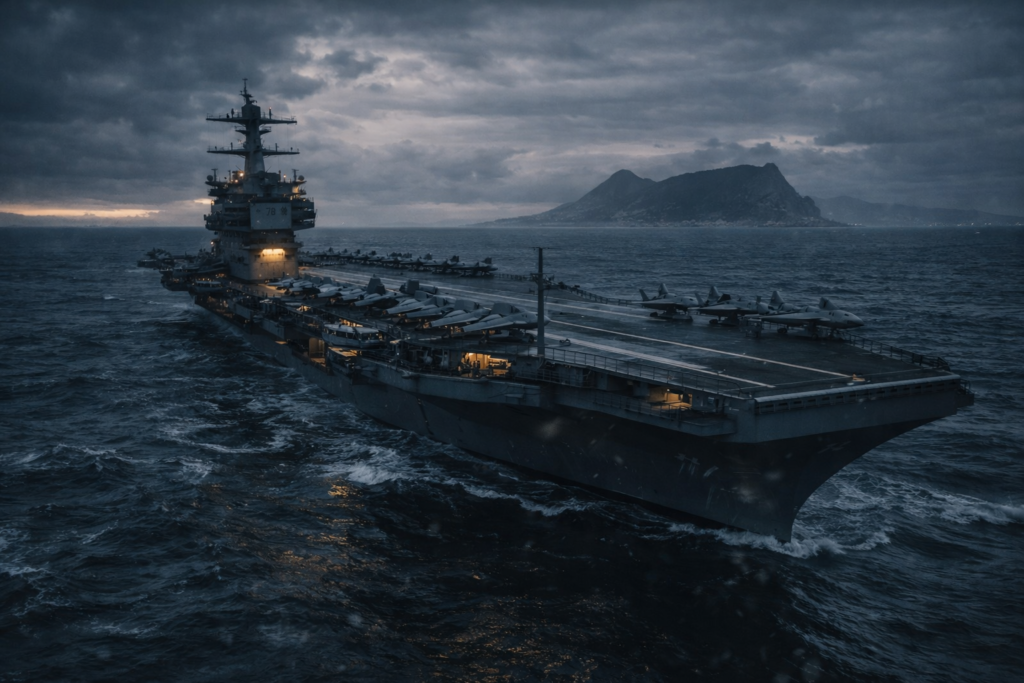
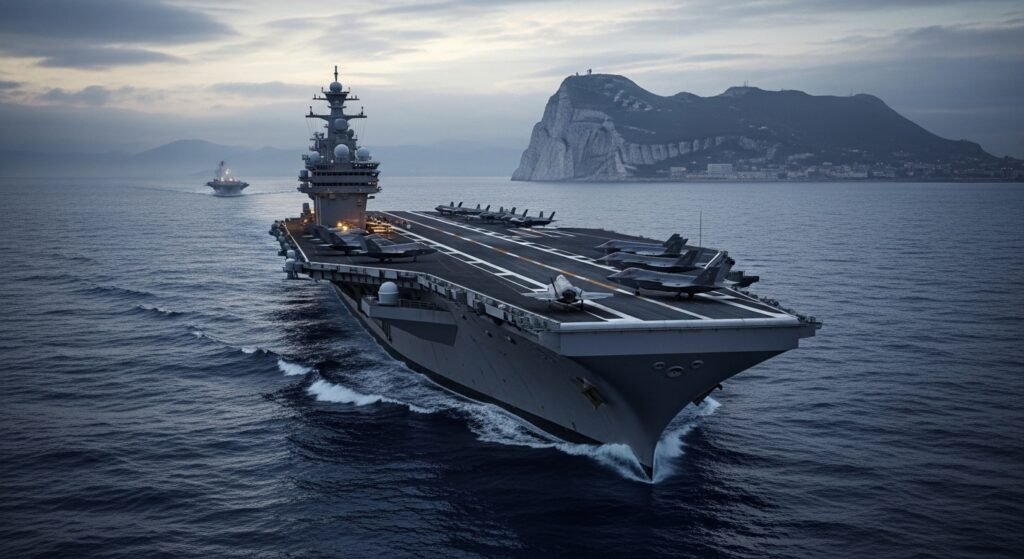
- Naval Movements: BBC Verify confirms the USS Gerald R Ford (the world’s largest aircraft carrier) and the destroyer USS Mahan have passed through the Strait of Gibraltar toward the Mediterranean, expected to join the USS Abraham Lincoln in the Middle East.
The Oval Office vs. The Pentagon: A Clash of Narratives
The core of the current controversy stems from conflicting narratives regarding the US military’s readiness and enthusiasm for a kinetic conflict with the Islamic Republic of Iran. According to multiple established media outlets, General Dan Caine has been a voice of caution within Trump’s inner circle. Sources familiar with internal Pentagon discussions claim Caine warned that direct military action against Iran could easily spiral. The primary concerns revolve around Iran’s extensive network of heavily armed proxy militias across Iraq, Syria, Lebanon, and Yemen, which could trigger a multi-front regional war demanding a massive surge in US troop deployments.
President Trump, however, aggressively pushed back against these claims in a lengthy post on his social media platform, Truth Social. “General Caine, like all of us, would like not to see war, but, if a decision is made on going against Iran at a military level, it is his opinion that it will be something easily won,” Trump wrote. He further dismissed reports of planned “limited strikes,” adding that General Caine “knows only one thing, how to win, and, if he is told to do so, will be leading the pack.”
The Geneva Window: Diplomacy Under the Gun
While the rhetoric of war escalates, a narrow window for diplomacy remains open. Special Envoy Steve Witkoff and Jared Kushner are spearheading the latest round of negotiations in Geneva. The pressure on these talks is immense, functioning under the shadow of Trump’s impending deadline. On February 19, the President delivered a stark public ultimatum, stating that the outcome of the US-Iran standoff would be decided “over the next, probably, 10 days.”
“We have to make a meaningful deal otherwise bad things happen,” Trump warned. However, frustration appears to be mounting within the administration regarding the pace of these talks. Earlier in the week, Steve Witkoff expressed the President’s impatience during an interview on Fox News, noting that Trump was questioning why Tehran had not yet “capitulated” given the overwhelming US military presence gathering on its doorstep.
An Unprecedented Deployment: The USS Gerald R Ford and Beyond
The physical manifestation of Trump’s “maximum pressure” strategy is currently sailing through global waterways. The United States has initiated a military build-up in the Middle East that defense experts are calling one of the most substantial in decades. The objective is twofold: to coerce Iran into abandoning its nuclear ambitions and to ensure overwhelming tactical superiority should diplomacy fail.
The crown jewel of this deployment is the USS Gerald R Ford. As the world’s largest and most technologically advanced warship, its movement is a geopolitical statement in itself. After briefly broadcasting its location off the Atlantic coast of Morocco, ship-tracking data and BBC Verify confirmed that the supercarrier, alongside the destroyer USS Mahan, successfully transited the Strait of Gibraltar. They are now navigating the Mediterranean, en route to the Middle East.
Once there, the Ford strike group is expected to integrate with forces surrounding the USS Abraham Lincoln, which was tracked entering the region earlier this week. This dual-carrier presence provides the US military with unparalleled air-strike capacity, sustained intelligence gathering, and an impenetrable naval defense grid.
Strategic Depth and Recent Military Context
Military analysts point out that this specific configuration of naval and aerial assets—including heavy lift and mid-air refueling aircraft—grants the Pentagon a level of strategic depth and sustainability far exceeding recent operations. This build-up eclipses the logistical footprint of the successful January operation to capture Venezuelan President Nicolas Maduro, as well as the targeted US airstrikes conducted against Iranian nuclear facilities last June.
The inclusion of heavy refueling aircraft indicates that the US is preparing for the possibility of long-range, sustained bombing campaigns that would require aircraft to remain in contested airspace for extended periods. It is a clear signal to Tehran that any potential conflict will not be restricted to mere border skirmishes, but could involve deep, sustained strikes into the heart of Iranian territory. As the 10-day countdown ticks away, the global community watches closely, caught between the hope for a last-minute diplomatic breakthrough in Geneva and the terrifying prospect of a new, devastating war in the Middle East.
Why It Matters
For the average everyday citizen, this standoff is not just distant geopolitical theater; it directly threatens global economic stability. A conflict with Iran would instantly disrupt global energy supplies, triggering skyrocketing gas prices and inflation, while potentially drawing allied nations into a prolonged, costly, and devastating multi-front Middle Eastern war.
Leave a Reply