Captain guilty of North Sea tanker crash death
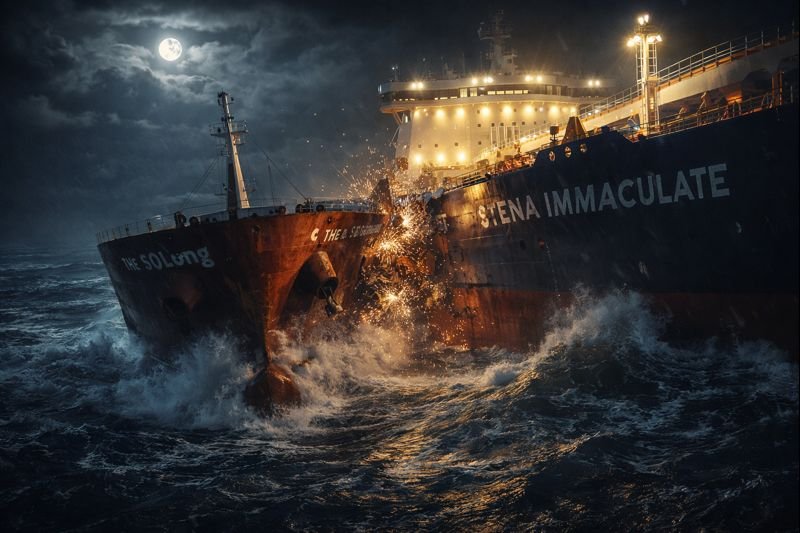
North Sea Tragedy: Captain Convicted of “Gross Negligence” After Deadly Collision Left Crewman Missing
At Brainx, we believe…
This tragic conviction highlights a fundamental truth of the maritime world: the sea is unforgiving of complacency. At Brainx, we believe the verdict against Captain Vladimir Motin serves as a grim reminder that the chain of command is also a chain of responsibility. When a captain’s “lax attitude” replaces rigorous protocol, the cost is measured in human lives—a devastating reality now faced by a grieving family in the Philippines.
The News: A Verdict of Deadly Negligence
In a somber conclusion to a trial at London’s Old Bailey, a seasoned ship captain has been found guilty of gross negligence manslaughter following a catastrophic collision in the North Sea. The incident, which occurred off the coast of East Yorkshire, resulted in the loss of a crew member and exposed severe failures in basic watchkeeping duties.
The Verdict and Sentencing
- Guilty on All Counts: After deliberating for over eight hours, the jury returned a unanimous guilty verdict against Vladimir Motin, the 59-year-old captain of the cargo ship Solong.
- Reaction: Motin, a native of St. Petersburg, Russia, appeared emotionless as the verdict was read. He has been remanded in custody and is scheduled for sentencing this Thursday.
- The Charge: The conviction of gross negligence manslaughter indicates that Motin’s conduct fell far below the standard expected of a competent seafarer, directly leading to the death of his crewman.
The Incident: March 10, 2025 The collision took place on the night of March 10, 2025, in the busy shipping lanes of the North Sea.
- The Ships: The cargo vessel Solong, under Motin’s command, collided violently with the Stena Immaculate, a US-flagged oil tanker.
- The Watch: The court established that Motin was the only person on watch duty at the time of the crash. Despite the sophisticated navigation equipment available on modern vessels, the Solong failed to alter its course.
- The Impact: The collision caused significant damage and chaos. In the immediate aftermath, 38-year-old crew member Mark Angelo Pernia went missing. Despite extensive search efforts, he was never found and is presumed dead.
The Victim: A Family Left Behind The human cost of this negligence is heartbreaking. Mark Angelo Pernia was not just a crew member; he was a husband and a father-to-be.
- A Tragic Timing: Prosecutor Tom Little KC revealed to the jury that Pernia’s wife was approximately seven months pregnant at the time of the collision.
- Remote Grief: The court heard that Pernia’s widow lives in a remote region of the Philippines. To watch the sentencing of the man responsible for her husband’s death, she will have to make difficult travel arrangements to find a location with a stable internet connection—a stark reminder of the global nature of the maritime workforce and the far-reaching ripples of this tragedy.
The Failures: “A Lax Attitude” The prosecution painted a damning picture of Motin’s conduct on the bridge that night. The court heard that the collision was not a result of mechanical failure or freak weather, but human error born of arrogance.
- Failure to Act: Motin failed to keep a proper lookout, a fundamental requirement of maritime law (COLREGs). He did not use “all available means” to assess the risk of collision.
- No Evasive Action: The court heard that Motin did not leave enough time to take evasive action. Crucially, as the collision became imminent, he failed to sound the alarm, summon help, or initiate a “crash stop” maneuver.
- Deceit: Prosecutor Julia Faure-Walker accused Motin of lying about the events to protect himself. She argued that his dishonesty was an attempt to avoid consequences so he could “get back to his wife” in Russia.
- The Prosecution’s Argument: Faure-Walker described Motin as having a “lax attitude,” stating that he “thought he knew better than anyone else.” She concluded, “Whether in isolation or combination, the defendant’s failures were so exceptionally bad they amount to gross negligence.”
The Defense The defense team faced an uphill battle.
- Admitting Fault, Denying Crime: Barristers for Motin conceded there was “no doubt” he was at fault for the collision. However, their strategy hinged on the argument that his actions, while negligent, did not reach the high threshold of gross negligence manslaughter.
- The Jury’s Decision: The jury rejected this argument, finding that the breach of duty was criminal in nature.
Deep Dive: The Rules of the Road at Sea
(Analysis for Brainx Ultimate Readers)
To understand the severity of this verdict, one must look at the International Regulations for Preventing Collisions at Sea (COLREGs), the “rules of the road” for ships. Rule 5 explicitly states: “Every vessel shall at all times maintain a proper look-out by sight and hearing as well as by all available means appropriate.” By being the sole person on the bridge and failing to utilize radar or visual checks effectively, Captain Motin did not just make a mistake; he abandoned his primary duty of care. In the crowded waters of the North Sea, such negligence turns a cargo ship into a 10,000-ton unguided missile. This case serves as a precedent that captains cannot hide behind “accidents” when basic safety protocols are ignored.
Why It Matters
This conviction matters because it pierces the corporate veil of the shipping industry and places accountability squarely on the individual in command. For the common man, it is a reminder that safety regulations—whether on a ship, a plane, or a factory floor—are written in blood. The verdict sends a global message to the maritime industry: cutting corners on watch duties is a criminal act. For the family of Mark Angelo Pernia, while it cannot bring him back, it offers the solace that his death was legally recognized not as a misfortune, but as a crime.



Leave a Reply